
Shopping Cart
There are no more items in your cart










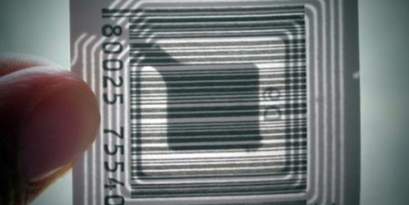
RFID: Understand the Technology, Choose the Right System and Apply It in Your Business
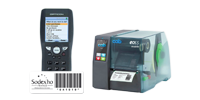
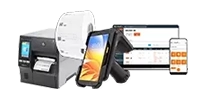
RFID identifies your assets and people without contact, through packaging or a pocket. From the access badge to the pallet label, a chip and a reader are enough to read hundreds of items per second, where the barcode requires a visual read, one at a time. Discover how it works, its frequencies (LF, HF, UHF), its advantages and limitations, a comparison with NFC and the barcode, and how to choose the right RFID system for your business.

PPE Employer Obligations: What the French Labour Code Says
Workplace safety is not optional: it is a legal duty borne by every company director. Free provision, CE conformity, training, maintenance and checking that equipment is actually worn - this guide sets out the French legal framework for PPE and the employer's practical responsibilities, sector by sector.

RFID Reader: Uses, Benefits and Selection Criteria
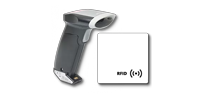
An RFID reader captures data from the chips embedded in labels, cards and badges, but a badge reader (LF/HF) will not replace a UHF reader built to inventory batches of goods. This guide compares fixed, handheld and USB formats, explains the LF, HF, NFC and UHF technologies, and sets out six practical criteria to choose a device that truly fits your tags and software. SBE Direct supports the choice with its RFID reader range, the Zebra RFD40 and TC22R, and the SAM software. Read the full article →
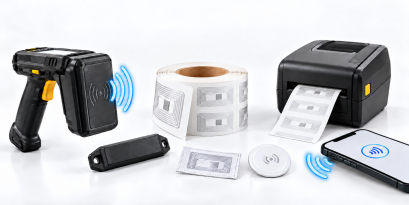
How to choose an RFID tag?
Choosing an RFID tag starts with the use case: inventory, equipment tracking, linen traceability or smartphone reading. HF, NFC or UHF technology, mounting surface, encoding, compatibility with your readers and software: discover the criteria that decide reliability, a summary table by application and the method to validate a reference before ordering. With SBE Direct solutions and samples to test.
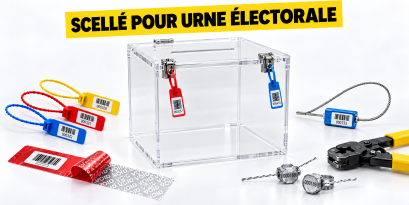
Security seal for a ballot box: protecting election equipment and safeguarding a transparent count
The article explains the role of a ballot box security seal: a single-use device that makes any opening visible, alongside the locks rather than in their place. It recalls that Article L63 of the French Electoral Code requires a transparent box, a single opening, two dissimilar locks and a strict split of the keys between the president and an assessor, but does not require a seal, which remains an optional complementary control. It presents the four seal families (plastic eyelet, adhesive, padlock, lead) with their fixings and a comparison table, then the selection criteria (compatibility, numbering, strength, quantities). It details application and checking in five stages, the securing of ancillary bags, crates and cases, and closes on the SBE Direct range. Running thread: a seal only has value once numbered, recorded and checked, and an anomaly is documented without jumping to a conclusion of fraud. Six FAQ questions close the article.
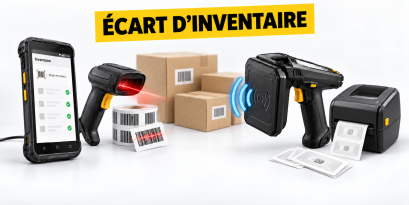
Inventory Discrepancy: Definition, Calculation, and How to Improve Stock Accuracy
The article explains what an inventory discrepancy is: the gap between the theoretical stock shown by the system and the actual stock physically counted. It separates negative discrepancy (shortage) from positive discrepancy (surplus), both of which are problems, and distinguishes a discrepancy from shrinkage. It gives four calculation formulas: discrepancy in quantity, discrepancy in value, discrepancy rate and stock accuracy rate. It sets the tolerance thresholds (under 1% excellent, 1 to 2% acceptable, above 2% to fix), details the five main causes with their typical share, then lists the levers to reduce discrepancies: cycle counts, reliable identification, automated capture, RFID and centralised software. It closes with a barcode versus RFID inventory comparison and a five-question FAQ. Key sourced figures: 65% of stock records contain a discrepancy (DeHoratius and Raman, 2004), accuracy raised to nearly 99% with RFID (Auburn RFID Lab and GS1 US, 2018).
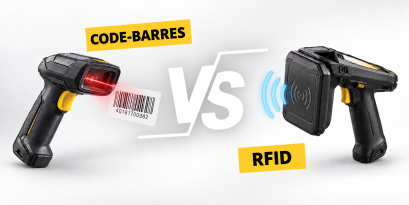
RFID or Barcode: Which Technology Should Your Business Choose?
RFID or barcode: how do you choose the right identification technology for your inventories and asset tracking? This guide compares the two solutions point by point: how they work, a figures-based comparison table, benefits, limits and B2B use cases. You leave with a 10-question decision checklist to arbitrate based on your volumes, field constraints and budget.

How Do You Choose a Reliable PPE Supplier?
Choosing a reliable supplier of PPE (personal protective equipment) is not simply about finding the cheapest items. Product compliance, the match with occupational risks, the availability of items, the quality of the advice given and the supplier’s ability to keep you resupplied are all criteria to examine.

11 Criteria for Choosing Your Inventory Management Software
Choosing inventory management software is not simply about comparing feature lists. The right solution is above all the one that matches your workflows, the nature of the products or equipment you track, the number of employees and sites involved, and the level of traceability your company needs.
Unique Device Identification (UDI): Definition, Regulations, and Implementation
This article details the technical structure of the IUD, its regulatory framework, current deadlines, and practical ways to implement it in healthcare facilities. At SBE Direct, a specialist in identification and traceability for professionals, this requirement for long-term readability is a daily challenge: technical labels, printing, scanning, and RFID.
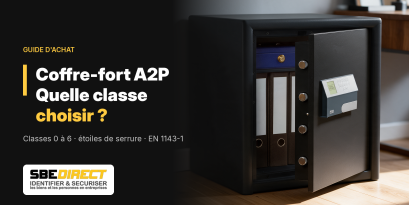
A2P Safes: Certification, Resistance Classes, and Buyer's Guide
Choosing an A2P-certified safe means opting for a security solution that is recognized by insurers and has been laboratory-tested. This French certification attests to a safe’s ability to withstand break-in attempts—a key factor in protecting your valuables and ensuring you receive insurance coverage.
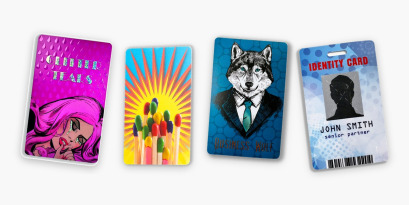
Four-colour printing: definition, processes and applications on your identification media
This article explains the four-color printing process and helps you choose the right technique for your PVC cards, badges, and labels. You’ll find a definition of CMYK, the five steps of the process, how to choose between offset, digital, and screen printing, a comparison between four-color printing and Pantone, and the guidelines to follow for a readable barcode. Your logo shifts from electric blue to a dull blue between the screen and the delivered card. This phenomenon is no accident: it stems from the transition from one color model to another. Four-color printing reproduces colors using only four inks, whereas your screen simulates millions. What practical difference does this make on a badge? When should you opt for a Pantone spot color? And why can a barcode printed in four-color process become unreadable at the checkout? This guide answers these questions, including the specific thresholds used in our production facilities and across our PVC card lines.

Protection débroussaillage : quels EPI pour travailler en sécurité ?
Brush-cutting protective gear is not just a lighter version of a lumberjack’s outfit. It is a distinct type of protective gear, designed for a tool that spins rapidly and propels anything in its path. A handheld brush cutter reaches 6,000 to 9,000 revolutions per minute, according to the Ministry of Agriculture’s technical data sheet on agricultural and forestry machinery (Cemagref, 2010).

Safety footwear standard: decoding classes S1 to S7 and EN ISO 20345:2022 markings
This article breaks down safety footwear standards so you can order the right model the first time, detailing the SB through S7 classes, the 18 additional markings, and the changes introduced in the 2022 version. You’ll learn how to read a complete label in thirty seconds and match each job to the appropriate marking.
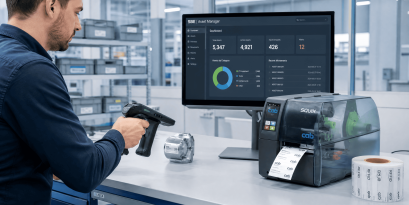
RFID anti-contrefaçon : protéger vos produits contre la fraude
RFID addresses a fraud problem that has exploded: according to the OECD-EUIPO 2025 report, global trade in counterfeit goods has reached 467 billion dollars (2.3% of world trade), with the European Union particularly exposed. Unlike holograms, barcodes, and QR codes, which are visible markings and therefore identically reproducible, RFID combines a unique identifier etched into the chip (not falsifiable through simple visual copying) with, for the most sensitive uses, dynamic cryptographic authentication whose response changes with every scan. It primarily protects six high value or health risk markets: textiles, automotive parts, pharmaceuticals, wines and spirits, luxury goods/watches/cosmetics, and electronics, each with its own specific constraints.
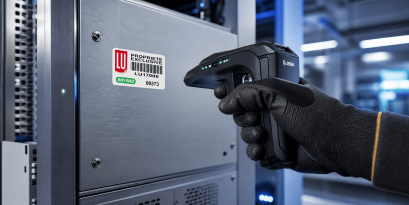
Digital Product Passport (DPP): what to expect and how to prepare
The Digital Product Passport (DPP) is becoming a mandatory EU requirement that gives every product a digital identity card composition, origin, durability, recyclability accessible via a QR code, RFID or NFC tag throughout its life cycle. Introduced by the ESPR Regulation (EU) 2024/1781, it rolls out category by category: batteries lead the way on 18 February 2027, followed by textiles, metals and electronics by 2028-2029. Businesses of every size are affected, SMEs included, and the burden of proof sits with the economic operator placing the product on the market.
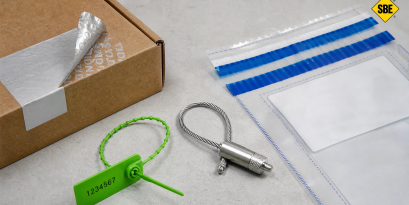
Tamper evident: definition, how it works, and tamper-proof security devices
Tamper evident refers to any packaging, labelling, or sealing device that makes an attempted opening or manipulation visible and irreversible, without physically preventing access — to be distinguished from tamper resistant, which slows down intrusion, and tamper proof, a largely marketing-driven notion since no packaging is truly inviolable. These devices rely on three mechanisms (differential adhesion failure, mechanical destruction, visual or chemical revelation) and come in several families depending on the surface to be protected: VOID labels and sealing labels for cartons and packaging, plastic/metal/cable security seals for doors and containers, security tapes for long closures, tamper-proof bags and envelopes for documents and valuables, and glued closures built into pharmaceutical packaging.
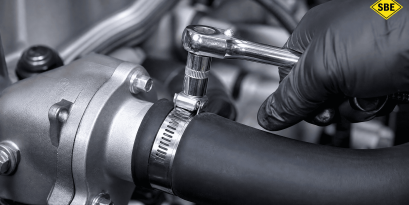
How do I remove a metal hose clamp?
Removing a metal hose clamp seems straightforward, but the method depends entirely on the model. A worm-drive Serflex clamp loosens counter-clockwise with a 7 or 8 mm socket wrench, a Mubea spring clamp compresses by squeezing its two tabs together with pliers, a crimped-ear Oetiker clamp is cut with pliers (single-use), a Clic-R unclips by hand, and a double-wire model unscrews or unhooks depending on its closure. If a clamp is seized, apply a penetrating lubricant, possibly some gentle heat or controlled percussion, before considering cutting it with an angle grinder, protecting the hose with a shim plate.
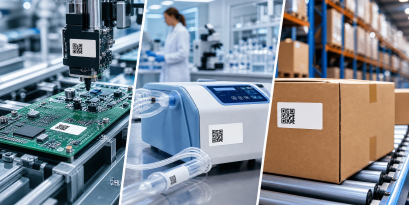
RFID geolocation chip: how do you track a tagged object?
Can an RFID chip really locate an object in real time, like a GPS? Not quite. Here is what an RFID chip can track, its true read range, how it compares with GPS and RTLS (UWB, BLE), and the four RFID location methods to find your assets without searching for them.
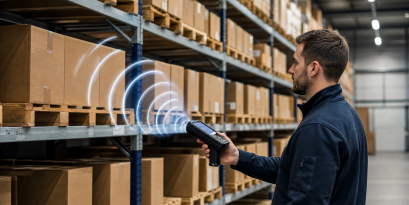
RFID en logistique : optimiser le suivi des flux et réduire les coûts
RFID in logistics lets you know, at any moment, where every pallet and every parcel is, with no manual entry. Stocktakes 4 to 5 times faster, real-time traceability, shipping errors kept in check: we walk through how it works, the frequencies, the costs and WMS integration, to help you scope your project with confidence.
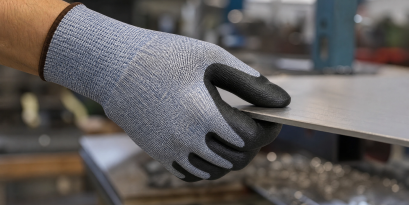
EN 388 standard: understanding and choosing your cut-resistant gloves
The EN 388 standard is the European reference for the mechanical protection of safety gloves against abrasion, cut, tear, puncture and impact risks. Mandatory under Regulation (EU) 2016/425 and required in its EN 388:2016+A1:2018 version, it is read through a pictogram of 4 to 6 characters indicating the glove's performance level for each test. This guide breaks down every rating, clarifies the difference between the "X" and "0" characters, and provides a selection grid by activity to help you choose gloves that match the real risk of the workstation without sacrificing dexterity.
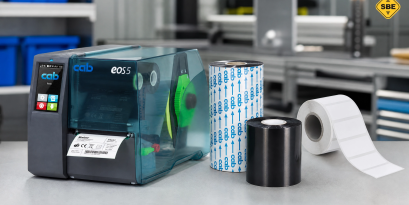
Thermal transfer printing: how it differs from direct thermal printing
Thermal transfer printing dominates industrial identification, barcoding and B2B logistics: a global market worth USD 51.55 billion in 2025, set to reach USD 91.83 billion by 2035. This guide compares thermal transfer and direct thermal printing point by point across durability, print quality, cost and industrial applications. You'll find a full comparison table, the three ribbon types to know (wax, wax-resin, resin), a five-question decision framework to choose your printer, and the SBE Direct method for securing long-term identification projects.
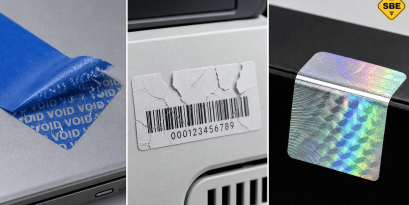
Tamper-evident label: the complete guide to securing your products and equipment
Proving that a product has not been opened, substituted or tampered with between the factory and the end user: that is the promise of the tamper-evident label. Pharmaceutical regulations, parcel tracking, IT asset management, official seals the applications are numerous and the technologies varied. This complete guide helps you understand the mechanisms, identify the applicable standards and select the right solution for your needs.
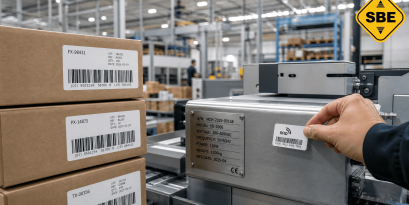
Product labelling: how to optimise traceability and compliance?
Product labelling identifies, informs, protects and traces any product placed on the European market. This guide details the six regulatory frameworks every B2B operator must master in 2026. You will learn which mandatory information applies to your sector, how to choose the right substrate (polyester, vinyl, anodised aluminium, destructible) and which DGCCRF penalties apply in the event of non-compliance up to a €750,000 fine and 2 years' imprisonment for misleading commercial practices. SBE Direct's labelling solutions, deployed across more than 900,000 tamper-evident plates at 16,000 B2B customers with up to -96% theft observed on marked assets, secure both regulatory compliance and traceability of your asset base.
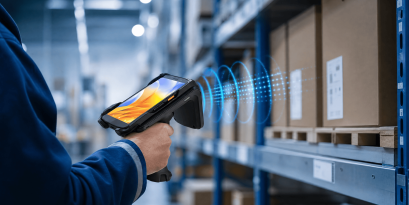
Industrial traceability: identify, track, secure
Industrial traceability has become a strategic foundation in 2026: 14,484 product recalls recorded across Europe in 2024, an average cost of €10.5 million per major recall, and mounting regulatory pressure (ISO 9001, MDR, FSMA, GS1 standards). This comprehensive guide explains how to identify, track and secure your products and assets across the three levels of traceability (upstream, internal, downstream), how to choose between barcodes, Datamatrix, UHF RFID, aluminium plates and tamper-evident labels, and how to deploy a reliable system in five steps. A proven method, built on 30 years of SBE Direct expertise and more than 16,000 customers supported.
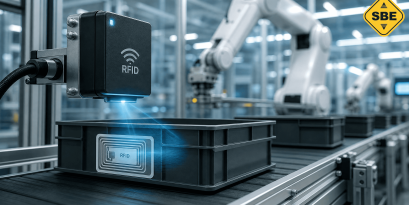
Industrial automation: definition, technologies and use cases
Industrial automation is transforming the productivity of French factories, with gains of up to 30%. But without reliable traceability, no automated line can deliver on its promises. This guide breaks down the key technologies, programmable controllers, sensors, and RFID and their real-world use cases across industry, logistics, and construction.
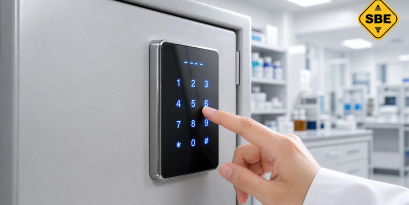
How to open an electronic code safe ?
How to open an electronic code safe, both in normal operation and when the safe is blocked ? It details how the keypad and locking mechanism work, the difference between master code and user code, and the main causes of failure (forgotten PIN, dead batteries, lockout after several wrong attempts, hardware malfunction). You will find concrete solutions to open a blocked safe (emergency key, temporary external power supply, contacting the manufacturer, calling a professional locksmith) as well as the procedure to change or reset your code. The article ends with best practices to avoid being locked out again (storing emergency keys safely, replacing batteries preventively, choosing a memorable code, keeping the serial number, and proof of purchase).
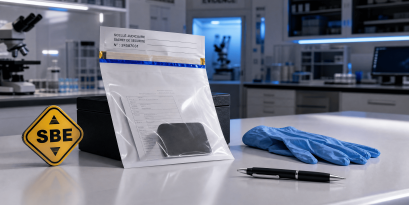
Judicial seals: everything you need to know
This practical guide explains what a judicial seal is, its six main families, the French legal framework (Articles 56 and 434‑22 of the Code of Criminal Procedure), the international ISO 17712:2013 standard, and the key selection criteria for your line of work. You will find official AGRASC figures, legal retention periods, and tamper‑evident solutions offered by SBE Direct, a B2B supplier for public authorities and law‑enforcement agencies since 1992. A judicial seal secures evidence, seized items or sensitive documents as part of criminal, customs, or administrative proceedings, and each profession has its own technical requirements: police officers, bailiffs, customs officers, court‑appointed experts, or compliance managers. Which seal should you use on a seized container? How long must it be kept? What are the risks in case of seal tampering or removal? This comprehensive guide provides clear, referenced answers to all these questions.

Danger signs in the workplace: meaning, types and legal obligations
A danger sign is a triangular yellow signal with a black border, mandatory in the workplace since the order of 2 August 2013 (NF EN ISO 7010 standard). There are two main categories: permanent and temporary. The risks covered range from physical hazards to chemical, electrical and environmental risks. The employer is legally responsible for their installation and maintenance.