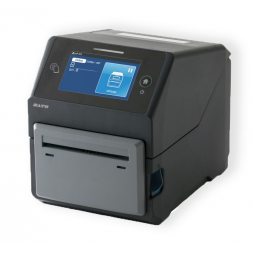
RFID Printers

RFID Printers

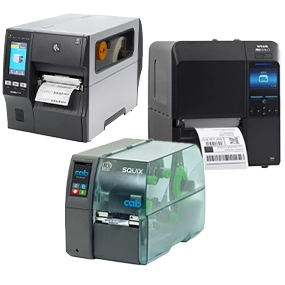
An RFID printer prints the label design and encodes the RFID chip in a single pass, enabling the tracking of inventory, assets, and shipments without requiring visual scanning. Depending on printing volume, frequency, and RFID technology (HF, UHF, or NFC), RFID printers are available as desktop or industrial models using either direct thermal or thermal transfer printing. This category includes RFID printers from Zebra, SATO, and CAB, with resolutions ranging from 203 to 600 dpi and a variety of connectivity options, making them suitable for manufacturing, retail, healthcare, and event management.

Read more ↓
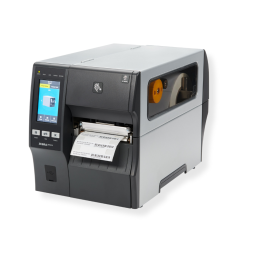
Professional RFID printers for printing and encoding

What is an RFID printer?

Gamme d’imprimantes RFID industrielles SATO Zebra CAB pour imprimer et encoder des étiquettes RFID

An RFID printer performs two tasks simultaneously. It prints the visible information on the label—such as barcodes, text, and logos—typically in monochrome, with colour elements provided by pre-printed label stock if required. At the same time, it encodes data into the RFID chip embedded in the label. The result is an RFID label that is both human-readable and wirelessly readable using radio frequency technology.

This device is the starting point of an asset tracking system, enabling you to produce RFID labels in-house, on demand, without relying on an external converter. It leverages RFID technology and traceability solutions tailored to your specific operating environment.

How does it work?

An RFID printer operates primarily using proven thermal transfer or direct thermal printing technology. During the RFID printing process, the printhead heats the ribbon—ensuring it is correctly loaded according to its winding direction—to transfer ink precisely onto the label material.

At the same time, an encoder built into the printer communicates with the RFID chip via radio frequency. If the chip is defective, the printer detects the fault and typically prints an error mark (often a cross) so the label can be discarded.

Different RFID standards are available depending on the required read range. Detection distance varies significantly according to the chip frequency, so correctly configuring your equipment starts with understanding the differences and professional applications of HF, UHF, and NFC RFID technologies.

Our team is available to help you select and configure the right RFID printing solution for your project.

Application sectors for the RFID printer

An RFID printer meets the traceability needs of many industries, from small-scale operations to high-volume industrial environments.

  • Logistics and manufacturing: tracking components along production lines, real-time pallet traceability, and reducing shipping errors.
  • Retail: enabling instant shelf inventory checks and speeding up checkout processes through simultaneous detection of items and individual products.
  • Healthcare and medical sector: accurate identification of medical devices and samples to secure patient care pathways, providing valuable support to healthcare staff.
  • Security and events: encoding tamper-proof access badges to streamline and control people flow in restricted areas.
  • Public sector and education: automating the tracking of IT equipment or furniture assets and simplifying library loan management.

How to choose an RFID printer: Key criteria

To select the right machine, you need to analyse your real operational constraints. Each feature must be adapted to your specific use case, from the width and height of your print formats to the material of your label rolls.

Here is a summary table to help you make the best choice:

Key criterionTechnical descriptionSBE Direct recommendation
Print volumeNumber of labels printed per day.Office (< 1,000/day) or Industrial (> 1,000/day).
Print speedOutput speed of the printer (in mm/s).Prefer high speed for logistics environments.
Media typePaper labels, synthetic labels, on-metal tags.Ensure compatibility with the printer’s media handling system.
RFID frequencyUHF, HF, or NFC standards.UHF is ideal for logistics applications (long read range).
Resolution (DPI)Print sharpness (203, 300, 600 dpi).300–600 dpi for very small 2D barcodes.
Chassis formatPhysical footprint of the machine.Desktop printer for very limited workspaces.

The Zebra ZT411, designed for on-metal RFID printing

Among our RFID printers, the Zebra ZT411 stands out for its ability to print and encode on-metal RFID labels, designed to be applied directly onto metal surfaces. Its specific hardware configuration supports these thicker labels (up to 1.5 mm) without additional equipment, with a print width of up to 4 inches (104 mm) and available resolutions of 203, 300, or 600 dpi. This capability makes it a benchmark solution for RFID traceability of metal assets, machinery, containers, and industrial equipment in the most demanding production and heavy logistics environments.

How much does an RFID printer cost?

The investment varies significantly depending on the range and industrial capabilities of the device. Addressing the price of an RFID printer therefore requires a clear understanding of your day-to-day operational needs.

  • Compact desktop models, suitable for low print volumes, start at around €800 to €1,500. This price range is ideal for equipping a retail point of sale, reception desk, or small storage area.
  • For industrial machines designed for continuous 24/7 operation (3-shift environments), the budget is typically between €2,000 and €4,000. This higher initial cost is quickly offset by the machine’s exceptional durability and the productivity gains it delivers.

RFID printer brands available from SBE Direct

We have carefully selected the global market leaders to ensure you receive durable, reliable, and long-lasting marking equipment:

Zebra

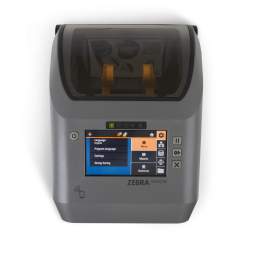
A benchmark brand in identification, this American manufacturer delivers highly reliable equipment. If you are looking for a compact device, explore our Zebra RFID printer, designed to fit on any countertop while delivering strong performance.

SATO

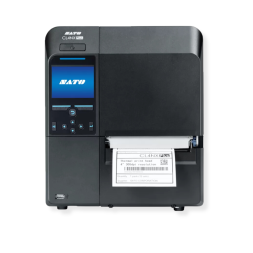
Known for its flawless Japanese engineering, SATO offers highly intuitive solutions. Our recommendation is the SATO CT4-LX RFID thermal transfer label printer, ideal for immediate adoption by your teams.

CAB

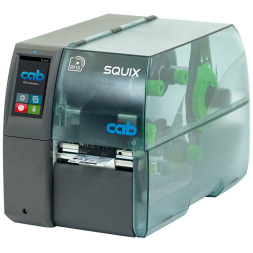
For the most extreme industrial environments, German engineering from CAB is the right choice. The CAB SQUIX 4 RFID thermal transfer label printer combines highly precise encoding with outstanding robustness.

SBE Direct's complete RFID ecosystem

Equipping yourself with an encoding machine is only the first step in your project. To build an end-to-end, high-performance traceability system, you also need suitable consumables. Discover our wide range of RFID labels designed to meet the standards of all environments.

To communicate with your tags in the field, we also provide portable or fixed RFID readers. These data capture devices are essential for collecting information at scale and from a distance. Finally, centralised management of these systems requires robust RFID software. If you want to take asset security further, explore our fast RFID asset inventory solution.

FAQ

What is the difference between an RFID printer and a standard label printer?

An RFID printer features a built-in RFID encoder. It digitally encodes the invisible RFID chip embedded in the label while simultaneously printing the visible design. In contrast, a standard label printer only prints on the surface of the label.

Can an RFID printer also print standard labels (without RFID chips)?

Yes. Simply disable the RFID encoding function in the printer settings. The printer will then operate as a standard thermal label printer, allowing you to print conventional label rolls without RFID chips.

Which software should I use to design and print RFID labels?

Professional label design software such as BarTender, NiceLabel, and ZebraDesigner are recommended. These solutions include built-in RFID encoding features and allow you to connect databases directly to the RFID chip encoding process.

What is the typical lifespan of an RFID printer?

An RFID printer typically lasts between 5 and 10 years. Its lifespan depends on the working environment and regular maintenance, including routine cleaning and periodic replacement of the printhead.

Can on-metal RFID labels be encoded with any RFID printer?

No. On-metal RFID labels incorporate a foam isolation layer, making them significantly thicker than standard RFID labels. Encoding these labels requires a compatible RFID printer with a print mechanism specifically designed to accommodate the additional thickness.

Filtrer

We use cookies to improve your experience.