RFID readers

RFID readers

RFID technology enables data to be read and transmitted without the need for direct line of sight. At the heart of this system, RFID readers play a key role: whether portable, fixed, USB-connected or integrated into a handheld gun, they ensure fast detection of RFID tags, even remotely and in complex environments.

SBE Direct offers a complete range of UHF, HF and NFC RFID readers, compatible with your badges, cards and inventory tags, for access control, logistics tracking or mobile inventory management.

Read more ↓
RFID Reader – Scan, identify and track your assets remotely

How does an RFID reader work?

An RFID reader can operate across different frequencies (LF, HF, NFC and UHF), with each technology designed for specific applications such as access control, asset tracking, inventory management and logistics.

The data capture process is based on the transmission of radio frequency waves. The RFID tag reader remotely activates the transponders attached to assets or goods to retrieve their encoded information.

Unlike traditional optical scanners, which require a direct line of sight, this technology can scan dozens of items simultaneously, even through packaging.

Using a high-performance RFID scanner improves the reliability of the entire supply chain by eliminating duplicate data entry and reducing human error. However, implementing such an infrastructure requires careful planning, as understanding RFID technology and choosing the right system is an essential step before full deployment.

The different types of professional RFID scanners

Identification requirements vary depending on the facility layout and the nature of the tasks involved. Consequently, the equipment is available in various hardware formats to precisely meet the logistical constraints of each industry sector.

Wired USB RFID reader for fixed workstations

The USB wired RFID reader for fixed workstations is ideal for reception desks, checkout counters and administrative offices. The USB RFID reader connects easily via a standard plug-and-play interface. It is mainly used for reading employee badges or quickly identifying small items at short range.

This configuration provides a constant power supply through the USB cable, eliminating concerns about battery life or the need to recharge devices at the end of the day.

Portable Bluetooth RFID reader for mobility

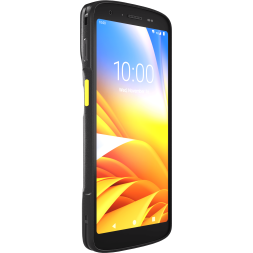
For operations requiring regular movement within a warehouse or production site, the portable RFID reader offers complete freedom of movement. Its lightweight design and ergonomic construction make repetitive handling easier without causing operator fatigue.

In addition, the integration of a Bluetooth RFID reader enables smooth, wireless communication with a tablet, smartphone or remote computer.

For access management and staff monitoring, using an UHF RFID reader for badges and cards is particularly effective when it comes to recording entries and exits in real time.

Long-range RFID reader and UHF gun

In large storage areas or for inventorying bulky pallets, a long-range RFID reader becomes essential. Capable of capturing signals from several meters away, it eliminates the need for operators to climb storage racks or handle heavy loads to read information.

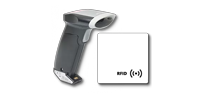
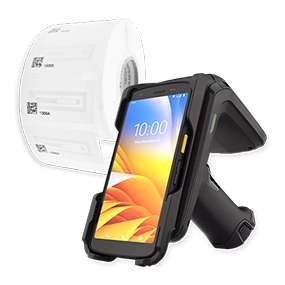
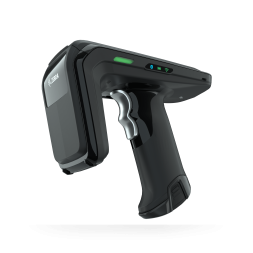
Pairing it with an ultra-high-frequency RFID gun significantly increases execution speed during large-scale inventory counts. In fact, the article on UHF RFID: frequency and industrial applications explains how these radio waves can penetrate dense pallets to achieve a read rate close to 100%.

The Importance of an Industrial RFID Reader for the Supply Chain

In factories and transport hubs, equipment is exposed to intense physical stress. An industrial RFID reader features a rugged housing designed to withstand repeated drops onto concrete, water splashes and dusty environments.

Its mechanical durability extends the lifespan of the investment and helps prevent service interruptions on production and packaging lines. The choice of terminal depends directly on the required reading distances and the existing IT infrastructure.

Reader TypeAverage RangeMain ConnectivityIdeal EnvironmentApplications
USB ModelShort (0 to 10 cm)Wired USBOffice, checkout, receptionAccess control, badges
Bluetooth ModelMedium (10 cm to 1 m)Wireless BluetoothRetail store, order preparationMobile inventory
Portable / UHF ModelLong (1 m to more than 10 m)Wi-Fi / BluetoothWarehouse, large-scale inventoryAsset management
Industrial ModelVariable depending on the antennaWired or WirelessFactory, loading dockLogistics, manufacturing

Why choose SBE Direct identification solutions?

The efficiency of a traceability system relies on the perfect match between the reading terminal and the information carriers. SBE Direct provides comprehensive expertise combining IT hardware and technical consumables to ensure optimal compatibility from the moment of deployment.

  • The combined use of terminals and suitable RFID tags enables the deployment of a reliable solution for asset tracking.
  • For companies managing fleets of machines or office furniture, choosing high-quality inventory labels provides proven long-term durability.
  • Finally, for mixed industrial environments using multiple technologies, the supply of specific barcode labels ensures full compatibility across all environments.

Beyond RFID readers, SBE Direct supports companies in selecting RFID tags, RFID printers and inventory management software to provide a complete solution.

Frequently Asked Questions

What is the difference between an active and passive RFID reader?

The main difference lies in the power supply method of the chip being read. A passive reader emits energy to activate a tag without a battery, whereas a reader for active chips captures the continuous signal transmitted by a chip equipped with its own internal power source.

What is the maximum reading range of an RFID scanner?

The reading distance can vary from a few centimeters to more than 15 meters, depending on the frequency used. High-frequency (HF) technologies are generally limited to short-range reading, while ultra-high-frequency (UHF) enables long-range data capture.

Does an RFID reader require a direct line of sight?

No. Radio waves can pass through most non-metallic materials such as cardboard, plastic, or wood. This makes it possible to scan the contents of a closed package or entire pallets without opening the packaging.

How do you connect a Bluetooth RFID reader to a terminal?

Pairing is performed through the wireless settings of the host device, in the same way as with any standard Bluetooth peripheral. Once the Bluetooth connection is established, the reader instantly transmits scanned data to your management software, ERP system, or spreadsheet.

We use cookies to improve your experience.