Shopping Cart
There are no more items in your cart





- New

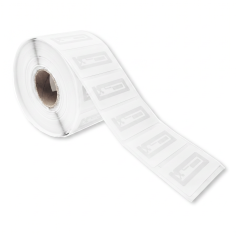
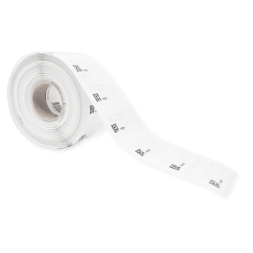
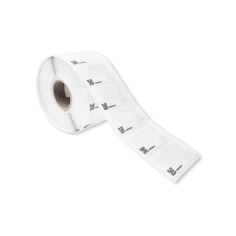
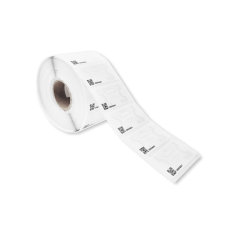
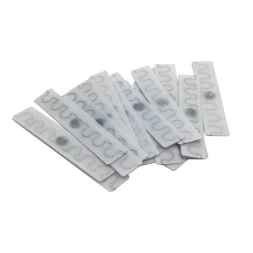
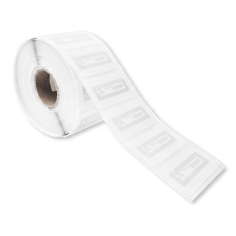
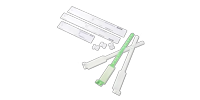
The 65 × 35 mm Impinj M730 UHF RFID label is designed for logistics, IT, and asset managers looking for a reliable passive RFID tag to identify and track large numbers of assets. Powered by the latest-generation Impinj M730 chip from the Monza family, it combines high read sensitivity with a compact format that can be applied to laptops, archive folders, production equipment, or transport containers.
Its purpose is simple: enable fast, hands-free RFID reading, even in dense environments, while providing real-time inventory data to the SAM asset management software. For an overview of RFID technology and traceability, see the parent category.

According to the Impinj IPJ-M730A-A00 datasheet, the M730 chip provides greater read sensitivity than the previous generation, enabling read ranges of up to 10 meters in free space when used with a properly configured fixed RFID reader. Its 128-bit EPC memory supports long, unique identifiers, making it suitable for asset databases exceeding 100,000 items. The operating temperature range of -40°C to +85°C meets the demands of logistics, industrial, and transportation environments. The label withstands thermal cycling, humidity levels up to 95%, and the minor mechanical stresses commonly encountered in warehouses and workplaces. For challenging metallic applications, the On-Metal version incorporates a dielectric isolation layer that maintains reliable read performance where a standard RFID label would lose readability entirely.

The choice depends on a single factor: the material of the surface.
The Standard version is designed for all non-metallic materials, including plastic, wood, cardboard, glass, and thick fabric. It is the recommended solution for office furniture, archive boxes, wooden pallets, and plastic equipment.
The On-Metal version is specifically engineered for metal surfaces. Without this construction, metal reflects radio waves and significantly reduces RFID performance. Thanks to its integrated dielectric layer, the label maintains its read range on steel, aluminum, stainless steel, and electronic equipment. It is the ideal choice for identifying laptops, server racks, metal cabinets, industrial machinery, and shipping containers.
To learn more about UHF RFID technology and its industrial applications, read our dedicated article on UHF RFID frequencies and industrial applications. This product page focuses on the label itself, while the article explains the underlying technology in greater detail.

The Impinj M730 UHF RFID label addresses a wide range of professional applications without requiring complex hardware installations. In logistics, it is used on cartons and pallets for dock door portal reading. In manufacturing, it tracks work-in-progress components and production tools. In IT and office environments, the On-Metal version identifies laptops, monitors, servers, and networking equipment during annual asset inventories. In healthcare, it enables the tracking of mobile medical devices and hospital linens. In retail, it simplifies inventory counting in stores and stockrooms. Every application relies on the same winning combination: an affordable passive RFID tag paired with a long-range UHF RFID reader.
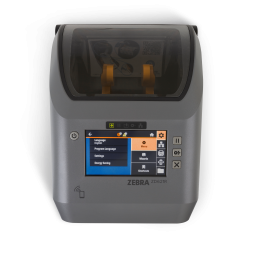
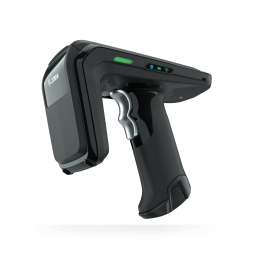
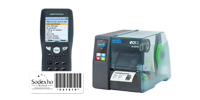
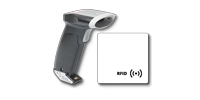
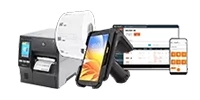
This Impinj M730 RFID label integrates seamlessly into the SBE Direct ecosystem. The SAM (SBE Asset Manager) software supports EPC encoding, asset database integration, and field inventory management using mobile devices. The label is compatible with all UHF RFID readers that comply with the Gen2v2 protocol and has been extensively tested with Zebra devices such as the TC22R, the RFD40, and Impinj fixed readers. For printing and encoding, RFID printers such as the SATO CL4NX Plus and the Zebra ZT411 can simultaneously encode the RFID chip and print visual information such as logos, 1D/2D barcodes, or serial numbers in a single production process.
To deploy a complete RFID asset management solution, several complementary products are available from the SBE Direct catalog. An RFID thermal transfer printer ensures reliable batch encoding and visual customization. Zebra mobile terminals provide fast field inventory capabilities, while SAM software centralizes inventory data, generates dashboards, and exports information to existing ERP or CMMS systems. For demanding environments, additional RFID labels—including tamper-evident labels, ultra-durable labels, and aluminum-backed RFID labels—cover applications where standard adhesive labels are not sufficient. The SBE Direct team can help you choose the right solution based on your assets, deployment volume, and reading environment, and offers free samples before large-scale implementation.
| Ref. | Surface | Unit price | Buy |
|---|---|---|---|
| MSE-RFID-UHF-IM730-VIER-OM | Metallic surface - on metal (roll of 400 labels) | 1+ €296.00 | |
| MSE-RFID-UHF-IM730 VIER | Any non-metallic surface (roll of 1000 labels) | 1+ €358.80 | |
| MSE-RFID-UHF-IM730 -VIER | Any non-metallic surface (roll of 1000 labels) | ||
| MSE-RFID-UHF-IM730-VIER | Any non-metallic surface (roll of 1000 labels) | 1+ €257.00 |
You might also like