Shopping Cart
There are no more items in your cart













.jpg)
HF/NFC technology at 13.56 MHz occupies a unique position in the RFID landscape. Where UHF excels at long-range mass reading, NFC does the opposite: a short, targeted, almost intimate interaction between a label and a device. This characteristic makes it a remarkably effective connected label in two very different contexts: precise industrial traceability and smartphone-based user experience. A single tap, and the information comes through. To place these labels within the full SBE ecosystem, you can browse the RFID technology and traceability category.
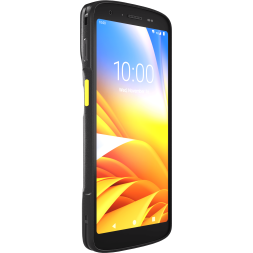
NFC has become a built-in standard on virtually all professional and consumer smartphones, both Android and iOS. In practice, any employee, technician, or customer can read an NFC label without a dedicated application, without pairing, and without prior configuration. This accessibility is a game-changer for companies that want product information, a maintenance record, or a certificate of authenticity to be instantly accessible in the field.
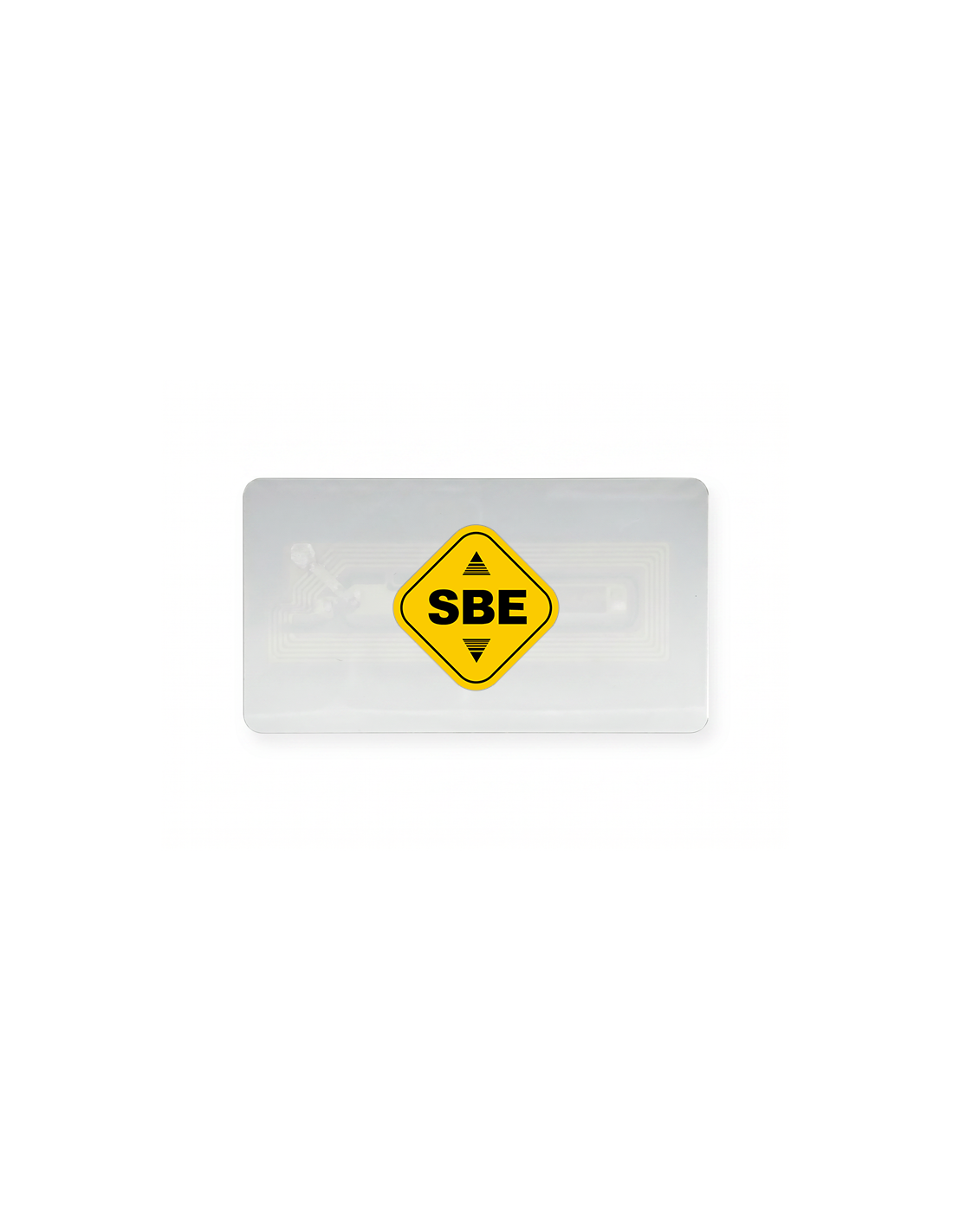
On the industrial side, these HF labels remain fully compatible with 13.56 MHz RFID readers, access control terminals, and mobile devices used in logistics and maintenance. The SBE Direct range covers both use cases within a single offer, with a common logic: customisation at source, ready-to-use NDEF encoding, and the choice of a format suited to the surface to be labelled.
.png "the three layers of the VOID label")
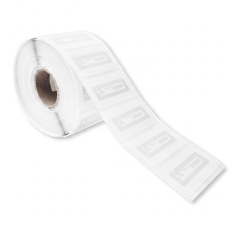
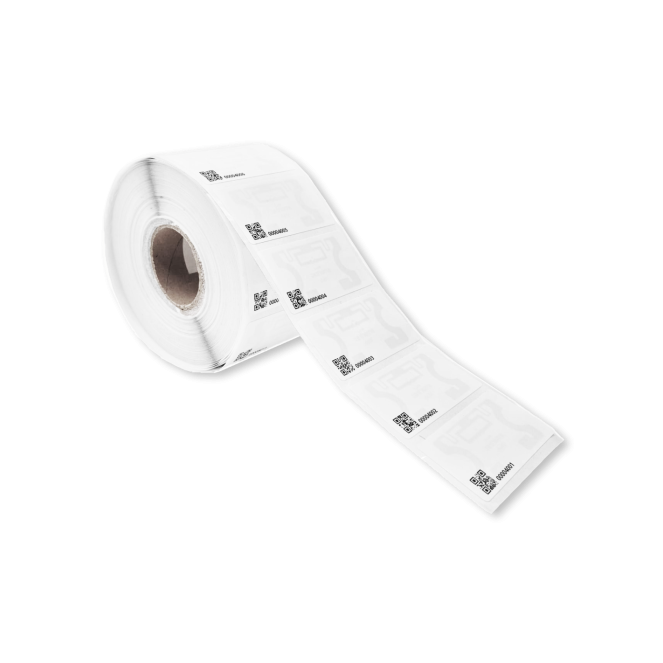
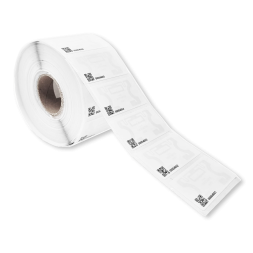
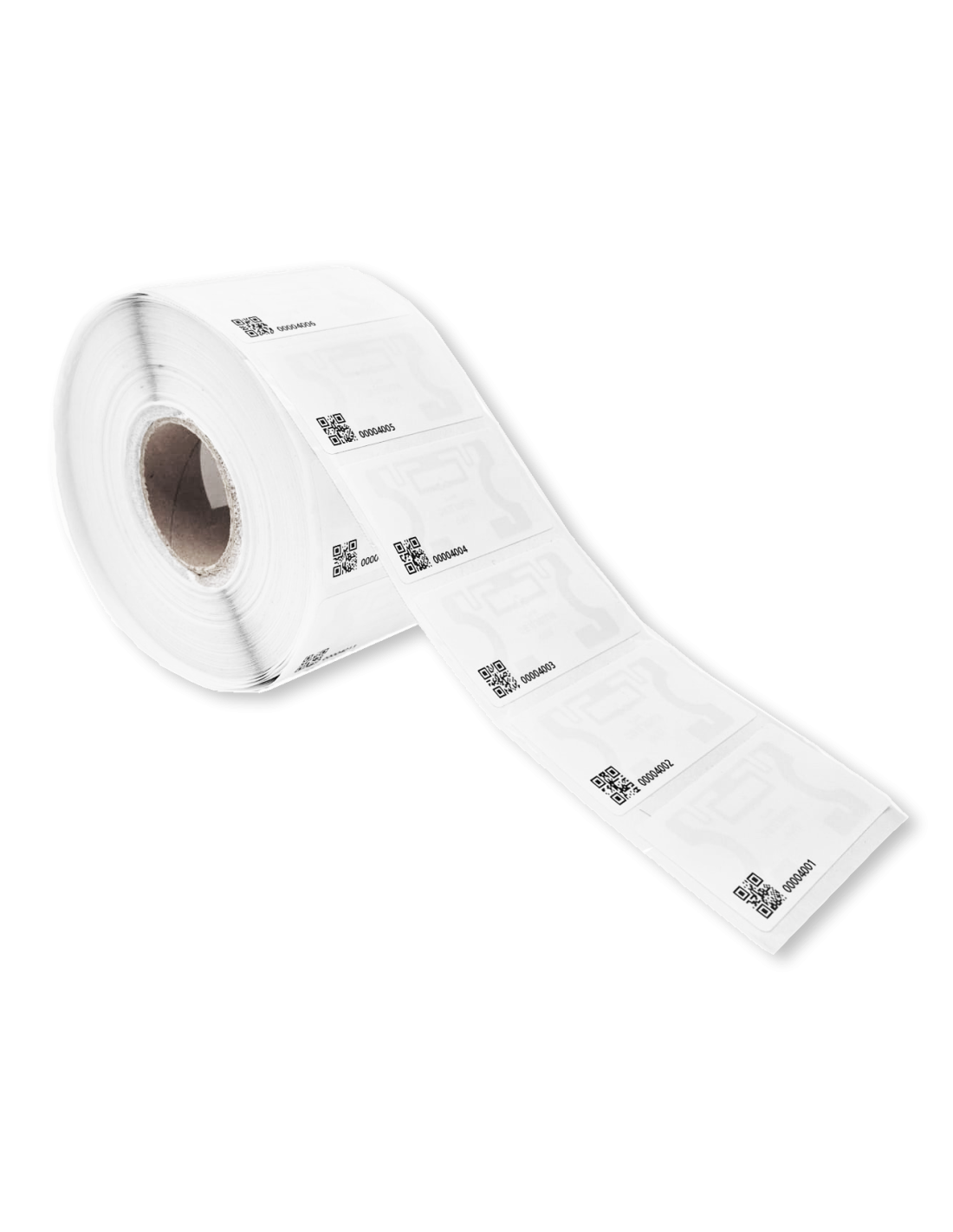
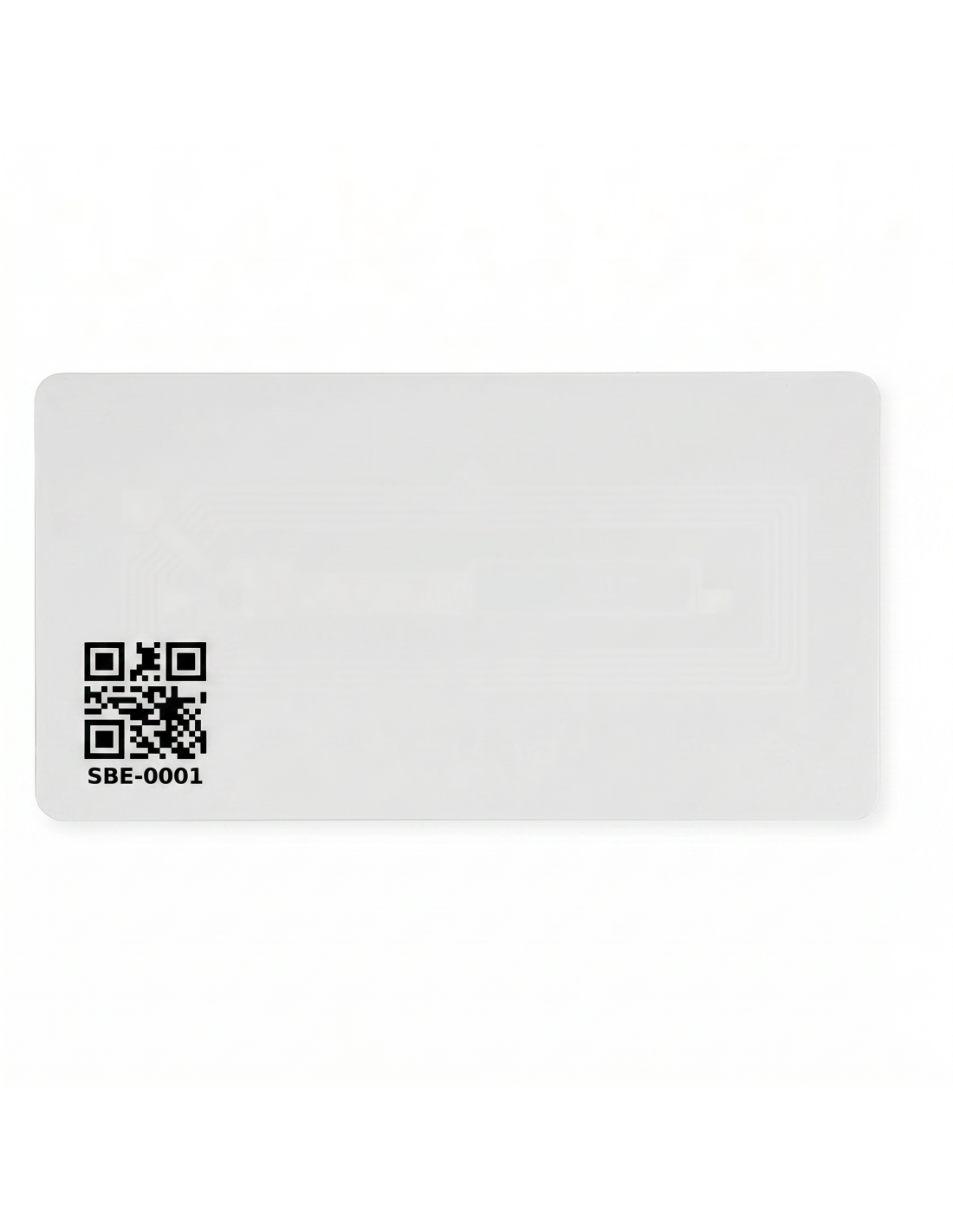
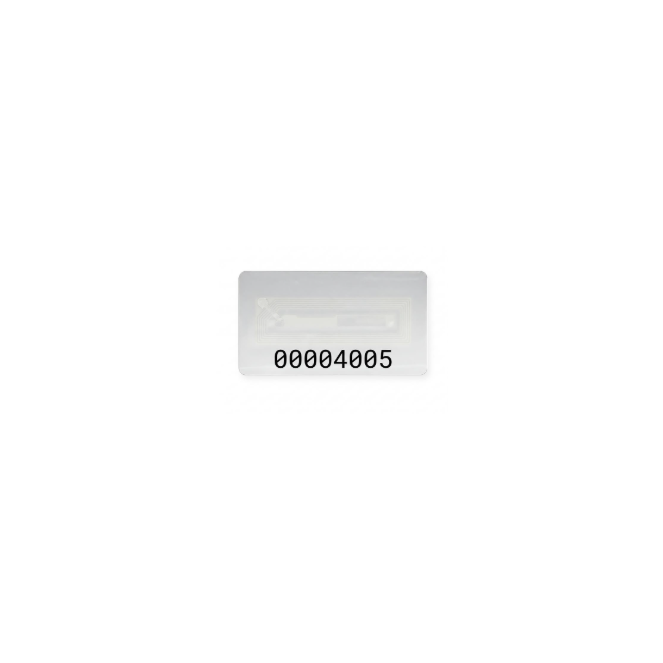
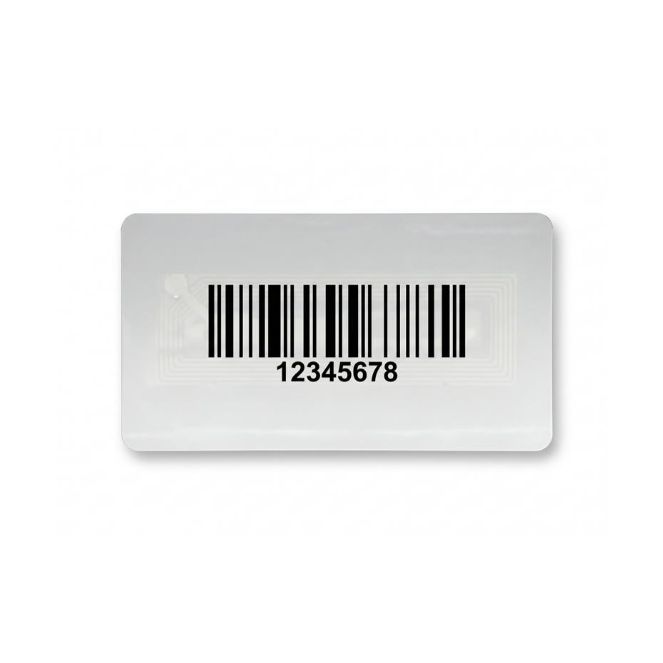
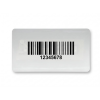
The Standard version is based on a PET wet inlay construction, supplied in an 86 × 54 mm format — equivalent in size to a credit card, sufficiently legible and comfortable for both manual and industrial application. It is fitted with either an NXP NTAG213 or Fudan F8213 chip, two widely deployed references within the NFC ecosystem and recognised by all compatible smartphones.
This configuration suits a wide range of non-metallic surfaces: documents, temporary visitor badges, furniture, indoor signage, and promotional media. The wet inlay ensures excellent adhesion on flat, clean surfaces, while the 40 mm core guarantees compatibility with industrial thermal transfer printers on the market.
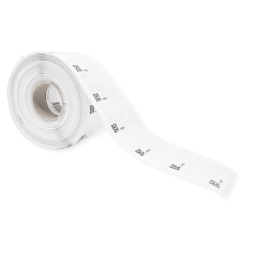
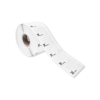
The standard packaging of 1,000 labels per roll meets the typical needs of SMEs and large accounts; larger deployments can be supplied in rolls of 5,000 on request. The label size can also be adapted to your target substrate as part of a custom manufacturing order.
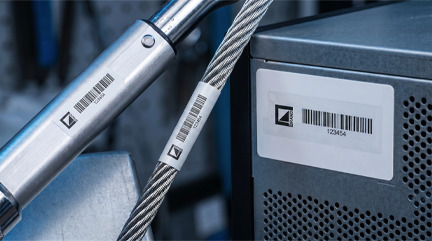
Metal absorbs and reflects radio waves, which disrupts the reading of a standard HF label applied directly onto steel, aluminium, or stainless steel. The On-Metal version corrects this issue through a technical PET substrate specifically designed to decouple the antenna from the metallic surface. The result is stable, reproducible reading where a Standard label would see its range drop to zero.
All these references are packaged in rolls of 1,000 labels on a 40 mm core, with an indicative production lead time of 9 to 10 working days after order confirmation. The PET construction ensures good mechanical durability and adequate resistance to common industrial operating conditions.

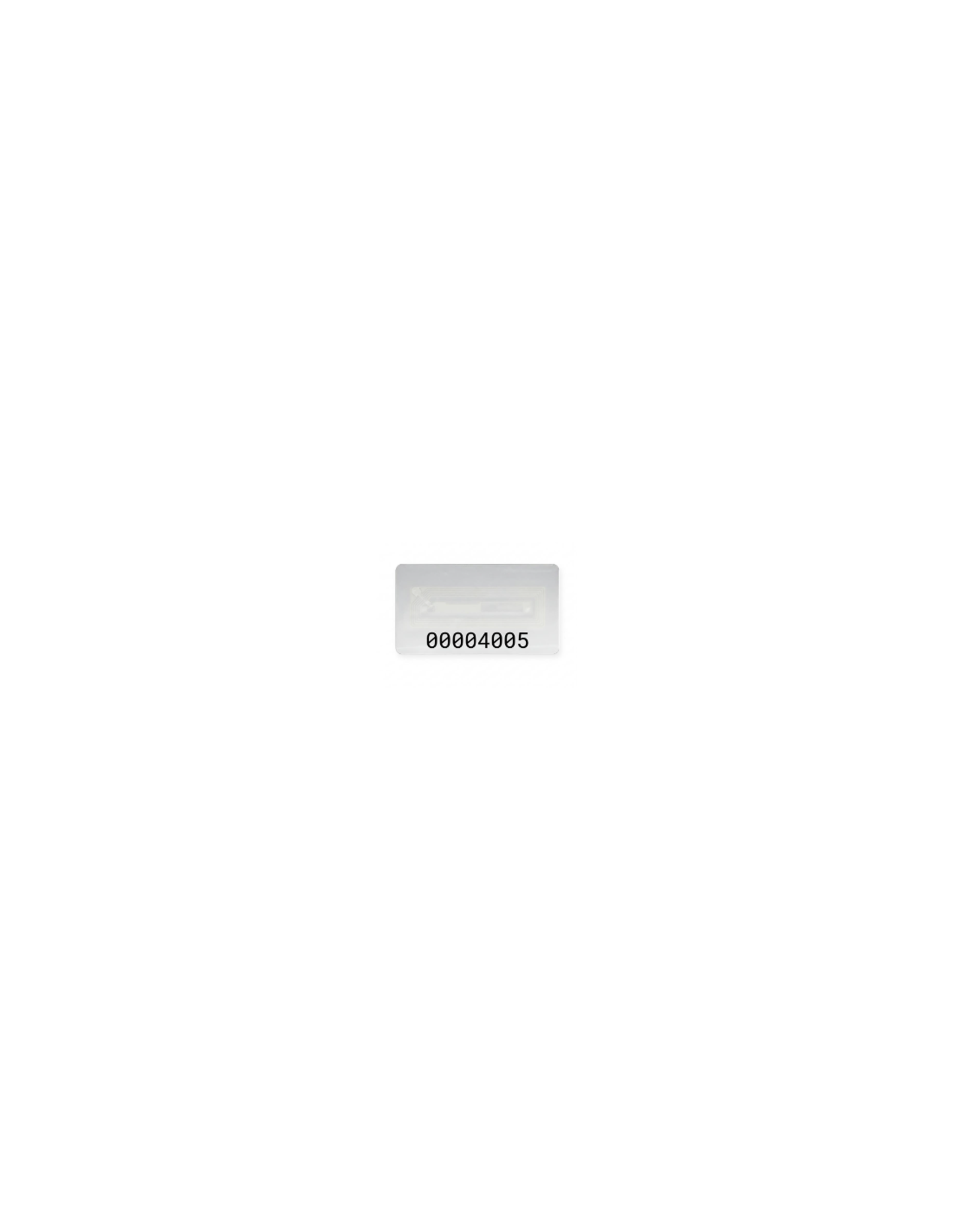
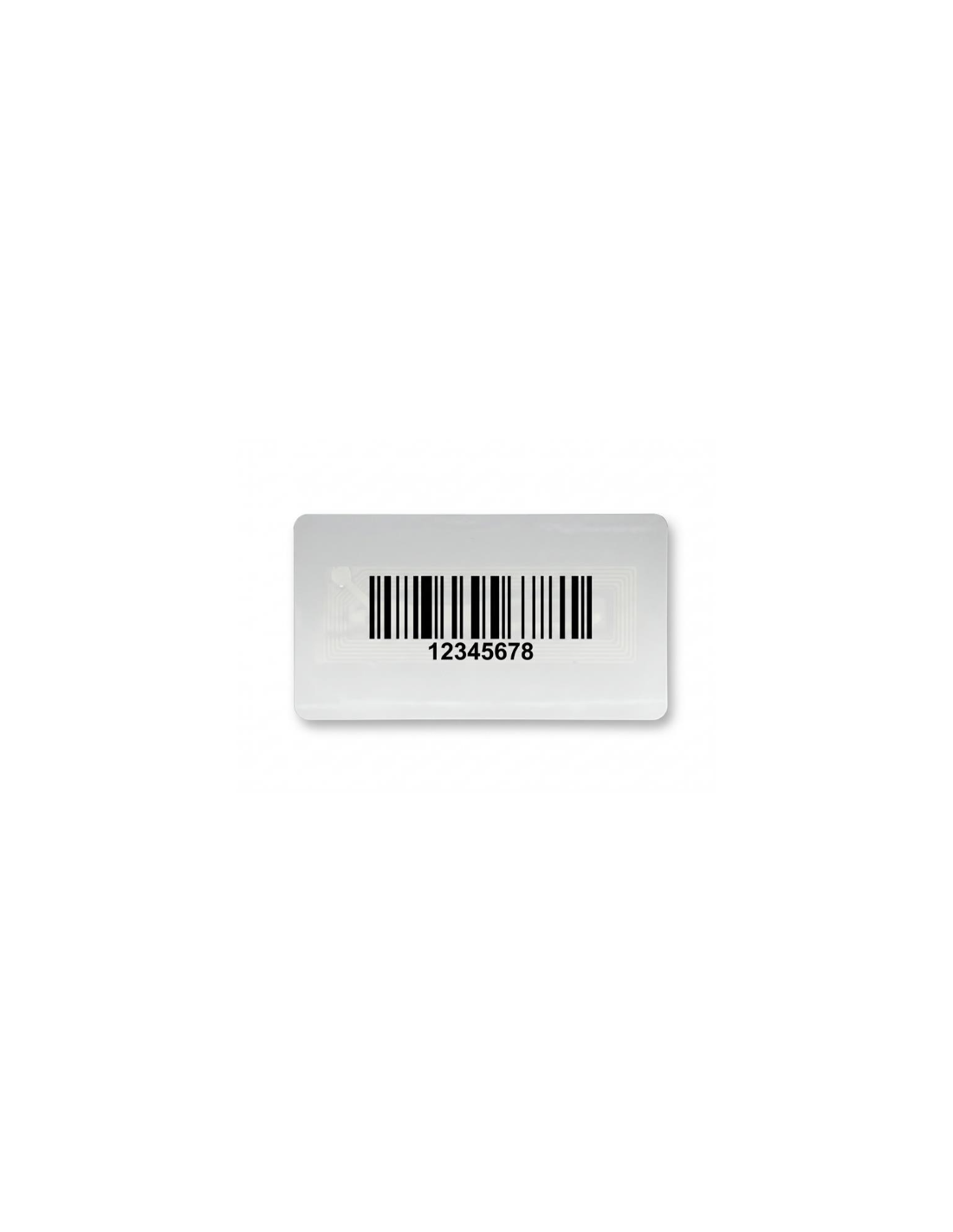
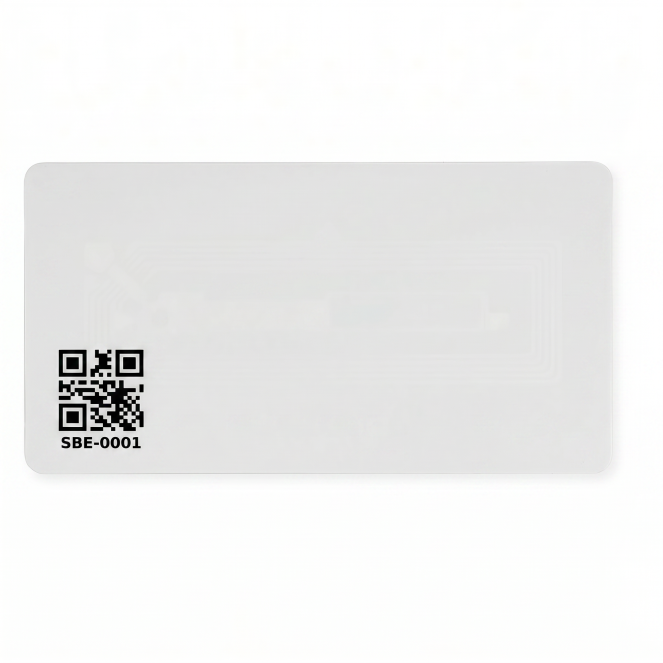
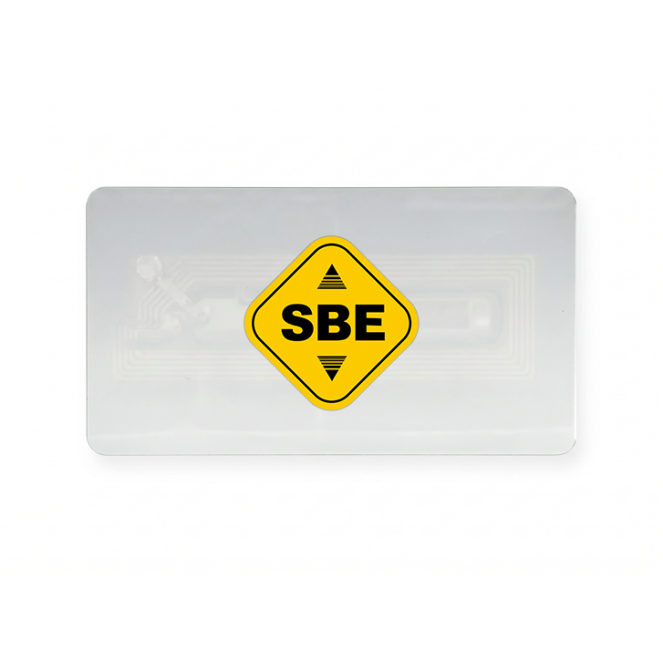
The value of an HF/NFC label is measured by what it contains. SBE Direct handles customisation at source to deliver labels that are immediately operational, with no in-house programming or printing required. Three levels are available at order, selectable from the product variants:
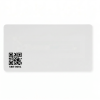
NDEF encoding covers the most common use cases: a URL pointing to a product page, a maintenance record, a certificate of authenticity, or a form; plain text; vCard; or a unique identifier. For colour printing, multi-zone layouts, or advanced customisation options, a dedicated quote request is available.

The versatility of customised HF/NFC labels makes them relevant across a wide range of contexts.
To understand how to integrate these labels into a complete asset management process, the RFID inventory guide details implementation principles and compatible software ecosystems.
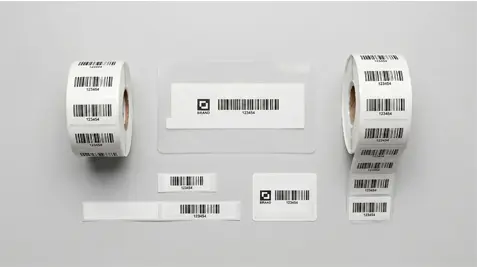
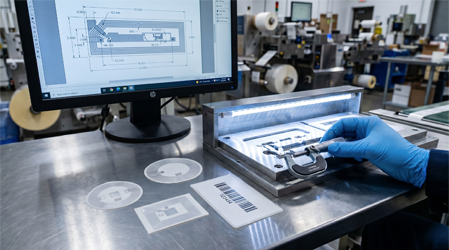
Beyond catalogue formats, SBE Direct supports its customers on custom HF/NFC RFID label manufacturing projects: specific format, NFC chip selection, adapted technical substrate, custom memory configuration.
This option covers requirements for non-standard formats (round label, reduced format for premium packaging, integration into a finished product), alternative chip selection (NTAG215, ICODE SLIX, MIFARE depending on application), or specific memory configuration.
HF/NFC RFID labels are generally supplied in rolls of 1,000 units, but other packaging options — such as rolls of 500 labels — can be considered on request. For any technical question, specific requirement, or custom project, please feel free to contact us to find a solution tailored to your application.
| Ref. | Personalization | Surface | Format | Unit price | Buy |
|---|---|---|---|---|---|
| MSE-RF-HF-NTAG213-86-NB | B&W logo + sequential printing | Any non-metallic surface (roll of 1000 labels) | 86 × 54 mm - NTAG213 | 5+ €833.00 10+ €715.00 50+ €584.00 | |
| MSE-RF-HF-FU213-86-NB | B&W logo + sequential printing | Any non-metallic surface (roll of 1000 labels) | 86x54 mm - Fudan213 | 5+ €833.00 10+ €715.00 50+ €584.00 | |
| MSE-RF-HF-OM-NTAG213-40-NB | B&W logo + sequential printing | Metal Surface – On-Metal (Roll 2 × 500 Labels) | 40×25 mm - NTAG213 | 5+ €758.00 10+ €722.00 50+ €680.00 | |
| MSE-RF-HF-OM-FM1108-56-NB | B&W logo + sequential printing | Metal Surface – On-Metal (Roll 2 × 500 Labels) | 56×18 mm - FuFM1108 | 5+ €589.00 10+ €548.00 50+ €511.00 | |
| MSE-RF-HF-OM-FU216-86-NB | B&W logo + sequential printing | Metal Surface – On-Metal (Roll 2 × 500 Labels) | 86 x 54 mm - Fudan216 | 5+ €1,439.00 10+ €1,403.00 50+ €1,362.00 | |
| MSE-RF-HF-OM-NTAG216-86-NB | B&W logo + sequential printing | Metal Surface – On-Metal (Roll 2 × 500 Labels) | 86 x 54 mm - Fudan216 | 5+ €1,746.00 10+ €1,709.00 50+ €1,673.00 | |
| MSE-RF-HF-NTAG213-86-EC-NB | Encoding + B&W logo + sequential printing | Any non-metallic surface (roll of 1000 labels) | 86 × 54 mm - NTAG213 | 5+ €881.00 10+ €757.00 50+ €616.00 | |
| MSE-RF-HF-FU213-86-EC-NB | Encoding + B&W logo + sequential printing | Any non-metallic surface (roll of 1000 labels) | 86x54 mm - Fudan213 | 5+ €881.00 10+ €757.00 50+ €616.00 | |
| MSE-RF-HF-OM-NTAG213-40-EC-NB | Encoding + B&W logo + sequential printing | Metal Surface – On-Metal (Roll 2 × 500 Labels) | 40×25 mm - NTAG213 | 5+ €827.00 10+ €791.00 50+ €749.00 | |
| MSE-RF-HF-OM-FM1108-56-EC-NB | Encoding + B&W logo + sequential printing | Metal Surface – On-Metal (Roll 2 × 500 Labels) | 56×18 mm - FuFM1108 | 5+ €658.00 10+ €617.00 50+ €581.00 | |
| MSE-RF-HF-OM-FU216-86-EC-NB | Encoding + B&W logo + sequential printing | Metal Surface – On-Metal (Roll 2 × 500 Labels) | 86 x 54 mm - Fudan216 | 5+ €1,508.00 10+ €1,471.00 50+ €1,430.00 | |
| MSE-RF-HF-OM-NTAG216-86-EC-NB | Encoding + B&W logo + sequential printing | Metal Surface – On-Metal (Roll 2 × 500 Labels) | 86 x 54 mm - Fudan216 | 5+ €1,814.00 10+ €1,777.00 50+ €1,741.00 | |
| MSE-RF-HF-NTAG213-86-EC | Encoding only | Any non-metallic surface (roll of 1000 labels) | 86 × 54 mm - NTAG213 | 5+ €812.00 10+ €697.00 50+ €564.00 | |
| MSE-RF-HF-FU213-86-EC | Encoding only | Any non-metallic surface (roll of 1000 labels) | 86x54 mm - Fudan213 | 5+ €812.00 10+ €697.00 50+ €564.00 | |
| MSE-RF-HF-OM-NTAG213-40-EC | Encoding only | Metal Surface – On-Metal (Roll 2 × 500 Labels) | 40×25 mm - NTAG213 | 5+ €796.00 10+ €758.00 50+ €718.00 | |
| MSE-RF-HF-OM-FM1108-56-EC | Encoding only | Metal Surface – On-Metal (Roll 2 × 500 Labels) | 56×18 mm - FuFM1108 | 5+ €626.00 10+ €584.00 50+ €548.00 | |
| MSE-RF-HF-OM-FU216-86-EC | Encoding only | Metal Surface – On-Metal (Roll 2 × 500 Labels) | 86 x 54 mm - Fudan216 | 5+ €1,476.00 10+ €1,439.00 50+ €1,398.00 | |
| MSE-RF-HF-OM-NTAG216-86-EC | Encoding only | Metal Surface – On-Metal (Roll 2 × 500 Labels) | 86 x 54 mm - Fudan216 | 5+ €1,782.00 10+ €1,746.00 50+ €1,709.00 |
You might also like