Shopping Cart
There are no more items in your cart













- New
.jpg "the three layers of the VOID label")
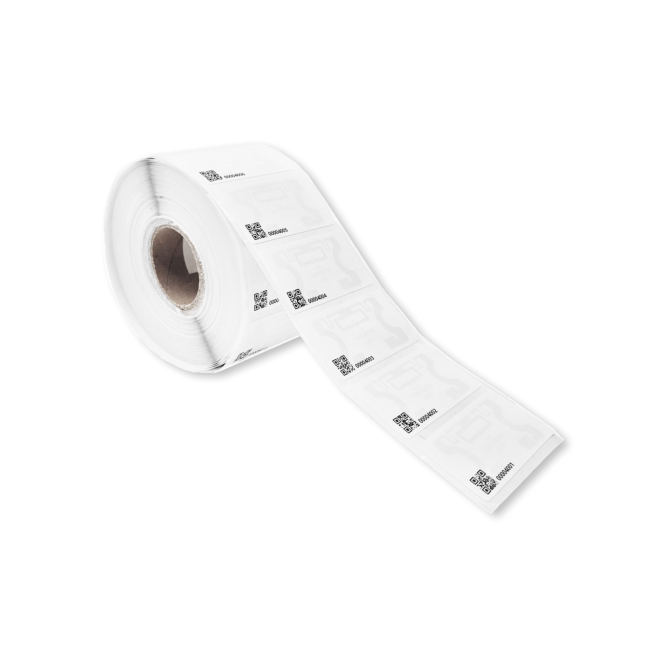
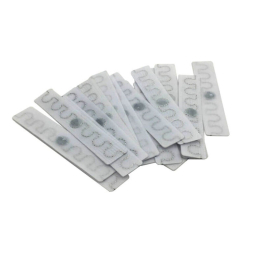
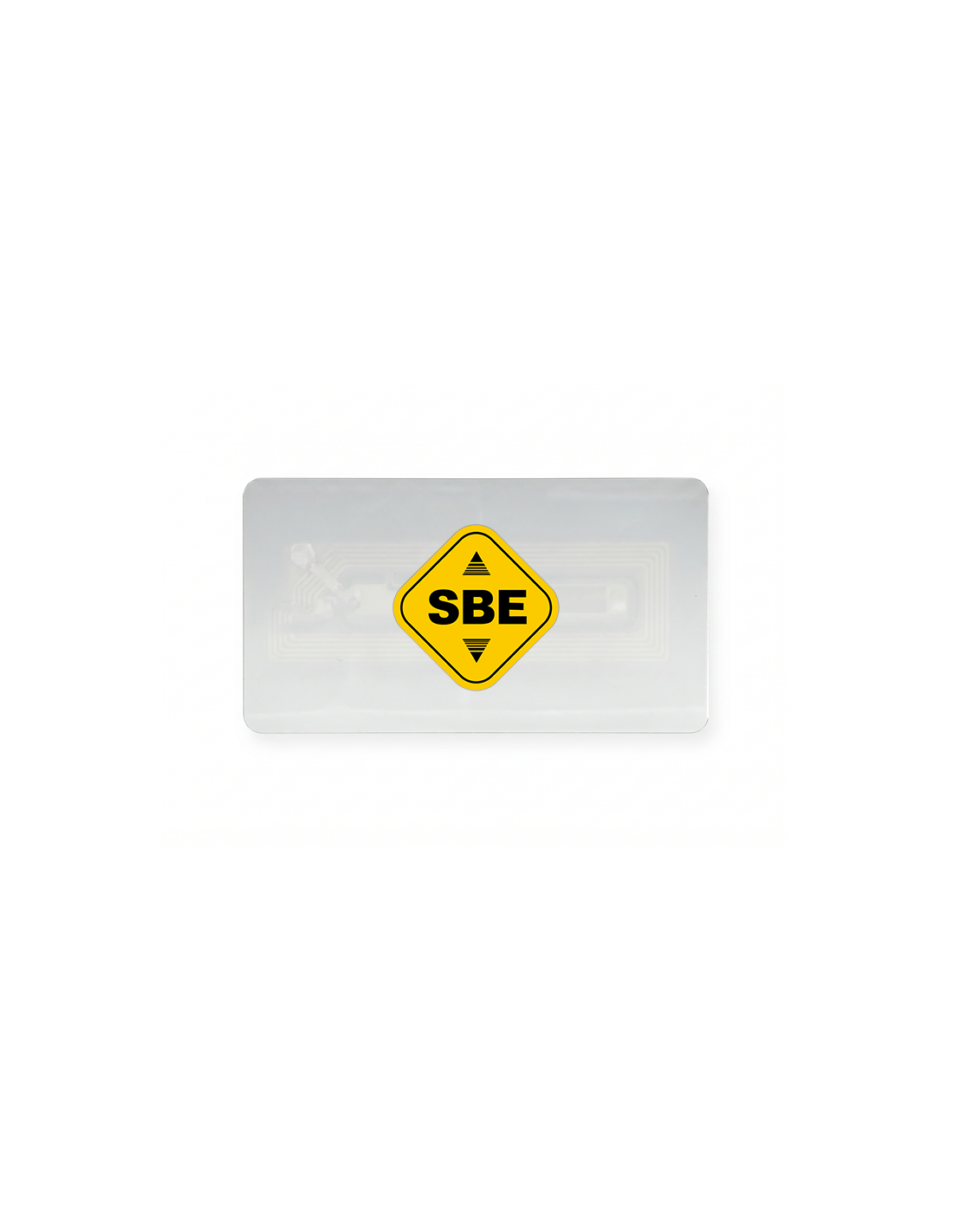
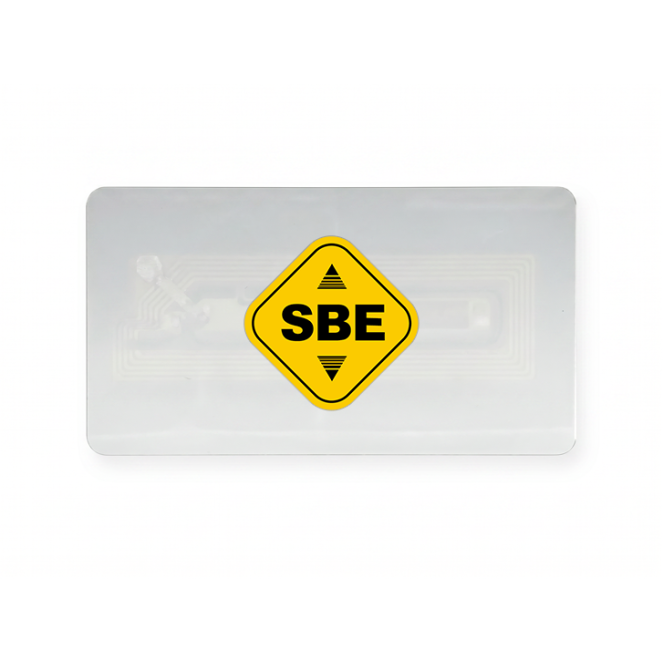
Customised UHF RFID labels are designed for companies that want to automate the reading, identification, and inventory of their assets without direct line of sight. Read at a distance by a fixed or handheld UHF RFID reader, they enable on-the-fly inventory, continuous traceability of logistics flows, and precise asset management.
The SBE Direct range is divided into two technical families, to be selected based on the surface to be labelled. For non-metallic surfaces (cardboard, plastics, wood, textiles), the Standard UHF RFID label version offers a flexible, cost-effective wet inlay format. For metallic surfaces (industrial equipment, machinery, IT racks, containers), the On-Metal UHF RFID label version incorporates a 1.2 mm technical PET substrate that isolates the antenna from the metal and guarantees stable reading.
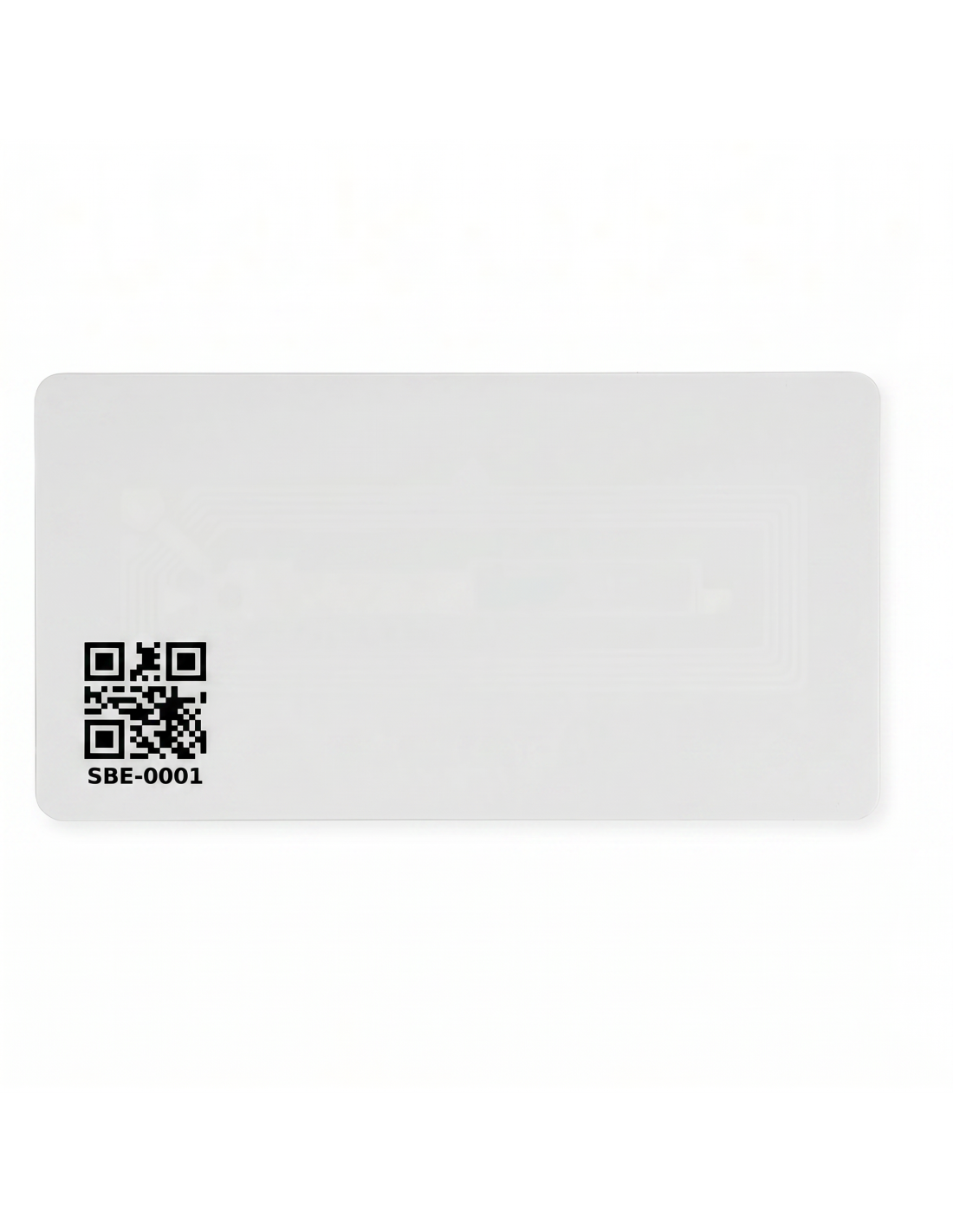
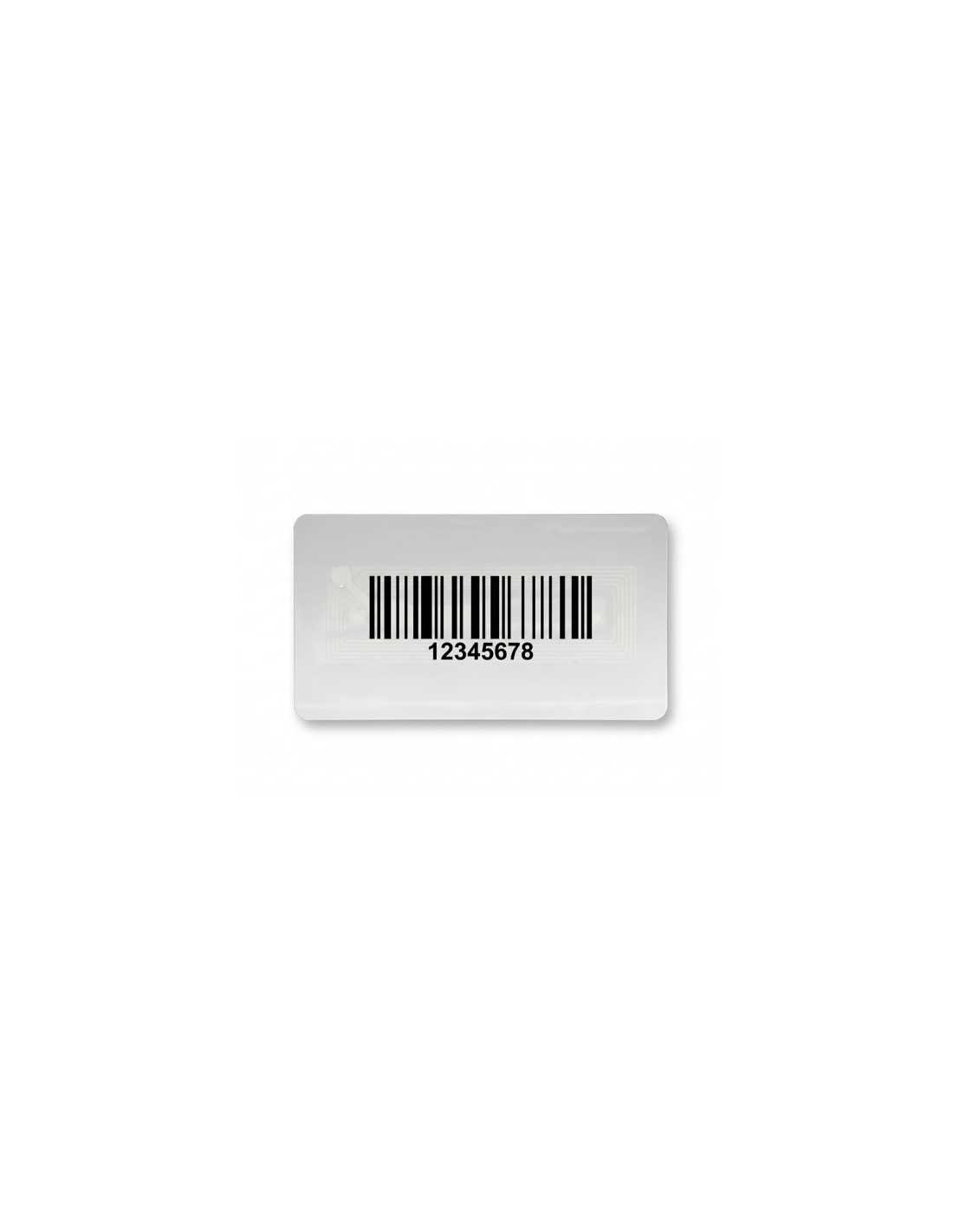
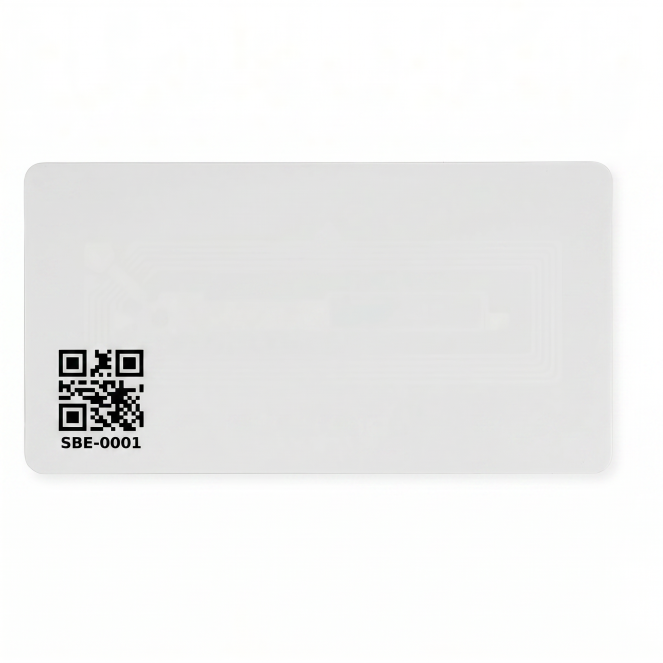
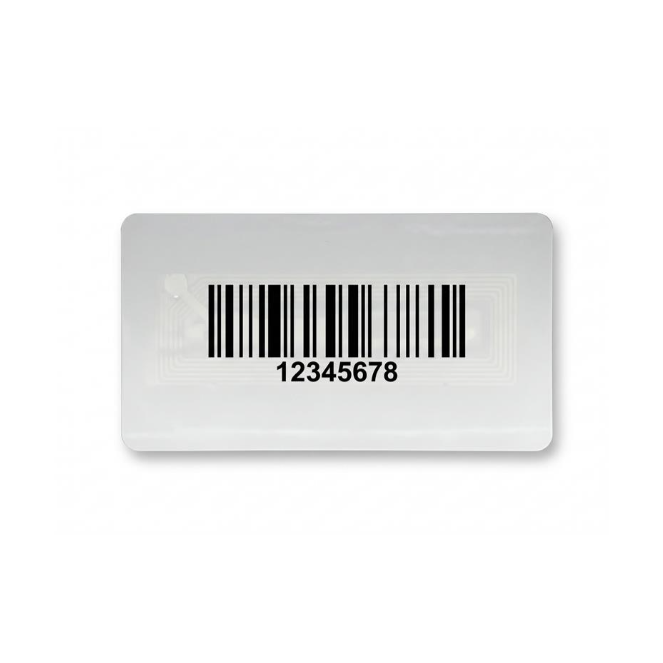
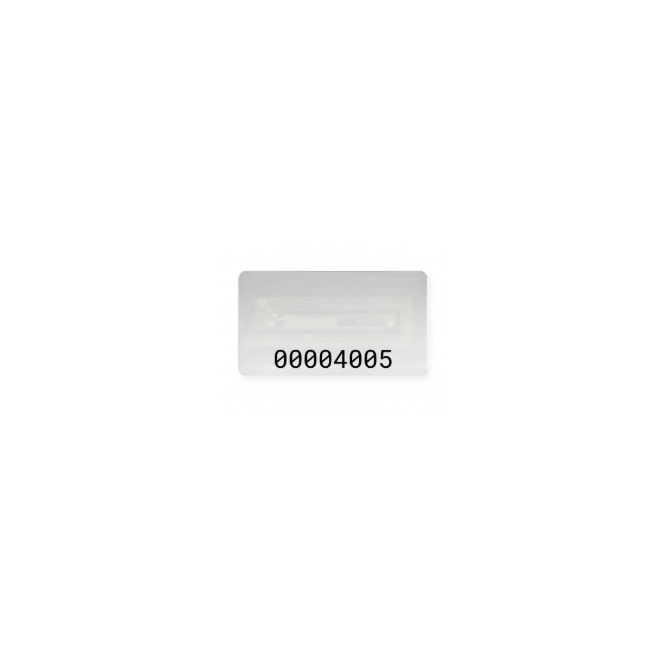
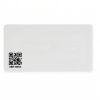
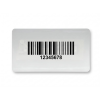
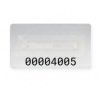
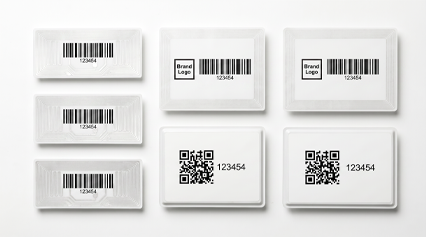
Each reference is delivered pre-encoded and customised to your requirements: EPC encoding, variable black-and-white printing (serial number, barcode, monochrome logo), or a combination of both.
This flexibility allows labels to be integrated directly into your information system with no intermediate manual programming step. In a context where logistics performance has become essential, RFID and traceability technologies are establishing themselves as indispensable solutions for reliable, automated product tracking.
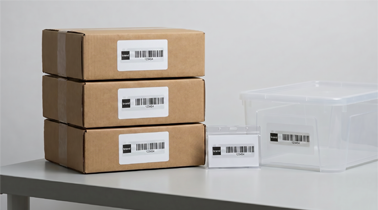
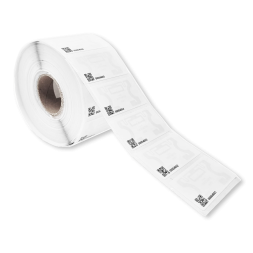
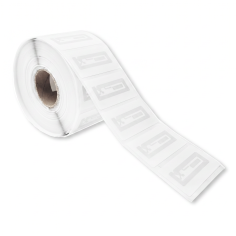
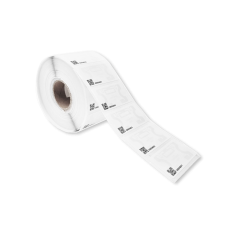
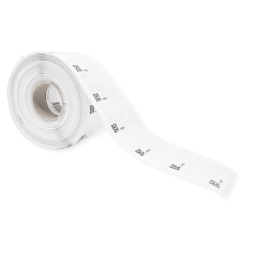
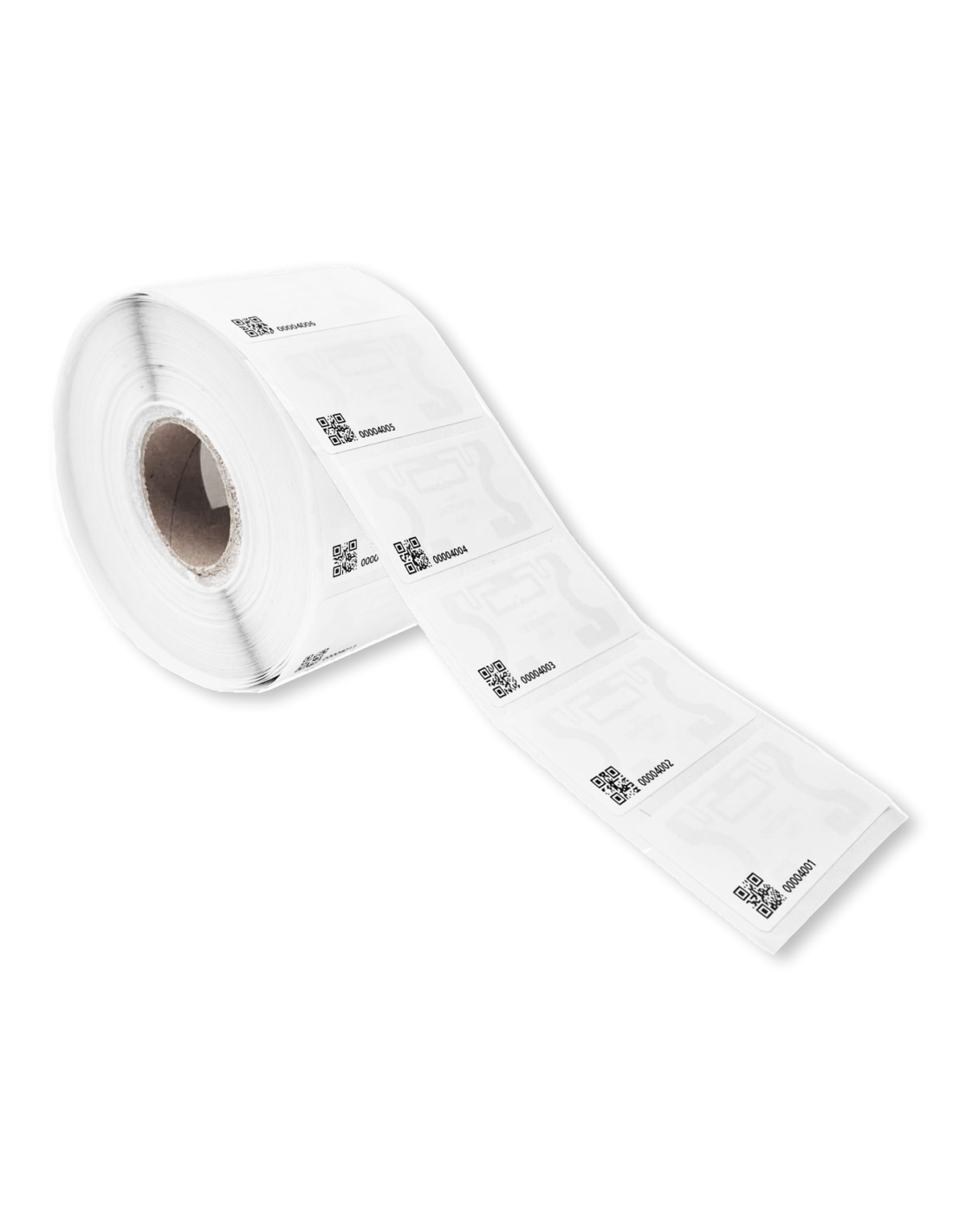
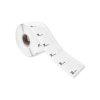
The Standard version is built on a wet inlay PET construction, suitable for application on documents, rigid plastic surfaces, equipment, and any non-metallic substrate. Two formats are available as standard: a 53 × 33 mm format fitted with the NXP UCODE 9/9xe chip, supplied in rolls of 1,000 labels, and a compact 44 × 18 mm format with the same chip, tuned for the ETSI 865–868 MHz band and designed for European applications.
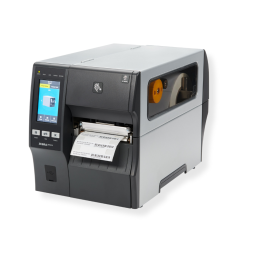
These Standard UHF labels are particularly suited to high-volume operations: labelling cartons at the end of production lines, pallet identification at logistics docks, and marking of sensitive documents. The 40 mm core ensures direct compatibility with most thermal transfer industrial RFID printers.
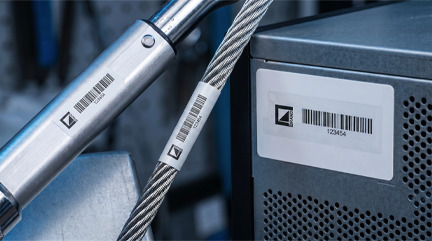
The presence of metal disrupts the radiation pattern of standard UHF RFID antennas. The On-Metal version resolves this constraint with a 1.2 mm technical PET substrate that isolates the antenna from the metallic surface and enables stable, reproducible reading. Three formats are available: 55 × 15 mm and 60 × 25 mm fitted with the Impinj Monza R6P chip, and 80 × 40 mm fitted with the NXP U9 / U9xe chip. Each format covers the worldwide 860–960 MHz band.
The On-Metal family targets IT asset management applications (servers, racks, network equipment), industrial maintenance (machinery, tools, moulds), logistics equipment traceability (trolleys, containers, metal bins), and fixed asset management. Packaging ranges from 400 to 600 labels per roll depending on the format, on a 40 mm core compatible with industrial printers.

Three customisation options are available at order, selectable directly from the product variants: encoding only, logo and barcode or sequential number printing, or encoding combined with logo and barcode or sequential number printing.
Encoding consists of programming the EPC or a unique identifier into the chip memory before delivery. Variable printing allows different data to be applied to each label, such as a sequential serial number, a 1D or 2D barcode, an internal reference, or a monochrome logo.
This industrial customisation eliminates in-house programming and printing steps, accelerates label commissioning, and guarantees consistency between the encoded RFID identifier and the printed information. For specific requirements involving colour printing or multi-zone layouts, additional options are available on request for quotation. You can also consult our comprehensive RFID inventory guide to understand how to integrate these labels into a global traceability process.
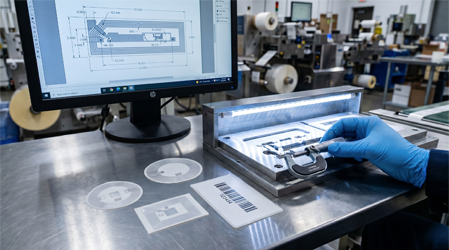
Beyond the standard catalogue formats, SBE Direct supports its customers on custom UHF RFID label manufacturing projects: specific format, chip selection, technical substrate, memory configuration. The minimum manufacturing quantity for a custom format is 10 rolls. Additional tooling fees of €600 apply once only for the creation of new tooling. These fees do not apply to standard catalogue formats. To assess the feasibility of your project, contact our technical team via a personalised quote request.
For large-scale industrial and logistics projects, SBE Direct offers an extended packaging option in rolls of 5,000 labels, available on request. This format optimises multi-site deployments, continuous-flow production lines, and high-cadence labelling operations by reducing the frequency of roll changes on industrial RFID printers. It also ensures better production consistency (same encoding batch, same print run) across large volumes. This option should be specified at the time of the quote request: it applies to both the Standard and On-Metal versions, and remains compatible with the standard 40 mm core.
| Ref. | Personalization | Surface | Format | Unit price | Buy |
|---|---|---|---|---|---|
| MSE-RF-UHF-NXP9-53-NB | B&W logo + sequential printing | Any non-metallic surface (roll of 1000 labels) | 53 × 33 mm - NXP UCODE9 | 5+ €416.00 10+ €298.00 50+ €211.00 | |
| MSE-RF-UHF-NXP9xe-53-NB | B&W logo + sequential printing | Any non-metallic surface (roll of 1000 labels) | 53 × 33 mm - NXP UCODE9xe | 5+ €416.00 10+ €298.00 50+ €211.00 | |
| MSE-RF-UHF-NXP9-44-NB | B&W logo + sequential printing | Any non-metallic surface (roll of 1000 labels) | 44 × 18 mm - NXP UCODE9 | 5+ €416.00 10+ €298.00 50+ €211.00 | |
| MSE-RF-UHF-NXP9xe-44-NB | B&W logo + sequential printing | Any non-metallic surface (roll of 1000 labels) | 44 × 18 mm - NXP UCODE9xe | 5+ €416.00 10+ €298.00 50+ €211.00 | |
| MSE-RF-UHF-OM-IMR6P-55-NB | B&W logo + sequential printing | Metal Surface – On-Metal (Roll 2 × 500 Labels) | 55 x 15 x 1.2 mm - Impinj MonzaR6P | 5+ €868.00 10+ €822.00 50+ €731.00 | |
| MSE-RF-UHF-OM-IMR6P-60-NB | B&W logo + sequential printing | Metal Surface – On-Metal (Roll 2 × 500 Labels) | 60 x 25 x 1.2 mm - Impinj MonzaR6P | 5+ €868.00 10+ €822.00 50+ €731.00 | |
| MSE-RF-UHF-OM-NXPU9-80-NB | B&W logo + sequential printing | Metal Surface – On-Metal (Roll 2 × 500 Labels) | 80 x 40 x 1.2 mm - NXP UCODE9 | 5+ €868.00 10+ €822.00 50+ €731.00 | |
| MSE-RF-UHF-OM-NXPU9xe-80-NB | B&W logo + sequential printing | Metal Surface – On-Metal (Roll 2 × 500 Labels) | 80 x 40 x 1.2 mm - NXP UCODE9xe | 5+ €868.00 10+ €822.00 50+ €731.00 | |
| MSE-RF-UHF-NXP9-53-EC-NB | Encoding + B&W logo + sequential printing | Any non-metallic surface (roll of 1000 labels) | 53 × 33 mm - NXP UCODE9 | 5+ €367.00 10+ €275.00 50+ €190.00 | |
| MSE-RF-UHF-NXP9xe-53-EC-NB | Encoding + B&W logo + sequential printing | Any non-metallic surface (roll of 1000 labels) | 53 × 33 mm - NXP UCODE9xe | 5+ €389.00 10+ €275.00 50+ €190.00 | |
| MSE-RF-UHF-NXP9-44-EC-NB | Encoding + B&W logo + sequential printing | Any non-metallic surface (roll of 1000 labels) | 44 × 18 mm - NXP UCODE9 | 5+ €389.00 10+ €275.00 50+ €190.00 | |
| MSE-RF-UHF-NXP9xe-44-EC-NB | Encoding + B&W logo + sequential printing | Any non-metallic surface (roll of 1000 labels) | 44 × 18 mm - NXP UCODE9xe | 5+ €389.00 10+ €275.00 50+ €190.00 | |
| MSE-RF-UHF-OM-IMR6P-55-EC-NB | Encoding + B&W logo + sequential printing | Metal Surface – On-Metal (Roll 2 × 500 Labels) | 55 x 15 x 1.2 mm - Impinj MonzaR6P | 5+ €868.00 10+ €822.00 50+ €731.00 | |
| MSE-RF-UHF-OM-IMR6P-60-EC-NB | Encoding + B&W logo + sequential printing | Metal Surface – On-Metal (Roll 2 × 500 Labels) | 60 x 25 x 1.2 mm - Impinj MonzaR6P | 5+ €868.00 10+ €822.00 50+ €731.00 | |
| MSE-RF-UHF-OM-NXPU9-80-EC-NB | Encoding + B&W logo + sequential printing | Metal Surface – On-Metal (Roll 2 × 500 Labels) | 80 x 40 x 1.2 mm - NXP UCODE9 | 5+ €868.00 10+ €822.00 50+ €731.00 | |
| MSE-RF-UHF-OM-NXPU9xe-80-EC-NB | Encoding + B&W logo + sequential printing | Metal Surface – On-Metal (Roll 2 × 500 Labels) | 80 x 40 x 1.2 mm - NXP UCODE9xe | 5+ €868.00 10+ €822.00 50+ €731.00 | |
| MSE-RF-UHF-NXP9-53-EC | Encoding only | Any non-metallic surface (roll of 1000 labels) | 53 × 33 mm - NXP UCODE9 | 5+ €382.00 10+ €269.00 50+ €185.00 | |
| MSE-RF-UHF-NXP9xe-53-EC | Encoding only | Any non-metallic surface (roll of 1000 labels) | 53 × 33 mm - NXP UCODE9xe | 5+ €382.00 10+ €269.00 50+ €185.00 | |
| MSE-RF-UHF-NXP9-44-EC | Encoding only | Any non-metallic surface (roll of 1000 labels) | 44 × 18 mm - NXP UCODE9 | 5+ €382.00 10+ €269.00 50+ €185.00 | |
| MSE-RF-UHF-NXP9xe-44-EC | Encoding only | Any non-metallic surface (roll of 1000 labels) | 44 × 18 mm - NXP UCODE9xe | 5+ €382.00 10+ €269.00 50+ €185.00 | |
| MSE-RF-UHF-OM-IMR6P-55-EC | Encoding only | Metal Surface – On-Metal (Roll 2 × 500 Labels) | 55 x 15 x 1.2 mm - Impinj MonzaR6P | 5+ €868.00 10+ €822.00 50+ €731.00 | |
| MSE-RF-UHF-OM-IMR6P-60-EC | Encoding only | Metal Surface – On-Metal (Roll 2 × 500 Labels) | 60 x 25 x 1.2 mm - Impinj MonzaR6P | 5+ €868.00 10+ €822.00 50+ €731.00 | |
| MSE-RF-UHF-OM-NXPU9-80-EC | Encoding only | Metal Surface – On-Metal (Roll 2 × 500 Labels) | 80 x 40 x 1.2 mm - NXP UCODE9 | 5+ €868.00 10+ €822.00 50+ €731.00 | |
| MSE-RF-UHF-OM-NXPU9xe-80-EC | Encoding only | Metal Surface – On-Metal (Roll 2 × 500 Labels) | 80 x 40 x 1.2 mm - NXP UCODE9xe | 5+ €868.00 10+ €822.00 50+ €731.00 |
You might also like