UHF RFID has become a key technology for companies that need reliable, fast, and automated asset traceability. The question is no longer “should we improve asset traceability?”, but “how can we identify and track assets without manual scanning?” Passive UHF RFID systems are widely used in industrial environments because they enable long-range reading, bulk identification, and faster inventory operations.

The rise of an increasingly connected industry and the growing complexity of global supply chains have forced companies to transform the way they identify and track their assets. At the heart of this transformation, Ultra-High Frequency radio frequency identification technology has established itself as the reference standard for companies seeking to combine accuracy, speed, and automation.

While traditional barcode-based systems are reaching their physical limits in the face of the need for mass reading without direct line of sight, UHF offers a solution whose importance in modern operations management continues to grow. This technology forms the central pillar of a real-time visibility strategy essential for inventory optimization and supply chain flow security.

What is UHF RFID?

RFID UHF, standing for "Ultra High Frequency", refers to a radio frequency band used to transmit information contactlessly, particularly in RFID systems. In the field of identification and traceability, long-range RFID technology enables the reading and identification of tags or badges from a distance, without needing to aim at them precisely or scan them one by one under a reader.

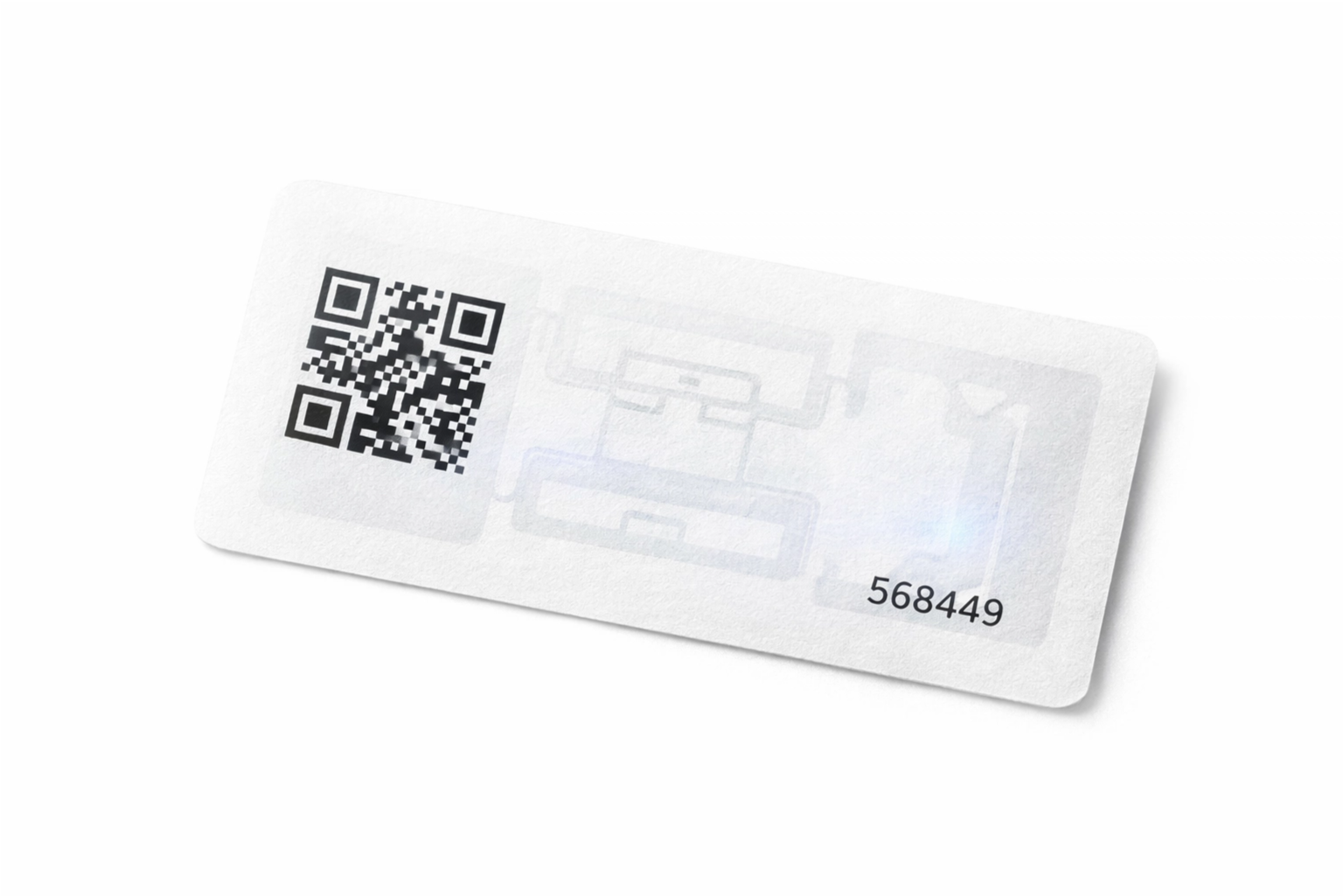
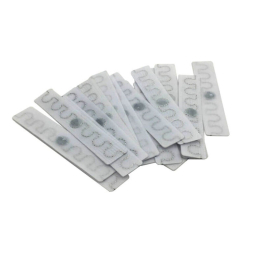
UHF-TAG

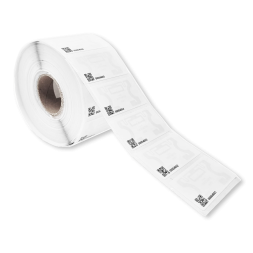
Concretely, each item (asset, product, equipment, textile, badge, etc.) is fitted with a tag containing a UHF RFID chip and an antenna, which communicate with a UHF reader to automatically transmit identification data.

For businesses, the value of this solution is twofold: on one hand, fast and simultaneous reading of multiple items, and on the other, more reliable identification than manual methods or barcode-only systems. It is this combination, powered by wireless technology, that makes it an essential lever for:

  • Automating inventory counts.
  • Tracking asset movements.
  • Securing access to sensitive areas.

And ultimately, every business application and every industrial application. By harnessing the power of UHF radio, companies transform their industrial traceability into an autonomous, high-performance system.

Key Characteristics of RFID UHF Technology

The performance of a UHF RFID system is tied to its wavelength and the quality of its antenna. Within the radio frequency spectrum, UHF radio frequency at 868 MHz enables efficient propagation through various non-metallic materials. This frequency band offers a long-range reading distance of up to 12 to 15 meters for passive tags. This technical characteristic is fundamental in storage environments where assets are stacked or located at height, making direct line of sight impossible. The choice of this spectral range is therefore strategic for traceability.

This remote identification solution differs from proximity technologies such as NFC (13.56 MHz) operating on the HF band, through its ability to identify objects at several meters distance without direct line of sight. This long-range wireless communication is the key advantage of long-range technology.

The architecture of this radio standard relies on the interaction between a reader and a tag. There are three main categories of tags, each meeting specific performance and cost requirements:

  • Passive tags: they have no internal battery. They use the energy from the electromagnetic signal emitted by the reader to power their chip and return data via a backscatter mechanism. Their cost is very low, enabling unit-level tagging across massive product volumes. Their range can reach 10 to 25 meters depending on the environment.
  • Active tags: equipped with a battery, they emit their own signal at regular intervals or upon an event. This enables reading ranges from 30 to over 100 meters. They are bulkier, more expensive, and require battery replacement maintenance, but are indispensable for mobile tracking of containers, vehicles, or heavy industrial equipment requiring long-distance active communication.
  • Semi-passive tags (BAP : Battery-Assisted Passive): they integrate a battery to power internal circuits and sensors (temperature, humidity), but use the reader's signal for data transmission. They deliver superior performance compared to passive tags in harsh environments while maintaining an extended lifespan.

Choosing the right tag category is therefore not a minor technical detail, it is a strategic decision that directly conditions the reliability, scalability, and total cost of ownership of the entire UHF RFID traceability system.

How It Works: The Backscatter Mechanism

Bien que les réglementations spécifiques, comme celles de l'Union européenne et de l'ANFR en France, délimitent des bandes précises pour éviter les interférences avec les services de télécommunications.

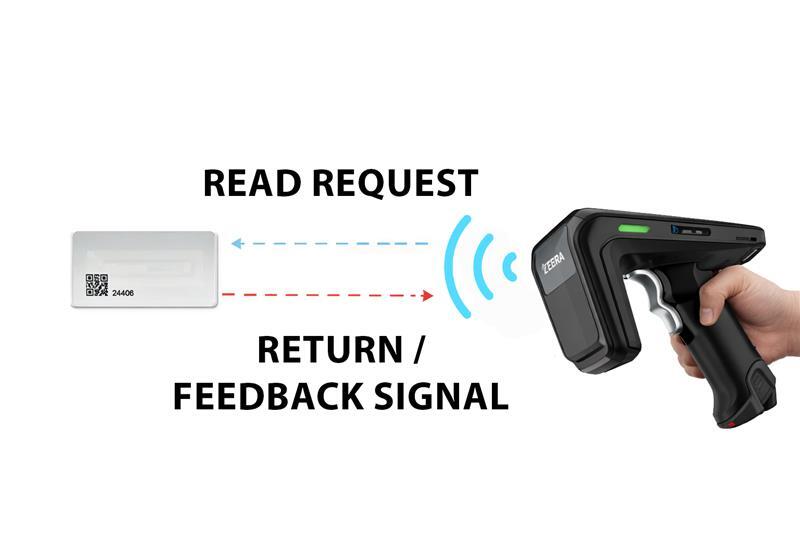
Unlike lower-frequency standards (LF or HF), the long-range standard uses the physical principle of far-field backscatter coupling. This mechanism relies on the ability of a UHF RFID reader to emit an electromagnetic wave, which, once received by the tag's antenna, is modulated and reflected back to transmit the data stored in the chip. This process establishes a reliable data link between the reader and the tag.

RFID UHF backscatter diagram: reader emits electromagnetic wave, passive tag modulates and reflects data back (860-960 MHz)

Note: thanks to backscatter, this technology enables an entire pallet to be scanned in one second without opening the boxes where HF or LF still require item-by-item reading.

What Are the Differences Between UHF and Other Frequency Bands?

RFID technologies UHF, HF and LF differ in their radio frequency, reading range and typical use cases. UHF RFID technology stands out in particular for its long read range and its ability to read a large number of tags simultaneously, making it especially well suited for logistics applications and large-scale inventory management.

CharacteristicUltra-High Frequency (UHF)High Frequency (HF/NFC)Low Frequency (LF)
Frequency Range860 – 960 MHz13.56 MHz125 – 134 kHz
Coupling MechanismBackscatter (far field)Inductive (near field)Inductive (near field)
Data Transfer SpeedVery highHighLow
Read RangeUp to 15 m< 1 m< 10 cm
Bulk Reading> 1,000 tags / secondLimitedImpossible (one at a time)
Ideal Use CaseLogistics, inventory, supply chainContactless payment, ticketingAutomotive immobilizer
InterferencePasses through cardboard, wood; sensitive to liquids/metalsLess sensitive to liquidsUnaffected by metal and water

 
Passive long-range RFID technology does not require any battery. Among RFID technologies, UHF is now the most widely used for logistics traceability and automated inventory management. Its long read range and its ability to simultaneously read multiple tags make it an ideal solution for asset management, retail and supply chain operations.

Which standards govern UHF RFID?

Passive UHF RFID is mainly based on the EPC Gen2 standard and the ISO/IEC 18000-63 standard. These frameworks define the communication rules between UHF RFID readers and tags, helping ensure equipment interoperability in industrial, logistics and retail environments.

VHF vs UHF: Which Frequency Should You Choose?

An important technical distinction must be made regarding the comparison between long-range RFID and VHF. In professional environments, this frequency range is preferred for indoor communications (walkie-talkies) because it has a superior ability to travel through and penetrate physical barriers such as concrete or wood.

This property of penetration and reflection is found directly in UHF RFID, which explains its remarkable effectiveness in dense industrial warehouses. Where VHF (Very High Frequency), with its longer waves, is ideal for large open outdoor spaces, UHF remains the only technology capable of guaranteeing precise asset management in enclosed and cluttered environments.

Good to know: while UHF delivers the highest performance indoors, it naturally encounters limitations with pure metal and liquids, which can reflect or absorb the signal. For these specific environments (drum storage, metal structures, engines), it is recommended to use "On-Metal" UHF tags purpose-built industrial RFID labels designed for these conditions. These are fitted with a specific insulating layer that preserves the full read power of UHF, even on conductive surfaces.

What Are the Main Industries Using RFID UHF Technology?

UHF RFID technology (Ultra High Frequency) is revolutionizing the way companies manage their assets, inventories, and daily operations. Thanks to its read range of up to 10 to 15 meters and its ability to simultaneously identify hundreds of items, this technology has established itself as a standard across numerous industries. Here are the four major sectors where UHF RFID is transforming professional practices.

Logistics

The logistics sector was one of the earliest adopters of UHF RFID technology, particularly passive RFID systems and for good reason: the productivity gains are spectacular. This technology makes it possible to radically transform the management of goods flows, from storage to delivery.

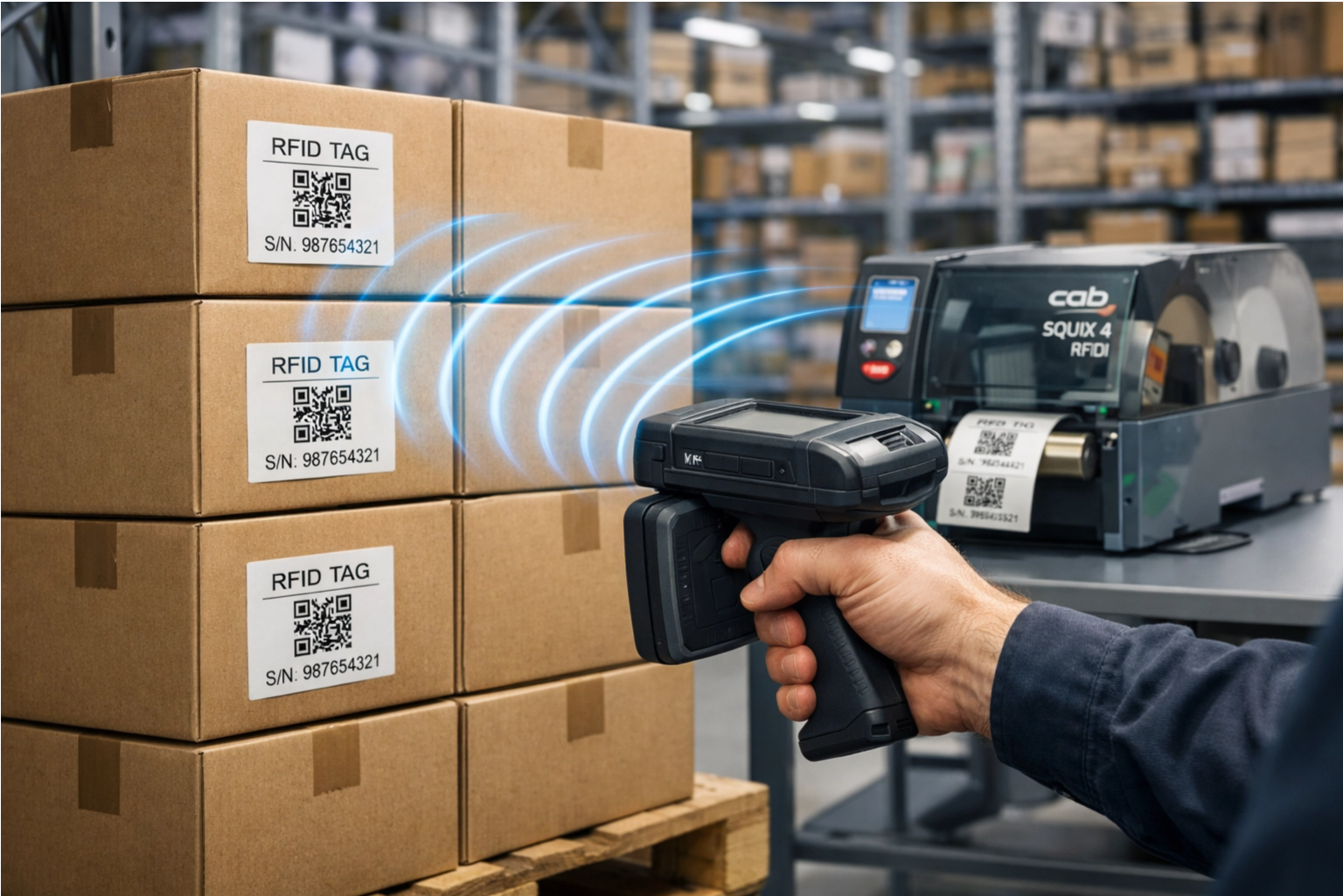
Warehouse operator scanning hundreds of items with a handheld UHF RFID reader

Fast and Automated Inventory Counts

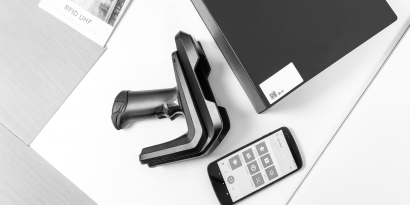
Gone are the days of time-consuming manual inventory counts! With UHF RFID, an operator equipped with a handheld reader can scan hundreds of items in seconds, without even needing to see them directly. Warehouses that previously required several days for their RFID inventory management can now complete this operation in just a few hours.

Pallet and Container Tracking

Real-time RFID tracking of pallets and containers transforms supply chain visibility. Each pallet fitted with a passive UHF RFID tag becomes a mobile data point: location, contents, shipping date, and destination. Fixed UHF RFID portals installed at strategic checkpoints detect tags from a distance via a precise UHF radio frequency, enabling real-time updates across logistics management systems. The result: zero pallet loss, a drastic reduction in shipping errors, and optimized delivery routes.

Retail and Commerce

Smart Anti-Theft

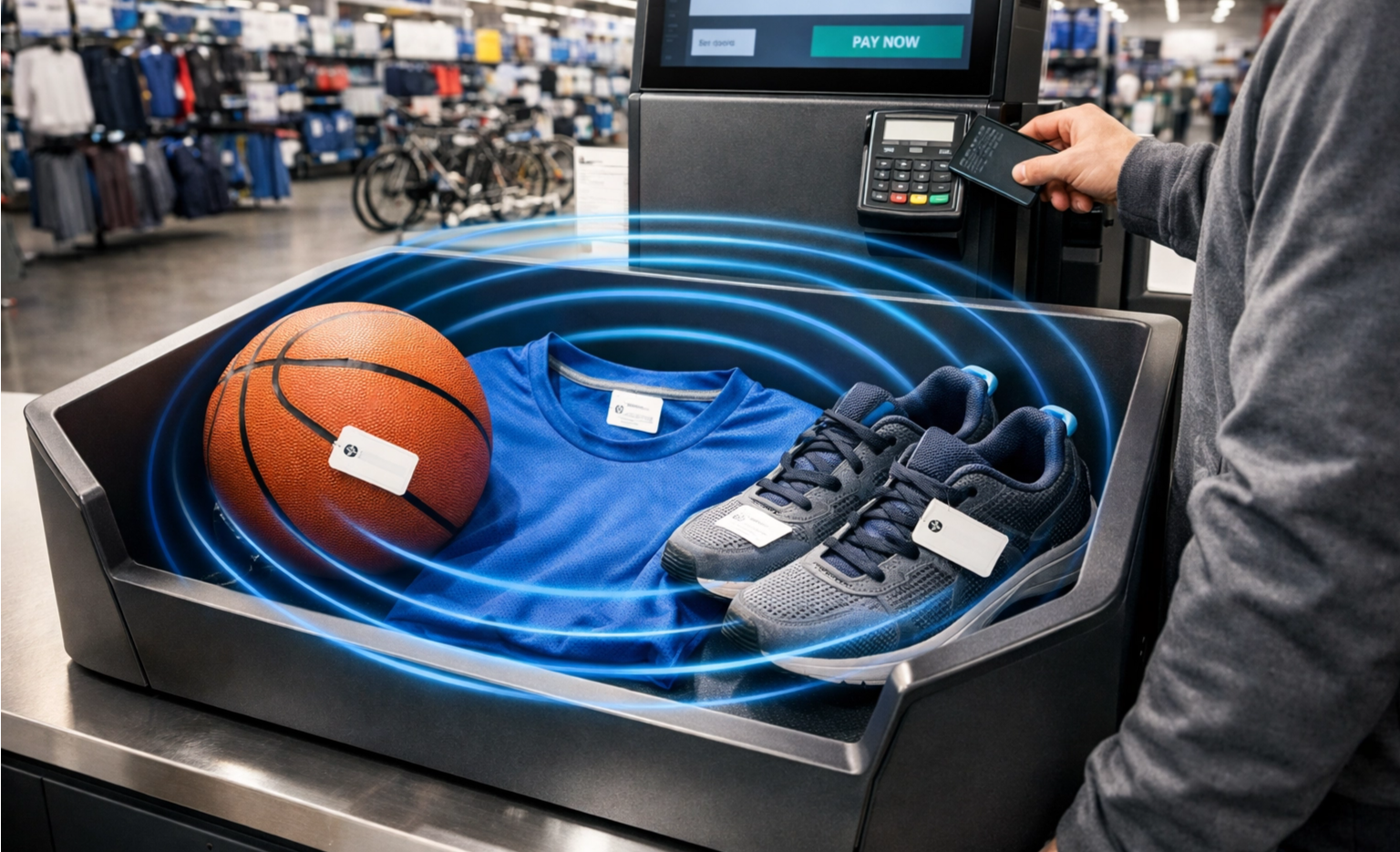
staff performing real-time stock inventory using UHF RFID technology in-store

UHF RFID anti-theft systems far outperform traditional magnetic labels. Each item is uniquely identified, making it possible not only to detect theft attempts, but also to know precisely which product is leaving the store without authorization. RFID portals at the store exit can even differentiate between a paid item (deactivated at checkout) and a stolen one. This precision considerably reduces false alarms that frustrate both customers and staff.

Real-Time Inventory Management

The most significant impact of RFID in retail concerns inventory management. Equipped retailers can now know the exact location of every item in the store: stockroom, shelf, fitting room.

This real-time RFID traceability makes it possible to prevent stock-outs (a major issue costing retailers billions), optimize replenishment, and even offer services such as click and collect with near 100% reliability. Sales staff, equipped with mobile terminals, can instantly locate an item for a customer thanks to the microchip embedded in the tag, considerably improving the overall shopping experience.

Event Management and Access Control

Smart Badges

RFID badges for conferences, trade shows, and events make it possible to track attendee journeys (which booths were visited, which sessions attended), facilitate automatic networking, and even personalize the experience in real time. For organizers, it represents a goldmine of data to understand crowd flows, optimize space layout, and measure the event ROI.

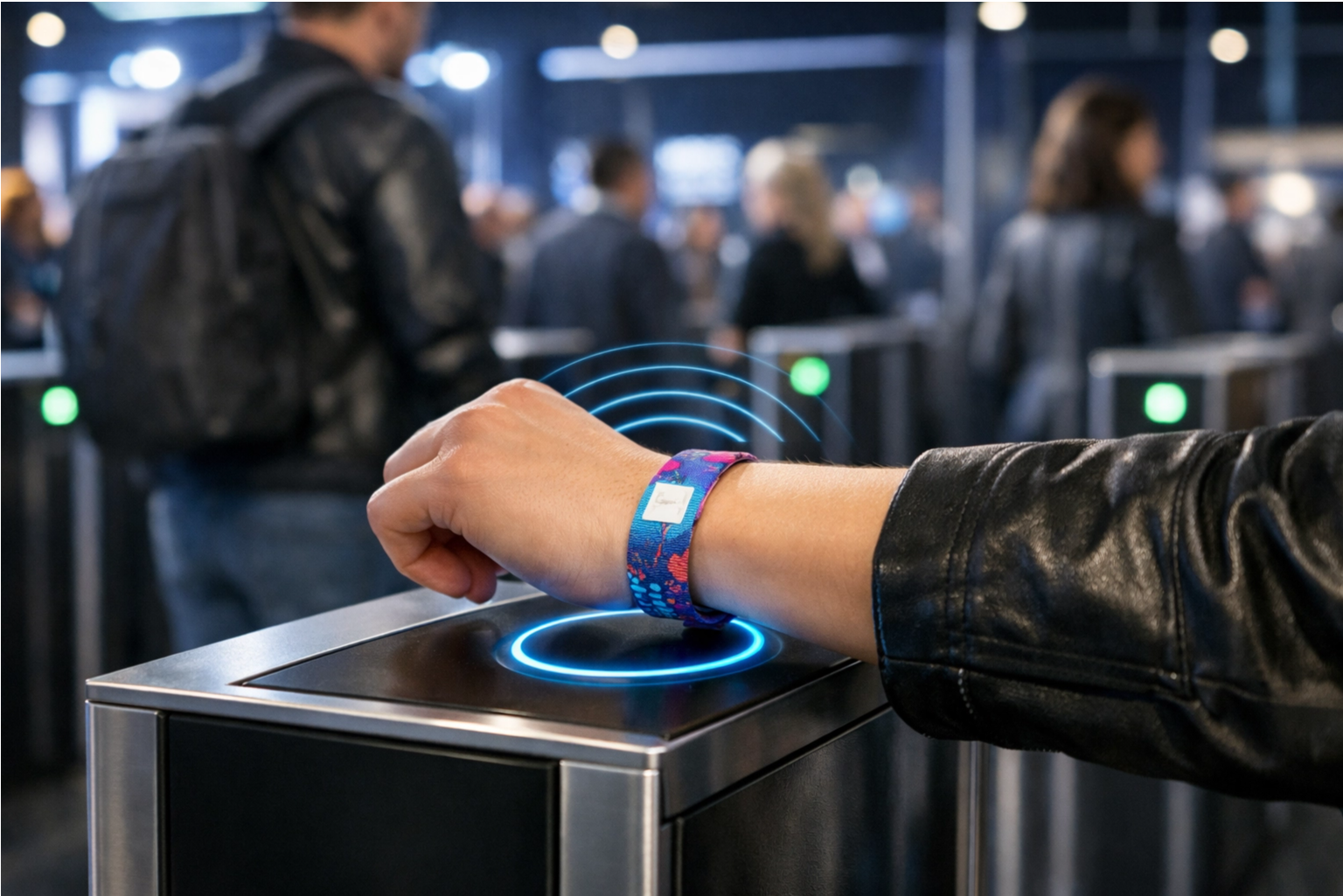
Attendee scanning UHF RFID wristband at event entrance for access control and cashless payment

RFID Ticketing

At festivals, concerts, and sporting events, RFID wristbands have revolutionized the attendee experience. No more searching for a paper ticket: the wristband serves as an access pass, a cashless payment method, and a key to VIP areas, all in one. Entry queues are drastically reduced thanks to the reading speed of UHF chips. Organizers can also effectively combat fraud and illegal ticket resale, as each wristband is personalized and fully traceable.

Healthcare and Hospitals

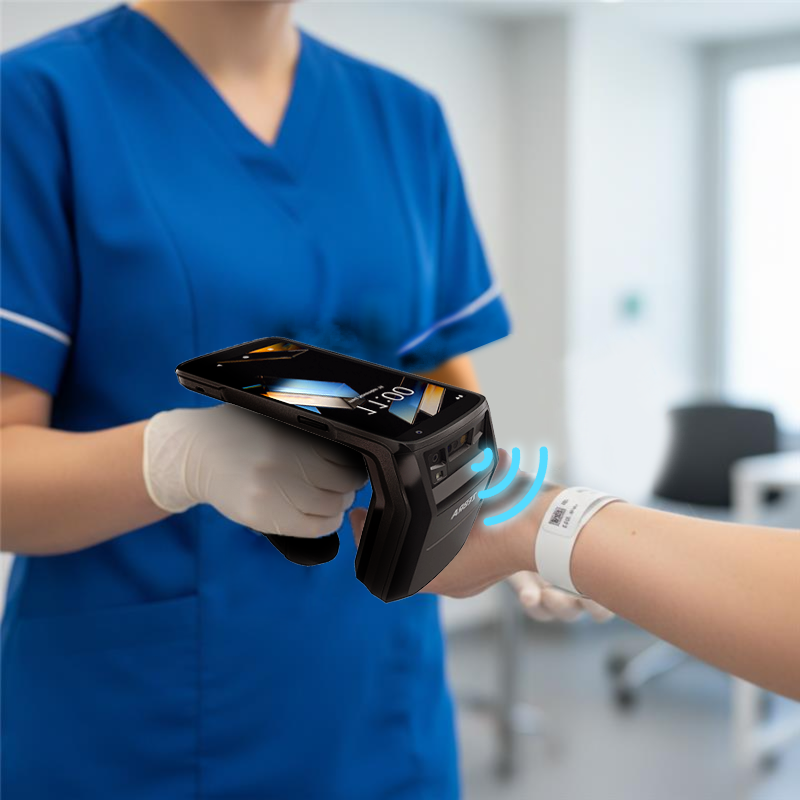
Healthcare staff identifying a patient and locating medical equipment using UHF RFID tags

The healthcare sector is progressively discovering the potential of UHF RFID to improve patient safety, optimize the management of costly equipment, and reduce medical errors. Key applications include:

  • Medical equipment tracking: hospitals own thousands of pieces of equipment (infusion pumps, ventilators, hospital beds) whose location is often uncertain. RFID makes it possible to know in real time where every device is located, reducing staff search time and preventing unnecessary purchases of "lost" equipment.
  • Patient identification: RFID wristbands worn by patients enable fast and reliable identification, which is crucial for preventing medical errors (administration of the wrong treatment, record mix-ups). Every medical act can be traced and automatically linked to the correct patient through the use of UHF RFID tags incorporating a chip adapted to the hospital environment.

  • Pharmaceutical inventory management: medications and healthcare products can be tracked from reception through to administration, ensuring cold chain compliance, expiration date management, and the fight against counterfeiting.

Operating room safety: some facilities use RFID to ensure that no surgical instrument is left inside a patient's body after an operation. This safety application has become indispensable in hospital settings.

Benefits of UHF

Passive UHF RFID (860–960 MHz band) is revolutionizing inventory management. It outperforms traditional barcodes on several critical points.

1. Long-Range Reading

These high-frequency signals enable long-range reading, often up to 10–15 meters depending on the tag and reader type. It operates without direct line of sight, leveraging UHF technology across dedicated frequency ranges unlike traditional barcodes, which are limited by their range and dependence on visual access. These radio waves penetrate buildings and dense environments more effectively, making them ideal for warehouses and urban settings. Unlike VHF, UHF ensures excellent detection range even in dense environments.

2. Bulk Reading (over 1,300 tags per second):

A UHF reader can read several hundred, even over 1,000 tags per second. This performance is made possible by the integrated DSP (Digital Signal Processing) which analyzes data at very high speed.

  • It enables an entire batch of items to be scanned in a single pass, without removing them from pallets.
  • Inventory time is reduced by 80–90% compared to manual methods or barcodes.
  • Increased speed and efficiency for inventory counts.
  • Significant reduction in human errors.

3. Inventory Efficiency and Traceability

  • UHF systems provide a near real-time view of stock levels and movements.

  • Traceability is possible from production to point of sale, with a unique identification of each item.

  • UHF tags are durable, reusable, and suited to industrial environments, both indoors and outdoors.

4. Reduction of Human Errors

  • UHF RFID eliminates manual data entry and one-by-one scanning, the main sources of errors.

  • Data accuracy frequently exceeds 99%, compared to approximately 80% with barcodes.

  • The risks of stock-outs, overstocking, and losses are significantly reduced. 

UHF tags are low-cost, particularly on paper substrate, enabling large-scale tracking across high volumes. The technology is ideally suited for logistics, warehouse management, retail, sports timing, and certain access control systems. It delivers a rapid return on investment through reduced errors, increased productivity, and better operational decision-making. This technology perfectly meets the needs of modern industry by eliminating manual data entry and one-by-one scanning. It adapts to every specific need of the logistics industry.

Benefits of UHF for Your Business

1. Time Savings on Inventory Counts

This traceability technology radically transforms the productivity of counting operations. Where a barcode requires one-by-one scanning with direct line of sight, a UHF solution based on a handheld or fixed reader enables remote, on-the-fly reading across a wide and adapted frequency spectrum.

  • Execution speed: the most high-performing mobile terminals can read up to 1,000 tags per second.
  • Field productivity: an inventory that previously took several days with mobilized teams can now be completed in a few hours, or even minutes for a given area. A reduction of 80 to 90% in inventory time is commonly observed.

Concrete example: a 1,000 m² area can be inventoried in under 10 minutes with an accuracy exceeding 95%.


2. Error Reduction

Automating data collection eliminates the primary source of inaccuracy: human intervention.

  • Data reliability: while manual or barcode-based inventories frequently plateau at around 80–85% accuracy, RFID enables reliability rates exceeding 99%.

  • Elimination of data entry errors: no more missed scans, double counts, or manual reference errors. Each tag carries a unique identifier (EPC — Electronic Product Code) that guarantees item uniqueness.

  • Discrepancy management: the increased accuracy drastically reduces unknown shrinkage and makes it possible to correct "ghost" stock (items shown as in stock but physically absent).

3. Full Traceability

UHF ensures granular visibility across the entire logistics chain, from production through to the end customer. This technology greatly facilitates quality control by ensuring seamless tracking of every stage.

  • Serialized tracking: unlike barcodes which identify a reference (SKU), RFID identifies each object individually (SGTIN : Serialized Global Trade Item Number). You know exactly which specific item has been sold or moved.

  • Complete history: every movement (receiving, inter-site transfer, shelving, shipping) is automatically timestamped and recorded. This greatly facilitates product recall management, regulatory compliance (particularly in food & beverage and pharma), and the fight against counterfeiting.

  • Real time: fixed UHF RFID portals installed at loading docks update stock levels instantly upon entry and exit, providing a continuous radio frequency connection and a live view of stock status.


4. Measurable ROI

While the initial investment may appear higher than that of barcodes, the return on investment (ROI) of UHF RFID is rapid, typically achieved within 12 to 18 months.

  • Labor cost reduction: fewer paid hours spent on low-value tasks such as manual counting.

  • Revenue increase: by reducing on-shelf stock-outs (estimated at a 50% decrease thanks to RFID), sales increase mechanically as products are available when customers look for them.

  • Purchase optimization: greater stock accuracy reduces unnecessary safety stock (overstocking) and lowers the need for working capital. Some projects report a 20% reduction in purchasing volumes thanks to improved visibility.

Our UHF Solutions for Your Business

CategoryProductTechnical SpecificationsApplications
Identification & TraceabilityUHF Inventory Label 65×35mm
Versatile solution for asset management
  • Read range up to 8 meters
  • Impinj M730 chip
  • Inventory
  • Access control
  • Logistics tracking
Identification & TraceabilityUHF RFID Textile Tags
For laundries and the textile sector
  • Extreme durability (washing, drying, high-temperature ironing)
  • Read range up to 7 meters
  • Heat-seal or sewn-in
  • Hospitality
  • Healthcare
  • Industrial laundries
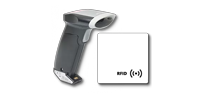
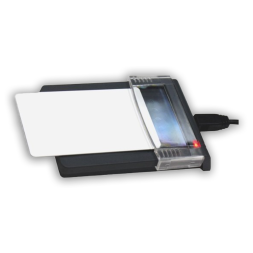
Reading & CaptureUHF RFID Reader for Badges and Cards
  • Contactless reading
  • 868 MHz frequency
  • USB-HID Plug & Play
  • Extreme temperature resistance
  • Access control
  • Time and attendance
  • Authentication
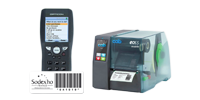
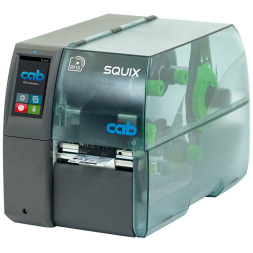
Production & CustomizationCAB SQUIX 4 RFID Printer
  • Simultaneous printing and encoding of UHF labels
  • High-quality thermal transfer technology
  • Integrated UHF RFID module
  • Cablabel S3 software included (complete pack)
Custom smart labels

Limitations of UHF

UHF technology offers many advantages, but it also comes with several important limitations to consider depending on your business environment. UHF is particularly sensitive to the presence of metal and liquids, which can reflect, absorb, or distort radio waves, thereby significantly reducing read range or creating blind spots that render certain tags nearly unreadable without specific adaptation. Dense industrial environments (machinery, cables, metal shelving) or products with high water content therefore require a rigorous requirements study (tag type, positioning, antennas, power levels).

Another limitation is European UHF band regulation, which sets strict maximum power levels and frequency channels. This limits the theoretical range of passive tags and complicates the design of robust systems, particularly in comparison to the longer-range infrastructures permitted in other regions. Frequency variations between countries (868 MHz in Europe, 915 MHz in North America, etc.) also make it more difficult to deploy a single, unified UHF RFID solution across an international supply chain.

These traceability devices can also be more susceptible to electromagnetic interference (EMI), especially in industrial or hospital environments, which can degrade read reliability or require specific shielding. Finally, this remote traceability solution is less suited to highly secure single-item reading applications (such as high-end access control or sensitive authentication), where High Frequency (HF/NFC) is often preferred for its reading precision and better resistance to close-range interference.

What Does the Regulation Say?


European regulation on the UHF band for RFID is defined by two levels of texts:

  • The guidelines and recommendations of the CEPT (European Conference of Postal and Telecommunications Administrations), which coordinate member states on the use of frequency bands.
  • The official EU/EC rules and decisions, which transform these recommendations into harmonized standards and implementing decisions applicable in each member state.

In Europe, the 865–868 MHz band is reserved for passive UHF RFID devices according to precise rules derived from this framework: 

  • The harmonized standard ETSI EN 302 208 sets a maximum average transmit power of 2 W ERP (Effective Radiated Power), which limits reader range compared to US regulations (FCC).
  • This range is subdivided into 200 kHz channels with LBT (Listen-Before-Talk) requirements to coexist with other radio services, imposing technical constraints on manufacturers.

The European Union (via decisions such as EU Decision 2022/180) makes this band freely available for passive devices across all member states. It also ensures consistency with complementary bands (for example around 915–921 MHz in certain countries), as long as the power and frequency limits defined by the ETSI standard are respected.


Continue reading...
These articles too might interest you.

RFID Technology: Benefits, Operation and Uses

RFID (Radio Frequency Identification) technology has revolutionized asset management by offering fast, efficient, and secure solutions. Let’s explore the benefits, technical features, and application sectors of this innovative technology.

SBE advise you
SBE Produits
3243 views

Label printer: the right choice

You need to print your own labels, but with the different printing technologies, roll sizes, compatible software, and types of ribbons, it’s often difficult to know where to start. No worries: by answering just a few simple questions, you’ll know exactly which label printer is right for you.

SBE advise you
Tanya Bicki
3262 views

Understanding RFID in 10 points

With the massive development of RFID products, it is important to understand how the technology works and how to use it in the most efficient way. How does the technology work? What is the most effective support in terms of how it is used? What chip to choose? To best find your way among the wide range of media and chips, here are a few simple points to which SBE responds:

SBE advise you
370789 views

Frequently asked questions

What Are the UHF RFID Frequencies?

UHF RFID technology operates across the global range of 860 to 960 MHz, but each region uses a specific band to avoid interference with other signals. In Europe, including France, the 865–868 MHz band is used, while in the United States it is 902–928 MHz. Devices such as the SQUIX 4 are therefore set by default to 868 MHz to comply with European regulations.

What Is the Difference Between VHF and UHF?
  • The difference lies primarily in wavelength and its ability to penetrate obstacles.

  • VHF waves (30–300 MHz) are longer, travel further, and navigate around hills or buildings more effectively — ideal for radio, marine, and aviation communications.

  • UHF waves (300 MHz–3 GHz) are shorter, penetrate buildings more effectively but have a shorter range. They carry more data, making them perfect for RFID and wireless network testing with tools such as the USRP B210.
Fréquences UHF autorisées France ?

In France, ARCEP governs the use of RAIN RFID technology across two main bands:

  • Low band (865–868 MHz): used throughout Europe, with 200 kHz channels and a maximum power of 2 W ERP.
  • High band (915–921 MHz): more recent, it allows wider channels and up to 4 W ERP, delivering improved performance.

These frequencies are free to use, with no paid license, provided that the equipment is CE certified and compliant with standard ETSI EN 302 208.

What is the difference between VHF and UHF?

VHF stands for very high frequency, generally between 30 and 300 MHz. UHF stands for ultra-high frequency, between 300 MHz and 3 GHz. In RFID, UHF technology mainly uses the 860-960 MHz band to provide a longer read range and enable simultaneous identification of multiple tags.

Which UHF frequencies are authorised in France?

En France et plus largement en Europe, les systèmes RFID UHF passifs utilisent principalement la bande 865-868 MHz. Cette plage est encadrée par les réglementations européennes afin de limiter les interférences radio et de garantir le bon fonctionnement des équipements RFID dans les environnements professionnels.

What is the difference between UHF RFID and NFC?

UHF RFID is used to read tags from several metres away, often in bulk. NFC operates at 13.56 MHz and requires a very short distance, usually a few centimetres. NFC is suitable for payments, badges or smartphone interactions, while UHF RFID is better suited to inventory, logistics and asset tracking.

What is UHF RFID used for in companies?

UHF RFID is used to quickly identify goods, pallets, equipment, stock items or professional assets. It helps automate inventories, reduce manual scanning and improve traceability in warehouses, industrial sites, stores, equipment fleets and supply chains.

What is the read range of a UHF RFID tag?
Accordion Content
See the author's articles
Melissa Oumaouche

With over 5 years of experience in creating content optimized for search engines, Mélissa is currently Marketing & Product Manager at SBE Direct, where she leads the product catalogue positioning across the e-commerce website and marketplaces, as well as the SEO content strategy in coordination with the marketing team she oversees.

We use cookies to improve your experience.