Thermal printing has established itself as a standard in many professional sectors. Fast, reliable, and free from traditional ink, this technology is now used by thousands of businesses worldwide. But how does a thermal printer actually work? What is the difference between direct thermal and thermal transfer? Which ribbon or media should you choose for your specific application?

This complete guide answers all these questions. It compares the two main thermal printing methods, details the key selection criteria (quality, DPI resolution, price, and label size), and helps you identify the right model for your needs.

Thermal Printer: What Is It?

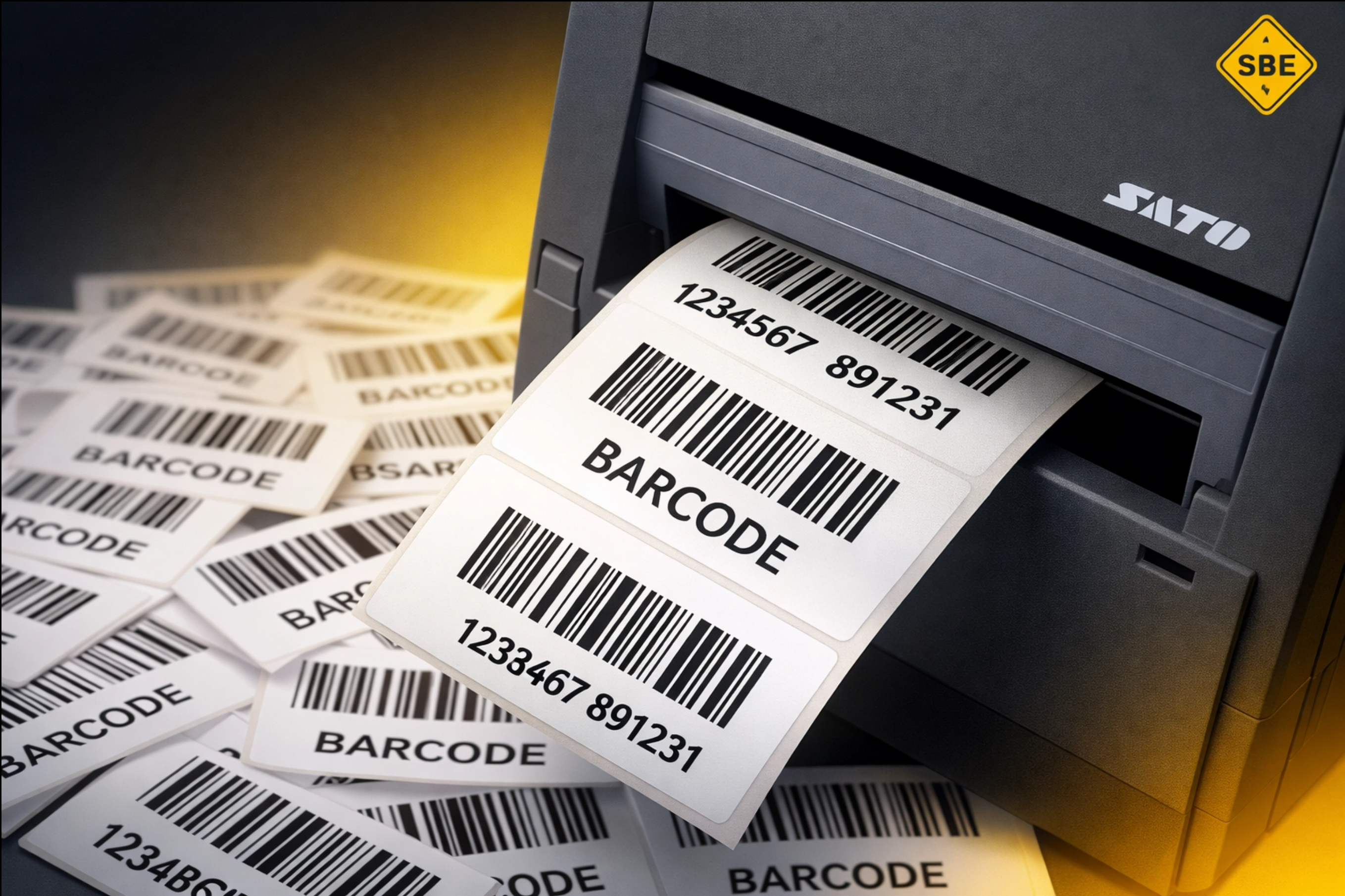
A thermal printer is a printing device that uses heat to produce an image on a medium. Unlike conventional printers, it operates without liquid ink or cartridges. The thermal printhead plays the central role: it heats the medium or an ink ribbon to create the print.

This type of printer is used across many professional environments: logistics, retail, healthcare, and manufacturing. It prints barcodes, labels, and receipts with high precision, using a printer tailored to each industry's needs.

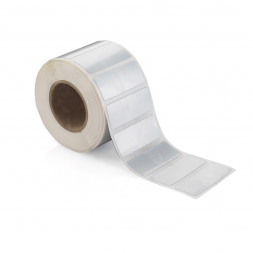
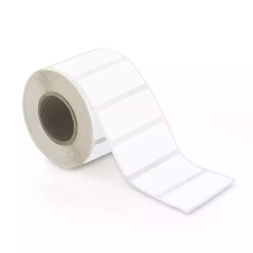
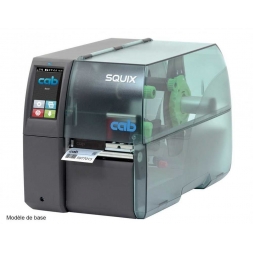
Print quality is measured in DPI (dots per inch). The higher the DPI, the sharper the details, a critical factor for barcodes and small formats. Looking for a turnkey solution? Explore our range of label printers along with our adhesive label rolls compatible with most models on the market.

The 2 Main Types of Thermal Printers


There are two distinct thermal printing technologies. Each one addresses specific business needs. Understanding the difference is key to making the right choice from the start.

Direct Thermal

A direct thermal printer operates without any intermediate consumable. The printhead heats specially coated thermal paper, which darkens under the effect of heat. The result: instant printing, with no ink ribbon required.

This process is ideal for:

  • Receipt and point-of-sale tickets

  • Short-term shipping labels

  • Hospital wristbands

Its main advantage: simplicity. Fewer parts, less maintenance, and lower running costs. However, prints are sensitive to light and heat; they fade over time.

Thermal Transfer

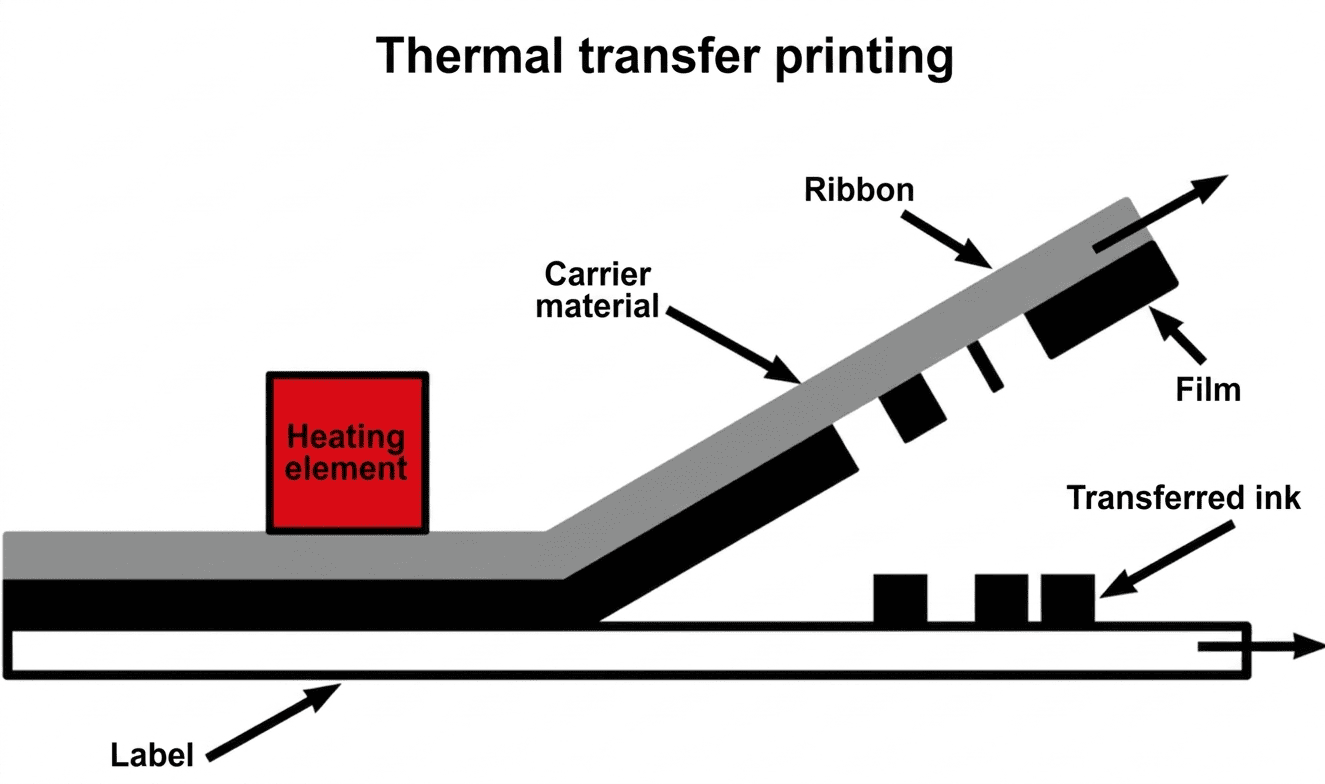
With this printing method, the printhead heats an ink ribbon that deposits ink onto the medium. The resulting quality is significantly superior, and the print withstands the test of time even in harsh environments.

This process is particularly suited for:

  • Long-lasting product labels

  • Manufacturing and logistics

  • High-precision barcodes

DPI resolution plays a key role here: the higher it is, the sharper the details. This is a decisive factor for small formats or dense data.

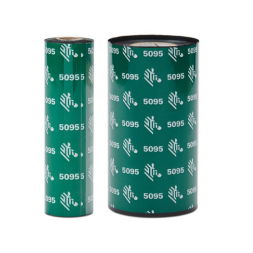
Explore our  thermal transfer label printers and our compatible ink ribbons to equip your workshop or warehouse. Each thermal printer is designed for a specific use. Your choice of printer directly determines the quality and lifespan of your prints.

Note: The SBE Direct catalog is entirely dedicated to thermal transfer, the benchmark technology for long-lasting synthetic labels.

How Does a Direct Thermal Printer Work?

How It Works

A direct thermal printer has a simple design. The printhead is made up of tiny heating resistors. When it comes into contact with thermal-sensitive paper, the heat triggers an instant chemical reaction: the medium darkens in the desired areas. No ink ribbon. No cartridge. No ink. Only thermal paper is needed to produce a sharp, fast print. The size and quality of the paper directly affect the final result.


Advantages and Limitations

  • No ink or consumables: fewer parts to replace, fewer breakdowns.

  • Low maintenance: the thermal printhead lasts longer without the wear caused by an ink ribbon.

  • Fast printing: ideal for high-volume environments.

  • Affordable thermal paper: a low-cost medium, available in rolls from our adhesive label rolls shop

Key Considerations

  • Limited lifespan: the print gradually fades over time.

  • Sensitivity to heat and light: hot or sunny environments can degrade print quality.

  • Not suited for long-term storage: avoid for product labels or archival purposes.

Applications

Direct thermal is the go-to choice in any setting where speed matters more than durability:

  • Point-of-sale receipts and tickets in retail or food service

  • Shipping labels and short-term delivery slips

  • Event or hospital wristbands, worn for just a few hours or days

This is the preferred thermal printing method for high-throughput, short-lifespan applications. It requires only thermal-sensitive adhesive label rolls, with no additional consumables needed.

Thermal Transfer Printing: The Solution for Long-Lasting Prints

How It Works

In this thermal printing method, the printhead does not heat the medium directly. Instead, it melts an ink ribbon positioned between the printhead and the paper (or any other medium). The ink is then precisely deposited onto the surface, layer by layer.

The result is a sharp, dense print that is perfectly resistant, even on non-thermal media such as polyester, polypropylene, or textile.

Advantages and Limitations

What makes the difference:

  • Excellent durability: prints withstand time, abrasion, and demanding storage conditions.

  • Resistance to heat, moisture, and UV: ideal for industrial or outdoor environments.

  • High print quality: legible text and precise barcodes, even at high DPI density.

  • Multi-media compatibility: plastic labels, textiles, metal, and cardboard.

Key consideration:

Typical Use Cases

Thermal transfer is the standard wherever print durability is non-negotiable:

  • Industrial labels: part identification, production tracking, harsh environments.

  • Medical traceability: specimen labels, patient records, pharmaceutical packaging.

  • Long-term identification: company assets, equipment, and products stored for several years.

For environments exposed to UV light, discover our special UV ink ribbons designed for maximum resistance to light exposure.

How to Choose Between Thermal Transfer and Direct Thermal?

Two technologies, two approaches. The right choice comes down to three key criteria.

CriteriaSituationRecommended SolutionDetails / Examples
Print LifespanA few days to a few weeks → several months or yearsDirect thermal → Thermal transfer (ribbon)Receipts, delivery notes, short-term wristbands → resistance to time, abrasion and demanding storage conditions
Usage ConditionsStandard environment → harsh environment (heat, humidity, UV, chemicals)Direct thermal → Thermal transfer (ribbon)Simple and cost-effective → UV-resistant ribbons for intense light exposure
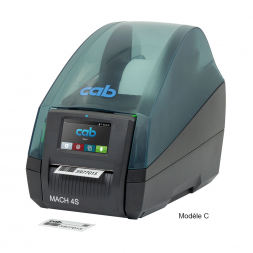
Print VolumeLow to medium volume → high volume or continuous printingCompact direct thermal printer → Industrial thermal printerAffordable price, low running costs → robust and fast, e.g. CAB Mach 4S, SATO CT4-LX

Thermal Transfer Ribbons: A Key Element in Print Quality

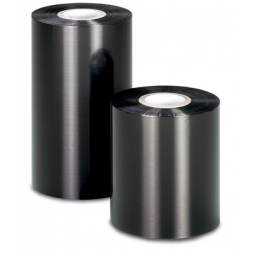
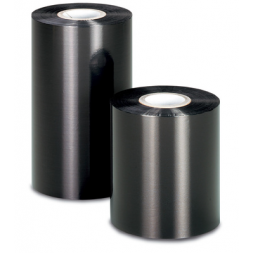
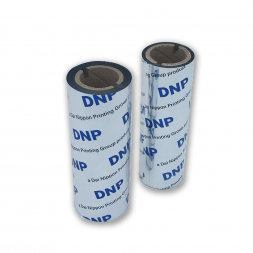
Choosing the right ink ribbon is just as important as choosing the printer. A consumable poorly matched to the medium or environment will compromise overall print quality: blurred text, unreadable barcodes, and ink that fades prematurely.

Three Main Types of Ink Ribbons

There are three types of consumables, each suited to a specific use:

  • Wax: the most common and most affordable. Ideal for standard paper surfaces. Suited for office printing or light logistics.

  • Wax-Resin: a good balance between durability and cost. Compatible with a wider range of media, including semi-synthetic materials.

  • Resin: the most resistant. Designed for plastic, polyester, or metallic surfaces. Withstands heat, moisture, and heavy abrasion.

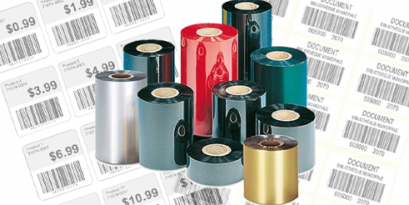
A Selection of Ink Ribbons by Brand and Use

For every thermal printer, there is a compatible ink ribbon. Here is a selection organized by brand and purpose:

Ribbons for Specific Applications

Some environments require specially adapted consumables:

  • Special UV ribbon: for prints exposed to natural light or UV rays. Ensures long-lasting readability outdoors.

  • Colour textile ribbon: for printing on fabric with precision. Ideal for care labels, garment marking, or professional workwear.

Go Further with the Right Software

A good ink ribbon is not enough without the right design software. BarTender Professional Edition allows you to create and print complex label templates directly from your workstation, with full compatibility with the leading thermal printers on the market.

Maintenance and Lifespan

A well-chosen ink ribbon also extends the lifespan of the printhead. An unsuitable consumable causes premature wear on the thermal resistors and requires more frequent cleaning or even early printhead replacement. The right consumable choice also means less maintenance in the long run.

Conclusion

Direct thermal or thermal transfer: both technologies have their place. The choice depends above all on the desired print lifespan, operating environment, and print volume.

For fast, short-term applications, a compact direct thermal printer is more than sufficient. For demanding environments and long-lasting prints, a thermal transfer printer is essential paired with the right consumable and the right DPI resolution.

The key is to clearly define your needs before investing: label size, media type, frequency of use, and environmental constraints. These are the criteria that will determine the right model and the right price.

Explore our full range of label printers and adhesive label rolls to equip your business with the right tools.

RELATED PRODUCTS

Continue reading...
These articles too might interest you.

Label printer: the right choice

You need to print your own labels, but with the different printing technologies, roll sizes, compatible software, and types of ribbons, it’s often difficult to know where to start. No worries: by answering just a few simple questions, you’ll know exactly which label printer is right for you.
SBE advise you
Tanya Bicki
3266 views

Thermal label printers : Thermal transfer VS direct thermal

A printer is an essential office tool. Its invention has revolutionized a multitude of sectors. It is not simply a matter of projecting ink onto a blank sheet of paper. It is nevertheless a tool at the cutting edge of technology, combining several skills for various media and uses. So let us guide you through the world of thermal label printing and let us discover together the differences between thermal transfer printers and direct thermal printers!
SBE advise you
8373 views

How to choose the right ink ribbon for quality labeling?

Choosing to print in-house saves a considerable amount of time and can, in some cases, be an economic gain. Printing labels with variable information within a company is extremely important, especially for barcode labels that need to be readable by scanners and have a long shelf life.  But this implies certain risks of misprints caused by many printing components that can have big consequences. In particular, when printing barcodes where a bad print will lead to an inability to read and track the product. To avoid the risks, you need to understand the printing components (label printer, ink ribbons and label rolls) and choose them carefully. SBE is here to guide you in your choice of ink ribbons. 

SBE advise you
10635 views

Questions fréquentes de nos clients administrations et collectivités

What Are the Costs Associated with Thermal Printing?

It all depends on the technology chosen. With direct thermal, only the printer and thermal-sensitive paper rolls are required, making it the most cost-effective solution. With thermal transfer, ink ribbons and compatible labels must be added, but the cost per label decreases rapidly with volume. Entry-level prices range from a compact desktop printer like the SATO CT4-LX to industrial models like the CAB Mach 4S for high-volume needs. As a rough guide, the unit cost is around €0.01 per label for direct thermal and €0.015 for thermal transfer, excluding printer depreciation.

Difference Between Thermal Transfer and Direct Thermal Printing

The price of a thermal printer varies depending on the type and range:

  • An entry-level direct thermal printer starts at around €150 to €300. Running costs are low: only the thermal paper needs replacing.

  • A compact thermal transfer printer like the SATO CT4-LX sits in a mid-range category. The cost includes consumables that need replacing based on volume.

  • An industrial printer like the CAB Mach 4S represents a higher investment, justified by its robustness and ability to handle high volumes.

On top of the purchase price, maintenance costs should be factored in: the printhead must be cleaned regularly to ensure a sharp image and extend the lifespan of the device.

See the author's articles
Melissa Oumaouche

With over 5 years of experience in creating content optimized for search engines, Mélissa is currently Marketing & Product Manager at SBE Direct, where she leads the product catalogue positioning across the e-commerce website and marketplaces, as well as the SEO content strategy in coordination with the marketing team she oversees.

We use cookies to improve your experience.