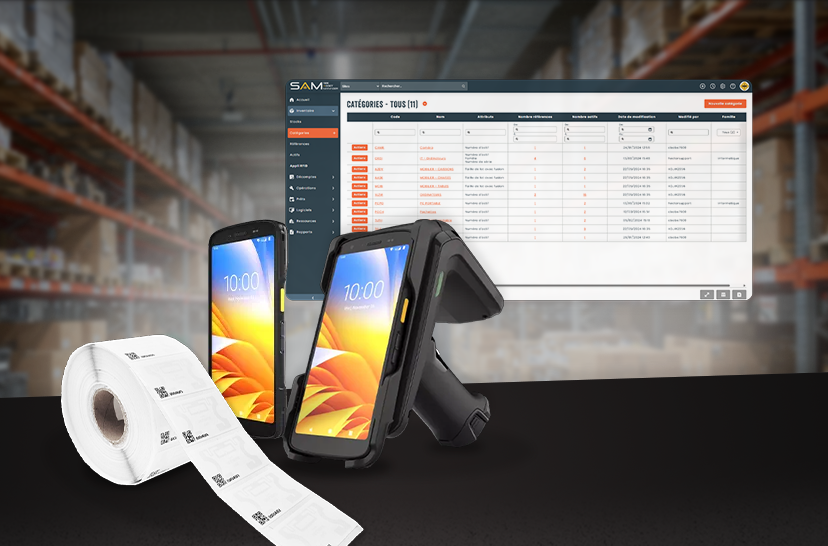
RFID inventory replaces manual counting with contactless reading: each RFID label is identified in seconds using RFID tags and specialized mobile terminals. The result: 90% fewer errors, close to 100% reliability, and real-time traceability in logistics, retail, and industry. Explore our range of RFID tags, RFID readers, and RFID management software to build a high-performance stock management system. This guide explains how RFID inventory works, its concrete benefits, and how to deploy it effectively in your business.

RFID Asset Inventory: What Is It?

RFID inventory is an automated process that uses radio waves to identify and count assets. Each item equipped with an RFID tag automatically communicates with a reader without requiring any manual intervention.

The system relies on three main components:

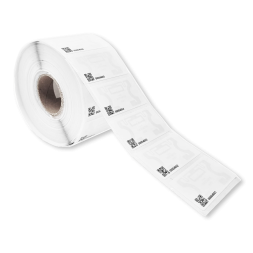
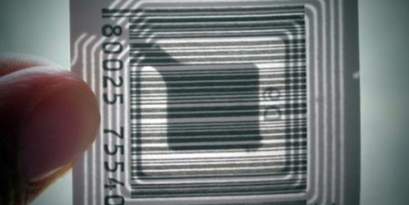
  • RFID tags: these contain an electronic chip and an antenna. They store the item's identification information (reference, serial number, location).
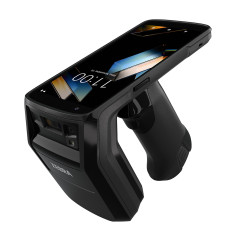
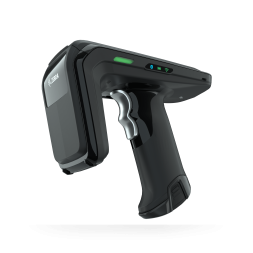
  • RFID readers: these emit radio waves that activate the RFID tags. They capture the data sent back by the chips and transmit it to the management system.
  • Management software: this centralizes the collected data, analyzes it, and synchronizes it with your ERP or WMS. It generates real-time inventory reports.

RFID inventory transforms a tedious manual operation into a fast and accurate automated process. An operator equipped with a portable reader can scan hundreds of items simply by walking down the aisles. Items remain in their locations. No handling is required.

Difference Between RFID Inventory and Barcode/QR Code Inventory

Barcodes/QR codes and RFID are both used to identify items. However, their performance differs radically.

CriterionBarcode / QR codeRFID Inventory
TechnologyOptical (laser)UHF radio waves
Reading modeSingle item, direct line-of-sight requiredBulk, no line-of-sight required
Reading speed1 item at a timeUp to 1,000 tags/second
Reading distance< 30 cmUp to 15 metres (UHF)
Penetrates obstaclesNoYes (cardboard, wood, plastic)
IdentificationProduct reference only (SKU)Unique identifier per item (SGTIN)
Data reliability80 – 85%> 99%
Inventory timeSeveral daysA few hours
Human interventionHighMinimal
Tag cost€0.01 – €0.02€0.05 – €0.10 (UHF)
Real-time traceabilityNoYes

The major advantage of RFID lies in the precision of the data capture and complete control over assets. This precision ensures that all stock information is 100% reliable. Concrete example: in a 1,000 m² warehouse, a barcode inventory requires 2–3 days of work with multiple operators. With RFID, the same operation takes less than 2 hours with a single operator.

Barcodes/QR codes remain relevant for certain uses (very low-margin products, small volumes). But for regular inventories in industrial or logistics environments, RFID offers a rapid return on investment for any industrial or logistics stock.

Use Cases for RFID Inventory

RFID inventory is adaptable to many business sectors. Here are the main use cases:

SectorProcessKey Benefits
Warehouses and logistics centresDaily or weekly cycle counting. Scanning of storage areas with portable terminals.Automatic real-time WMS updates. Immediate detection of discrepancies and securing of the supply chain.
Stores and retail outletsExpress inventories without closing to the public. Counting items on shelves, in stockrooms, and in fitting rooms.Total stock visibility, zero out-of-stocks, optimized restocking.
Hospitals and healthcare facilitiesTraceability of expensive medical equipment. Automatic verification of compliance and maintenance dates.Enhanced operational safety. Accurate pharmaceutical inventories and guaranteed regulatory compliance.
Libraries and document centresFast inventories without individual handling. Automatic detection of misplaced or missing books.<

RFID inventory revolutionizes stock management by offering precise automatic inventory, complete asset traceability, and real-time visibility. Adaptable to logistics, retail, or industry, this technology reduces errors, speeds up checks, and secures your flow of goods.

How Does an RFID Solution Work?


Contrary to what one might think, an RFID inventory is not just about "scanning tags." It takes place in two very distinct main phases, to which are added the technical steps of reading, transmitting, and analyzing data.

Phase 1: Hardware Identification - The First Inventory

This is the foundational step, the most important one, and it is only done once (or when integrating new assets). It consists of associating each physical asset with an RFID chip and filling out a complete descriptive profile in the software.

Here is what happens in practice:

  • An RFID tag is affixed to the asset to be inventoried.
  • The tag is scanned with a reader: a blank profile automatically opens in the software.
  • The profile is filled out: asset name, serial number, photo, weight, condition, location, and most importantly, the status (present on site, loaned out, in repair, scrapped, assigned to a person, etc.).
  • The tag is now associated with the asset: this is the link between the physical world and the database.

At the end of Phase 1, you have a reference database: a complete initial inventory, with all statuses filled in. This is your baseline snapshot of your asset fleet.

This first inventory has a name in the trade: it is also called the "initial physical inventory" or "census." It is crucial that it is carried out carefully, as it will serve as a reference for all future comparisons.

Phase 2: The Inventory - Successive Sweeps

Once Phase 1 is complete, you can carry out inventories at regular intervals: annually, quarterly, monthly, at whatever frequency suits your obligations or needs. During each inventory (Phase 2), the operator walks through the premises with a portable RFID reader. The reader automatically captures all tags within its read range. The software instantly compares the read tags with the reference database and produces a report in three categories:

  • Recognized and assigned tags: the assets are present and compliant.
  • Unread / missing tags: assets present during the previous inventory were not detected. They may have been moved, lost, or stolen.
  • Blank or unassigned tags: tags exist but have not yet been associated with an asset (newly arrived goods, not yet identified).
  • Assets without tags: physical assets are present but do not have an RFID tag. They must be identified and added to the database.

Based on this report, the operator corrects the discrepancies: re-identifying missing assets, affixing new tags to untagged assets, and updating statuses (scrapped, transferred to another department, etc.). Once all discrepancies are resolved, the inventory is locked and can be sent to accounting, as an asset inventory is also an accounting document.

This is the core principle of the SCANASSET software:

  • Phase 1: Identify the hardware and build the reference database.
  • Phase 2 (and subsequent phases): carry out the comparative inventory at regular intervals.

These two phases are fundamentally different and complementary.

Once you understand these two phases, here is the concrete equipment needed to implement them. In asset inventory, the benchmark technology is UHF (Ultra High Frequency): it allows dozens of tags to be read in seconds, from several meters away, without any direct line of sight.

Know more about RFID UHF Technology

A Word on NFC / HF

This technology requires bringing the reader within a few centimeters of the tag, much like a travel card on a turnstile. It is only used when the environment is highly metallic and UHF is too disrupted. In practice, this is very rare in asset inventory.

A Word on Fixed Ceiling Antennas

It is technically possible to install RFID antennas in a suspended ceiling to achieve a real-time stock inventory (everything entering and leaving is automatically detected). This is a setup found in some clothing or IT equipment warehouses. However, this is not asset inventory: it is stock flow management. SBE Direct focuses on asset management inventory, namely, the inventory of computers, furniture, and equipment, for which a portable reader remains the most suitable, flexible, and economical tool.

How to Set Up an RFID Inventory?

The deployment of an RFID solution requires a structured, multi-phase approach.

1. Audit and Needs Definition

Analyze your current processes: inventory and management time, frequency, number of operators involved, error rate, and critical areas. Identify your objectives: reducing inventory time, improving accuracy, real-time traceability, hardware costs based on your stock, and technology maintenance needs. Evaluate your environment: the presence of metals or liquids, surfaces to cover, storage height, and types of items.

2. Choosing the Technology

Select the RFID frequency:

  • UHF (Ultra High Frequency) : for mass inventories, long range (up to 15 m). It is the benchmark technology for asset inventory.
  • HF / NFC : precision reading (a few centimeters to 1 meter), useful in highly metallic environments where UHF is disrupted (rarely used in asset inventory).
  • Hybrid: a combination of both for very specific needs.

Next, choose the equipment (tags, reading devices, and software) suited to your environment and processes.

3. Pilot Test

Deploy the solution in a limited area. Test for 4 to 8 weeks, measure performance, make necessary adjustments, and train an initial team.

4. Progressive Deployment

Extend the solution zone by zone. Equip all your items progressively. Train the entire staff. Ensure integration with your existing systems (ERP, WMS, TMS).

5. Continuous Optimization

Analyze usage data; identify areas for improvement; adjust processes; and leverage advanced features (automatic alerts, predictive analytics, and geolocation).

7. Automatisation des flux de stock

Stock movements are recorded automatically without manual intervention. Receipts, transfers, and shipments are tracked in real time. Logistics processes are streamlined. Allocation or routing errors are eliminated. The supply chain becomes completely transparent.

Secteurs qui utilisent l'inventaire par RFID

RFID inventory covers three main families of uses, which are found in almost all business sectors:

  • Mobile asset inventory (asset management): computers, office furniture, tables, chairs, screens, phones, and common company assets. This is SBE Direct's core business.
  • Industrial asset inventory: machinery, production equipment, tools, and spare parts.
  • Production tracking: traceability of manufactured products throughout the production cycle.

Depending on the sector, these three dimensions are combined differently.

Logistics and Distribution

In the logistics and distribution sector, RFID technology serves several critical functions:

  • Mobile assets: inventory of IT hardware, office equipment, and warehouse assets.
  • Operational assets: tracking pallets, containers, forklifts, and handling equipment.
  • Stock management: real-time tracking of goods flows, accelerating order preparation, and optimizing the supply chain. This allows companies to recognize products quickly, manage shelf-stacking, and track an item from supply to sale, significantly reducing inventory time.

Retail and Commerce

In the retail and commerce sector, RFID technology provides several specific solutions:

  • Mobile assets: inventory of IT hardware and furniture in stores and headquarters.
  • Stock management: performing in-store inventories without business interruption, fighting shrinkage (unexplained stock loss), and enabling automatic restocking. Inventory that previously took 24 hours can be completed in just 2 hours, allowing stock files to update in real time.
  • Multi-site management: centralized visibility across the entire network of point-of-sale locations.
  • Anti-theft security: integration with exit gates for enhanced security of high-value items. RFID tags can be automatically deactivated at checkout, which significantly reduces the risk of theft and human error.

Industry and Production

In the industry and production sector, RFID technology is applied to manage various types of assets and operations:

  • Mobile assets: inventory of IT hardware, office equipment, and meeting room furnishings.
  • Industrial assets: tracking machines, tools, and spare parts directly on production lines.
  • Production: traceability of manufactured products (components, subassemblies, finished products). For example, a pharmaceutical factory that labels each batch with an RFID tag right from manufacturing.

Healthcare and Hospitals

In the healthcare and hospital sector, RFID technology provides critical solutions for asset management, security, and compliance:

  • Mobile assets: inventory of IT hardware, beds, wheelchairs, and departmental furniture.
  • Medical assets: locating expensive and critical equipment such as infusion pumps, ventilators, and defibrillators. By using technical labels, RFID tags, and discreet mounting systems, equipment remains trackable and protected, ensuring it is available at the right time and place.
  • Compliance: accurate pharmaceutical inventories and traceability of implantable medical devices.

Events

  • Mobile assets: inventory of event equipment (stages, structures, audiovisual equipment).
  • Access control: management of RFID badges and wristbands, cashless ticketing.

What RFID equipment for stock management?

RFID TAGS

An RFID tag is a device composed of a chip and an antenna, which stores information that can be read remotely by an RFID reader without a direct line of sight, unlike a barcode. Each tag acts as an electronic ID card for your items, enabling quick and automatic identification during inventories.

Three deployment options

  • Ready to use: printed, encoded, and delivered by SBE, the fastest solution.
  • Blank: to print and encode yourself with your RFID printer, ideal for large volumes.
  • Mixed: partially prepared (QR code, encoded chip) with a free area for your additions.

Types of tags

TypeMain usageRange
UHF TagsMass inventoriesUp to 15 m
HF / NFC tagsMetallic environmentsA few cm to 1 m
On-metalMetallic surfacesVariable
Textile tagsLaundries, care homesUp to 7 m

This is heading element

An RFID tag is a device composed of a chip and an antenna, which stores information that can be read remotely by an RFID reader without a direct line of sight, unlike a barcode. Each tag acts as an electronic ID card for your items, enabling quick and automatic identification during inventories.

Three deployment options

  • Ready to use: printed, encoded, and delivered by SBE, the fastest solution.
  • Blank: to print and encode yourself with your RFID printer, ideal for large volumes.
  • Mixed: partially prepared (QR code, encoded chip) with a free area for your additions.

Types of tags

TypeMain usageRange
UHF TagsMass inventoriesUp to 15 m
HF / NFC tagsMetallic environmentsA few cm to 1 m
On-metalMetallic surfacesVariable
Textile tagsLaundries, care homesUp to 7 m

RFID Software

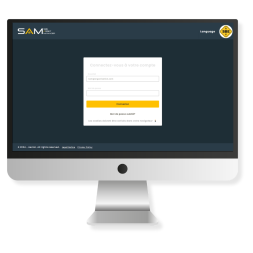
The RFID software centralizes and analyzes data from the readers. It transforms raw readings into actionable dashboards, integrates with your existing systems (ERP, WMS), and ensures real-time tracking of your assets.

Essential features:
Automated inventories, complete traceability of movements, customized alerts (thresholds, maintenance), real-time reports, multi-site management, and a mobile application with instant synchronization.

SCANASSET: Our Flagship Solution

SCANASSET is a SaaS cloud solution deployable in just a few days, requiring no local installation. It offers three plans starting at €997/year (for up to 1,000 assets), complete with dedicated support and included training.

Request your free demo

RFID PRINTERS

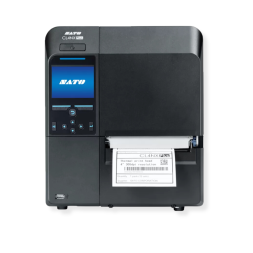
An RFID printer encodes the chip and prints visual information (barcode, text, logo) in a single operation. It gives you complete autonomy to produce your labels on demand, without delivery delays.

Recommended models

ModelResolutionSpeedKey point
SATO CT4-LX203 / 305 dpi167 labels/minTouch screen, optional UHF + HF
CAB SQUIX 4300 / 600 dpi300 mm/sAluminum chassis, software included
Zebra ZD621RUp to 300 dpi203 mm/sCompact, Wi-Fi / Bluetooth connectivity


Producing in-house means gaining flexibility, reducing costs on large volumes, and instantly personalizing each label.

Discover our full range of RFID printers

Conclusion

RFID inventory transforms a time-consuming task into an automated, fast, and reliable process: saving 80 to 90% of time, offering over 99% reliability, and yielding a return on investment in 12 to 18 months. SBE Direct supports you from the initial audit to deployment, with a comprehensive range of equipment and the SAM software to manage it all. Contact our experts for a free consultation.

FEATURED PRODUCTS

Continue reading...
These articles too might interest you.

UHF RFID Explained: Frequency, Technology & Industrial Applications

UHF RFID technology (860–960 MHz) enables the simultaneous reading of hundreds of tags at distances of up to 15 meters, with no line-of-sight requirement, where barcodes still demand manual, one-at-a-time scanning. It has established itself as the global standard for automated traceability across industries as diverse as logistics, retail, healthcare, and industrial asset management. Its key advantages include data accuracy exceeding 99%, an 80–90% reduction in cycle count time, and an ROI typically achieved within 12 to 18 months. Its only notable limitations involve sensitivity to metal surfaces and liquids, which require the use of On-Metal tags (also referred to as metal-mount RFID tags) in demanding industrial environments.


Product News
Melissa Oumaouche
1414 views

RFID Technology: Benefits, Operation and Uses

RFID (Radio Frequency Identification) technology has revolutionized asset management by offering fast, efficient, and secure solutions. Let’s explore the benefits, technical features, and application sectors of this innovative technology.

SBE advise you
SBE Produits
3243 views

Understanding RFID in 10 points

With the massive development of RFID products, it is important to understand how the technology works and how to use it in the most efficient way. How does the technology work? What is the most effective support in terms of how it is used? What chip to choose? To best find your way among the wide range of media and chips, here are a few simple points to which SBE responds:

SBE advise you
370791 views

FAQ

What is the RFID Solution for Inventory?

A complete solution relies on four components: UHF RFID tags to identify each item, a portable or fixed RFID reader to scan remotely, management software to centralize data and generate reports, and optionally an RFID printer to produce your labels in-house.

What are the Disadvantages of RFID?
  • Higher initial cost: €0.05-0.10 per tag compared to €0.01-0.02 for barcodes, but an ROI is achieved in 12 to 18 months.

  • Sensitivity to metals and liquids: avoidable with on-metal tags or HF/NFC technology.

  • Electromagnetic interference: a preliminary site survey helps to adapt the solution.

  • Learning curve: modern interfaces are intuitive, making onboarding possible in just a few hours.

These limitations are largely offset by time savings (80-90%) and a reliability rate exceeding 99%.

Can RFID be used in a warehouse equipped with barcodes?

Yes, both technologies coexist perfectly. Our RFID tags systematically integrate a visible barcode in addition to the chip, and the Zebra TC22/TC27 terminal paired with the RFD40 sled reads both formats. The SAM software simultaneously manages barcodes, QR codes, and RFID within a single interface. Our recommendation: deploy progressively, starting with the highest value-added areas, and then expand based on the results.

See the author's articles
Melissa Oumaouche

With over 5 years of experience in creating content optimized for search engines, Mélissa is currently Marketing & Product Manager at SBE Direct, where she leads the product catalogue positioning across the e-commerce website and marketplaces, as well as the SEO content strategy in coordination with the marketing team she oversees.

We use cookies to improve your experience.