Product labelling is the first point of contact between a product and its users: consumers, employees, carriers, customs officers, or inspectors. It identifies, informs, protects, and traces while ensuring regulatory compliance.

Every professional who manufactures, sells, stores, or distributes goods must therefore master the labeling rules that apply to their sector. Which information is mandatory on a food label, a CLP label, or a price tag? How do you choose the right substrate to identify your company's assets? What penalties apply in the event of non-compliance? This complete guide answers every one of these questions.

What is product labelling and what is it used for?

Product labeling refers to all the information affixed to a product, its packaging, or its container in order to identify it and describe its characteristics. It includes text statements, pictograms, barcodes or QR codes, holograms, and any distinctive mark. This marking serves one fundamental purpose: protecting the consumer or end user, in line with the supervisory missions of the French DGCCRF (2025).

The label brings together all the information attached to a product or its packaging. It is an official, legally enforceable identity signal.

The key functions of a label

A label performs four complementary functions: informing, protecting, tracing and selling.

Inform, protect, trace, sell

  • Inform about the nature of the product, its composition and how to use it.
  • Protect the consumer against misleading practices and health risks.
  • Trace every unit along the logistics chain (batch number, serial code).
  • Sell, by promoting the brand and key selling points.

Who is subject to labelling obligations?

Any manufacturer, importer, distributor, or reseller placing goods on the European market is subject to labelling obligations. Depending on the sector, the requirements come either from EU law (European regulations) or from French law (the Consumer Code or the Environmental Code). E-commerce operators are also covered, including for the online sale of chemical products.

Industrial labelling: identification, traceability and security of company assets


Beyond products sold on the market, labelling also applies to a company's internal assets: computers, production equipment, furniture, vehicles, or stock. It is a cornerstone of asset management, theft prevention, and quality control.

Why label your professional assets?

Marking your assets makes it possible to run a reliable inventory, prove ownership in a dispute, and deter theft. Field feedback confirms it: based on more than 30 years of experience with 16,000 B2B customers, companies that deploy tamper-evident marking observe a very significant drop in equipment loss. 900,000 tamper-evident plates installed across our customer base have led to observed reductions of up to -96% in theft on marked assets.

Industrial labelling solutions

Three solution families dominate the market:

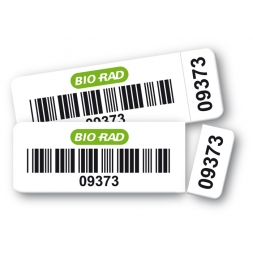
  • Barcode or QR labels for fast inventory.
  • Engraved metal manufacturer's nameplates for industrial equipment.
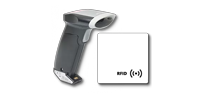
  • UHF RFID labels for multi-tag reading and real-time location.

The right choice depends on the environment and the level of security required. For IT assets exposed to theft, the standard is ultra-resistant labels designed for marking critical equipment, often combined with a tamper-evident identifier.

Choosing the right material for the environment

Polyester is suitable for office and logistics environments. Vinyl adheres to curved or textured surfaces. Anodized aluminum, laser-engraved, withstands extreme temperatures and solvents: it is the standard on machine tools and manufacturer's nameplates. Lastly, destructible substrates fragment at the slightest attempt at removal, providing long-term security for high-value assets.

Choosing the right printer and consumables for quality labelling

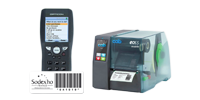
A label's quality depends as much on the printer as on the substrate. For industrial labelling, the preferred set-up is a professional thermal transfer printer (CAB, SATO) combined with a resin ribbon for resistance to abrasion and UV. Sizing your labels correctly for the substrate remains essential to preserve readability over time.

Mandatory labelling for food products

Food labels are governed by a strict European framework: the INCO Regulation (EU) No. 1169/2011, applicable since December 2014. It sets out mandatory information, legibility requirements, and the highlighting of allergens (Eclarion, 2026).

EU Regulation INCO No 1169/2011: the European framework

The INCO Regulation harmonizes consumer information across the entire European Union and imposes a minimum character size of 1.2 mm for mandatory information (0.9 mm on packaging whose largest surface area is less than 80 cm²).

Mandatory information on a food label

Eleven items are required on prepackaged foodstuffs:

  1. Sales name.
  2. List of ingredients (in descending order).
  3. Allergens highlighted (bold, italic or underlined).
  4. Net quantity, by volume or by mass.
  5. Use-by date (UBD) or best-before date (BBD).
  6. Storage conditions.
  7. Name and address of the EU-established operator.
  8. Batch number.
  9. Country of origin or place of provenance, where omitting it could be misleading.
  10. Instructions for use, where relevant.
  11. Nutritional declaration (energy, fat, carbohydrates, protein, salt) per 100 g or 100 ml.

Minimum character size is 1.2 mm (0.9 mm for packaging whose largest surface area is below 80 cm²).

Origin labelling: what has changed since 2025

Since the French Order of 7 March 2024, the origin of meat used as an ingredient in prepared meals is mandatory. The Origin'Info scheme, launched in summer 2024, complements this obligation for processed products on a voluntary basis. In 2025, DGCCRF inspections were stepped up on the consistency between a product's displayed origin and that of its main ingredient (≥ 50% of the composition).

Nutri-Score and environmental labelling: developments to watch

For bulk products, bakery or butchery, only allergen information is mandatory (verbally, in writing or via a visible sign). A nutritional declaration is not required.

Labelling of non-pre-packaged foodstuffs: what's different?

Since the French Order of 7 March 2024, the origin of meat used as an ingredient in prepared meals is mandatory. The Origin'Info scheme, launched in summer 2024, complements this obligation for processed products on a voluntary basis. In 2025, DGCCRF inspections were stepped up on the consistency between a product's displayed origin and that of its main ingredient (≥ 50% of the composition).

The CLP label: labelling of chemical and hazardous products

The CLP label is based on Regulation (EC) No 1272/2008, supplemented by Regulation (EU) 2024/2865 published on 20 November 2024 by the French National Research and Safety Institute INRS (2026). Any hazardous substance or mixture placed on the European market must carry a compliant CLP label.

European CLP Regulation (EC) No 1272/2008

The CLP Regulation harmonises the classification, labelling and packaging of hazardous substances and mixtures across the European Union, aligning with the United Nations Globally Harmonised System (GHS)

The 9 GHS hazard pictograms and three risk categories

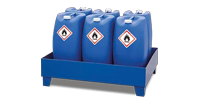
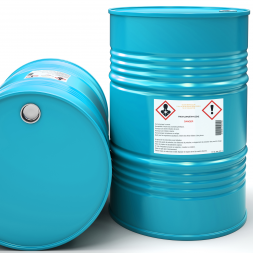
Nine GHS hazard pictograms (red diamond on a white background) cover three categories: physical hazards (explosive, flammable, oxidising, gas under pressure), health hazards (toxic, corrosive, sensitising, CMR) and environmental hazards. To standardise marking, ready-to-apply CLP pictogram kits considerably simplify compliance, as do CLP pictograms pre-printed on blank labels.

Signal word, hazard statements (H) and precautionary statements (P)

A CLP label must include the signal word ("Danger" or "Warning"), the hazard statements (H codes) and the precautionary statements (P codes). For tailored needs, custom CLP pictogramsare often essential.

The Safety Data Sheet (SDS): the essential complement to the label

The Safety Data Sheet (SDS) complements the label with 16 sections covering composition, first aid, storage and disposal. It is mandatory for every professional handling hazardous substances.

CLP 2025-2026: what's new

Three structural changes:

  • New hazard classes: endocrine disruptors, PMT (persistent, mobile, toxic) and vPvM (very persistent, very mobile) substances.
  • Digital labels: from 1 May 2026, a QR code can supplement (but not replace) the physical label, with free two-click access and a minimum retention period of 10 years.
  • Compliance timeline: substances before 1 November 2026, mixtures before 1 May 2028

Cosmetic product labelling

Cosmetic product labelling is governed by Regulation (EC) No 1223/2009, which applies to any cosmetic product placed on the European market.

Regulation (EC) No 1223/2009: the basics

This regulation defines the responsibility of the manufacturer or importer, mandatory registration on the CPNP portal and pre-market safety obligations.

Cosmetic product labelling

Cosmetic product labelling is governed by Regulation (EC) No 1223/2009, which applies to any cosmetic product placed on the European market.

Regulation (EC) No 1223/2009: the basics

This regulation defines the responsibility of the manufacturer or importer, mandatory registration on the CPNP portal and pre-market safety obligations.

Mandatory information

The label must include: the name and address of the responsible person, the nominal content, the best-before date (above 30 months) or the period after opening (PAO, open-jar symbol), the product's function, precautions for use, the INCI list of ingredients (in descending order) and the batch number. The country of origin is mandatory for products imported from outside the EU.

Latest developments: PFAS ban in France

French Law No 2025-188 of 27 February 2025, supplemented by Decree No 2025-1376 of 28 December 2025, bans the manufacture, import and placing on the market of cosmetics containing PFAS as of 1 January 2026, with stock clearance limited to 12 months (Coslaw, 2026). Traceability of nanomaterials and allergens is being reinforced in parallel, calling for more precise cosmetic labelling.

Labelling of clothing and textile products

Textile labelling is based on European Regulation (EU) No 1007/2011 on textile fibre names.

European Textile Labelling Regulation (EU) No 1007/2011

This regulation harmonises fibre names and requires a clear declaration of composition for any textile product placed on the European market, whether intended for the general public or for professionals.

Mandatory information: fibre composition, country of manufacture, care instructions

Three items are required: fibre composition (as a percentage, in descending order of importance); country of manufacture ("Made in…") for imported products; and care instructions according to ISO 3758 (five symbols: washing, bleaching, drying, ironing, and professional cleaning). Designing a textile label that is both informative and compliant means choosing between woven and printed depending on the fabric and the expected service life. Woven or printed textile labels cover most needs.

Textile environmental labelling: the impact score in force since October 2025

The textile environmental display, known as the Ecobalyse eco-score, came into force on 1 October 2025 (Carbonfact, 2026). It assigns a single score in "impact points" covering the garment's life cycle (water, CO₂, biodiversity, durability, recycling). As long as a brand does not publish its own score, the display remains voluntary; from October 2026, any third party will be able to publish the score on the brand's behalf using default data, often unfavourable.

Informative label vs brand label

The informative label (composition, care, size) is legally mandatory. The brand label (logo, design, slogan) is optional but plays a strong commercial role. The two coexist and can be combined on the same substrate.

Labelling and price display in store

Price display in store is governed by Articles L.112-1 et seq. of the French Consumer Code. Every product on display for sale must show its price including all taxes, legibly and without ambiguity.

The legal obligation to display the price including tax

The price including tax must be visible and legible before the purchase, both in physical stores and online. No ambiguity is tolerated regarding the currency, the format or the position of the label relative to the product.

Unit price and price per kilo/litre: rules for pre-packaged products

For pre-packaged products, the unit price (per kg, per litre, per piece) is mandatory whenever the quantity is variable or shown on the container. This rule makes it easier to compare formats.

Promotions and discounts: mandatory mentions on the price tag

Since the 2022 order transposing the Omnibus Directive, any announced discount must refer to the lowest price applied over the previous 30 days. The discount must be shown in absolute value and as a percentage. The word "sale" is strictly reserved for official sales periods.

Shrinkflation: a new disclosure obligation since July 2024

Since 1 July 2024, medium and large retail outlets must inform consumers when a product's quantity is reduced for an identical or higher price. The information is displayed in the immediate vicinity of the product for two months after the change.

5 best practices for successful product labelling

To make your product marking reliable over the long term, five levers make the difference:

  1. Check the regulations upstream, sector by sector (INCO, CLP, cosmetics, textile, AGEC Law).
  2. Choose the right materials for the environment (temperature, humidity, abrasion, UV).
  3. Ensure legibility: minimum character size, typographic contrast, French as the mandatory language.
  4. Implement a quality-control process before placing on the market (checklist, visual validation, 5-year archiving).
  5. Stay informed of regulatory developments (CLP 2026, PFAS, Ecobalyse, Origin'Info).

Traceability becomes more reliable when an asset management software centralises the identifiers attached to each piece of equipment, from initial marking to annual inventory.

Penalties for non-compliance with labelling regulations

Failure to comply exposes operators to graduated penalties based on severity.

Fines and administrative penalties (DGCCRF)

Failure to comply exposes operators to graduated penalties based on severity.

Prosecution for misleading commercial practices

The offence of consumer deception (Article L.441-1 of the Consumer Code) carries up to 2 years' imprisonment and a €300,000 fine, raised to €600,000 or even €750,000 in the event of aggravating circumstances.

Endangering the lives of others: the most serious cases

Omitting hazard statements on a chemical or food product can be characterised as endangering the lives of others. Penalties are then significantly higher, going up to several years' imprisonment.

Impact on reputation and consumer trust

A product recall or a high-profile conviction lastingly damages the trust of distributors and consumers. The indirect cost often far exceeds the financial penalty imposed.

Mastering this body of rules requires combining regulatory monitoring, rigorous technical choices and robust quality processes. From INCO to CLP 2025, from cosmetic PFAS to the textile eco-score, the 2025-2026 developments are reshuffling the deck: anticipation is becoming a competitive advantage. Adopting the right hardware and software solutions today secures the compliance and traceability of your product labelling.

Related products

Continue reading...
These articles too might interest you.

Industrial automation: definition, technologies and use cases

Industrial automation is transforming the productivity of French factories, with gains of up to 30%. But without reliable traceability, no automated line can deliver on its promises. This guide breaks down the key technologies, programmable controllers, sensors, and RFID and their real-world use cases across industry, logistics, and construction.
Product News
Melissa Oumaouche
107 views

How to choose the right ink ribbon for quality labeling?

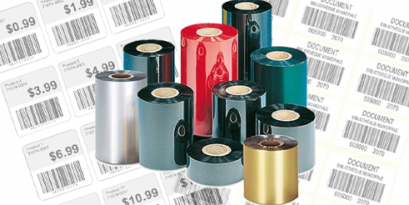
Choosing to print in-house saves a considerable amount of time and can, in some cases, be an economic gain. Printing labels with variable information within a company is extremely important, especially for barcode labels that need to be readable by scanners and have a long shelf life.  But this implies certain risks of misprints caused by many printing components that can have big consequences. In particular, when printing barcodes where a bad print will lead to an inability to read and track the product. To avoid the risks, you need to understand the printing components (label printer, ink ribbons and label rolls) and choose them carefully. SBE is here to guide you in your choice of ink ribbons. 

SBE advise you
10635 views

Frequently asked questions

How do I choose the right type of label for my industrial products?

The choice depends on the environment, the substrate and the required level of security. For office use, adhesive polyester is sufficient; for machinery, engraved aluminium is recommended. For assets at risk of theft, opt for a tamper-evident or destructible label. Always validate resistance to UV, abrasion and solvents.

What do the pictograms on a CLP label mean?

The nine GHS pictograms (red diamond on a white background) signal the physical, health and environmental hazards of a chemical substance. They are accompanied by a signal word ("Danger" or "Warning"), H statements and P precautionary statements. The Safety Data Sheet is a mandatory complement to the label.

Is price labelling mandatory in France?

Yes, every product on display for sale must show its price including tax, legibly and unambiguously. The unit price (per kg or per litre) is mandatory for pre-packaged items. Promotions must show the reference price for the previous 30 days. Shrinkflation has had to be flagged near the product since July 2024.

See the author's articles
Melissa Oumaouche

With over 5 years of experience in creating content optimized for search engines, Mélissa is currently Marketing & Product Manager at SBE Direct, where she leads the product catalogue positioning across the e-commerce website and marketplaces, as well as the SEO content strategy in coordination with the marketing team she oversees.

We use cookies to improve your experience.