Industrial traceability is no longer optional. In 2024, Europe recorded 14,484 product recalls across five key sectors, according to the Sedgwick European Recall Index 2025. This historically high level is placing significant pressure on margins, brand reputation, and safety. The average cost of a major recall is €10.5 million, according to an analysis by Allianz Global Corporate & Specialty covering 367 incidents across 28 countries.

How can a defective batch be isolated in just a few minutes? Which industrial marking technology should you choose between barcodes, DataMatrix, and RFID? What standards should be applied to remain compliant? How can you combat counterfeiting and theft? This comprehensive guide answers all these questions and introduces the SBE Direct method, built on 30 years of expertise and more than 16,000 clients supported.

What is industrial traceability?

Industrial traceability is the ability to track and record the origin, history, and location of a product, component, or asset throughout its entire lifecycle. It relies on two inseparable pillars: physical identification (label, marking, or RFID tag) and the associated data (serial number, batch, date, and operator). This dual requirement is reflected in ISO 9001:2015 §7.5.3, which makes it a requirement of the quality management system.

In practical terms, tracing a product means being able to answer three questions at any time: where does it come from, where is it now, and where is it going?

The three levels of traceability

Industrial traceability is built around three complementary levels that cover the entire value chain:

  • Upstream traceability identifies the origin of raw materials, components, and suppliers.
  • Internal traceability records transformation operations, the machines used, and production parameters.
  • Downstream traceability tracks batches or individual units through to end customers, field use, and end of life.

These three levels work together. A flaw at just one level breaks the entire chain and makes targeted recalls impossible.

Without a reliable physical identifier, software data remains abstract. Without structured data, marking is useless. The performance of an industrial traceability system therefore depends on the quality of the link between the two. That is why the choice of high-resistance industrial labels should always go hand in hand with careful consideration of the downstream management software.

Key sectors of industrial traceability

Industrial traceability applies to every sector that must prove the origin, quality, or safety of its products. Five sectors stand out as the most mature, with regulatory requirements and technologies adapted to their field conditions. Since 1992, SBE Direct has supported players across these five industries.

Industry and production


The manufacturing industry uses traceability to manage quality, handle non-conformities, and track critical components. In aerospace, automotive, and energy, every part is marked as it leaves the production line, most often with laser-engraved DataMatrix codes or micro-percussion marking. The goal is to trace back to the operator, the machine, and the raw material batch in the event of an incident.

Logistics and transport


In logistics, product traceability is used to monitor flows in real time, reduce losses, and streamline inventory management. Barcodes and UHF RFID are the dominant technologies. According to Mordor Intelligence, the global track-and-trace solutions market is expected to reach 5.93 billion dollars by 2031, with a compound annual growth rate of 9.14%.

Healthcare and medical


The medical sector applies the Unique Device Identification (UDI) system required under European Regulation MDR 2017/745. Each device must be registered in the European EUDAMED database. Hospital traceability also covers patient identification through ID bracelets and the sterilization of instruments through DataMatrix marking.

Asset management


Finance departments and IT teams track IT assets, office furniture, and production equipment to optimize fixed asset management. The challenge is not only accounting-related: it is also a way to combat theft and loss. Across the 900,000 tamper-evident plates installed by SBE Direct at its clients’ sites, the average reduction in theft observed reaches 96%.

Retail and distribution


In retail, traceability combines inventory management, loss prevention, and product authentication. Luxury goods, in particular, face high counterfeiting risks and therefore deploy hybrid solutions: RFID labels for inventory tracking and holograms or VOID labels for authenticity.

Why traceability has become essential

Industrial traceability has evolved from a best practice into a strategic obligation. Four converging forces make it mandatory in 2026: regulatory compliance, recall management, anti-counterfeiting efforts, and logistics optimization. Ignoring any one of these dimensions exposes the company to significant financial, legal, or reputational risk.

Regulatory Compliance and Standards


Traceability standards vary across industries, but they all converge on a requirement for unique identification and retained data. Here are the key obligations to be aware of:

  • ISO 9001:2015: Clause 7.5.3 requires control of product identification and traceability within any certified quality management system.
  • GS1 Standards: A global framework for the supply chain (GTIN, GLN, barcodes, GS1 Digital Link). GS1 standards enable interoperable traceability between manufacturers, distributors, and platforms, as detailed by GS1.
  • MDR 2017/745 (Healthcare): UDI (Unique Device Identification) is mandatory for all medical devices placed on the European market.
  • FSMA (Food industry): Strengthened food traceability requirements, with a new FDA rule that came into effect in January 2026.
  • EN 9100 / IATF 16949: Sector-specific requirements for aerospace and automotive industries.

Note: Documented traceability serves as audit evidence in the event of an inspection. Without structured and reliable data, a company cannot demonstrate compliance.

Quality, Safety, and Recall Management

Effective traceability makes it possible to isolate defective batches within minutes and target only the units that need to be recalled, rather than withdrawing an entire production run. The stakes are both financial and human. According to the Sedgwick 2025 report, the number of product recalls in Europe reached a historic high in 2024, and the average cost of a major recall exceeds €10.5 million.

The benefits of strong downstream traceability are threefold:

  • Ability to isolate non-compliant batches in under one hour.
  • Reduction of non-quality costs and limitation of recall scope.
  • Protection of brand reputation and preservation of customer trust.

Anti-Counterfeiting and Theft Prevention


In luxury, pharmaceuticals, and high-tech industries, securing industrial traceability relies on tamper-proof anti-fraud solutions. Three main categories dominate:

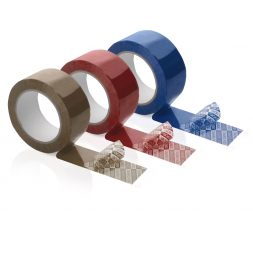
  • VOID labels: When removed, they leave an indelible mark (such as the word “VOID” or a checkerboard pattern), providing clear evidence of tampering.
  • Authentication holograms: Laser-numbered and impossible to reproduce without the original industrial equipment.
  • Numbered security seals: Applied to containers, parcels, or sensitive goods, they ensure transport integrity.

According to field data from SBE Direct, applying a patented anti-theft marking such as Safe-Tech to an IT asset fleet reduces theft rates by an average of 96%, based on a sample of 900,000 tamper-proof labels installed.

Industrial Traceability Solutions

Choosing an industrial traceability solution means balancing between five main technology families, each suited to a specific environment, volume, and budget. The overview below helps frame the decision before going into detail. No single technology is universal: the right choice depends on the criticality of the application and real-world constraints.

TechnologyData DensityDurabilityRead RangeUnit CostTypical Use Case
1D BarcodeLowMedium (2–5 years)10 cm – 2 mVery lowStock management, retail
QR Code / DatamatrixHigh
up to 3,000 chars
High (laser engraving)5 cm – 1 mLowAerospace, medical, DPM
RFID HF / NFCMedium
up to 1 kB
High5 – 10 cmMediumBadges, sensitive products
RFID UHF
ISO 18000-63
Medium
up to 8 kB
Very high6 – 9 mMedium to highMass inventory, logistics
Engraved aluminium plateLowExtreme (>20 years)Human readableHighManufacturer plates, fixed assets
VOID label / hologramVariableHighVisualLow to mediumAnti-fraud, authentication

Barcode Labels and QR Codes


The 1D barcode remains the most widely used technology for standard product traceability. Cost-effective and readable by virtually any scanner, it is particularly well suited for inventory management and retail. QR Codes and Data Matrix codes offer higher data density and remain readable even when partially damaged. For typical industrial needs, the SBE Direct barcode label range covers all types of materials, including thermal paper, polypropylene, and metallized polyester.

RFID Technology

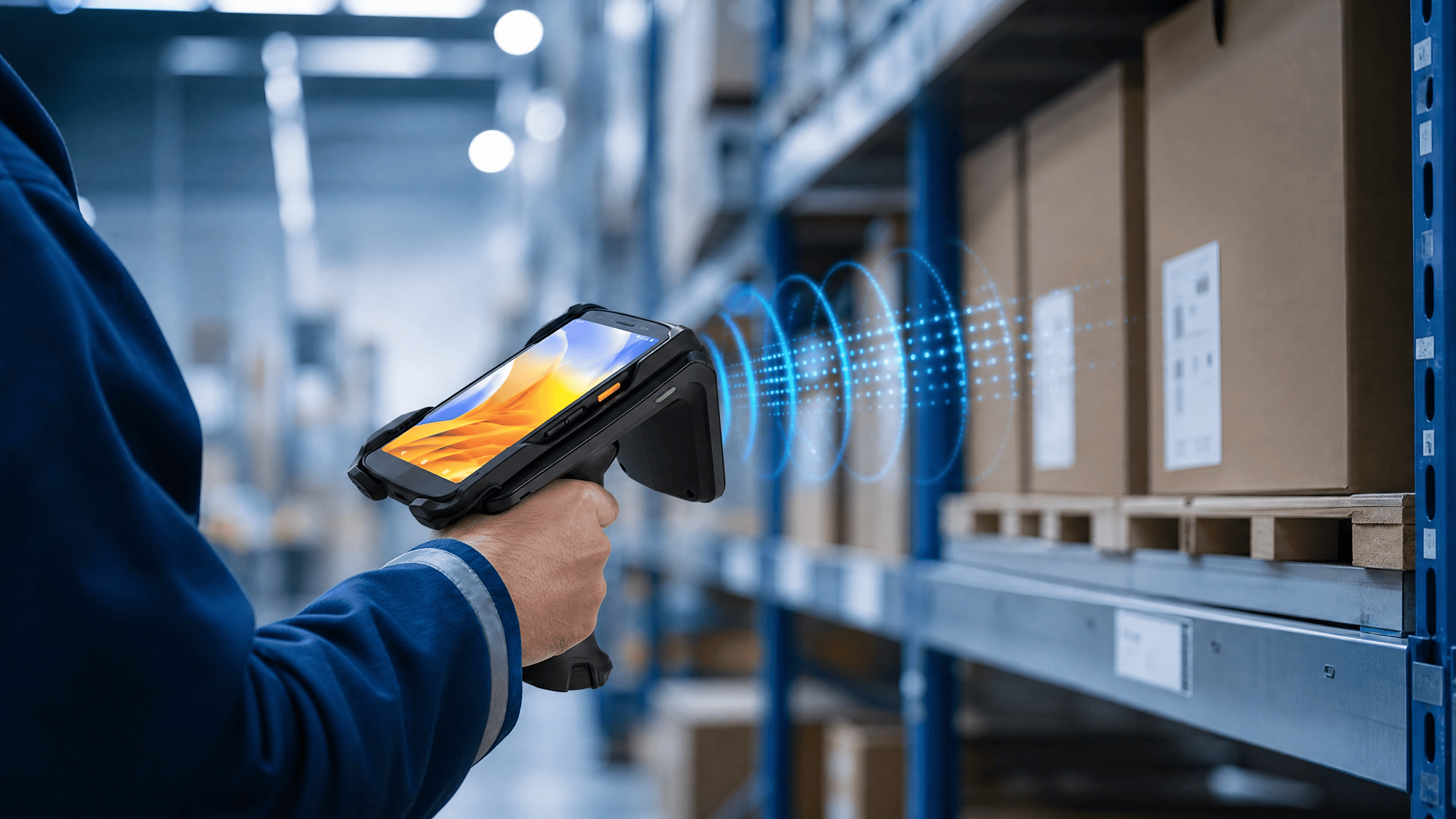
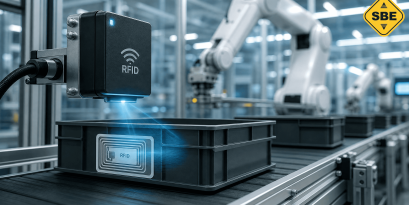
RFID (Radio Frequency Identification) enables data to be read without contact or line of sight. Three frequency bands cover most industrial needs:

  • LF (low frequency): Robust in metal or wet environments, but with a short reading range (under 10 cm).
  • HF / NFC (13.56 MHz): Ideal for badges, access control, and product authentication.
  • UHF (865–868 MHz in Europe, ISO 18000-63 / EPC Gen2 standard): Reading range up to 9 meters, ideal for bulk inventory and warehouse logistics.

For large-scale industrial production traceability projects, UHF RFID is the reference technology. The SBE Direct UHF/HF RFID label range is compatible with all standard protocols.

Industrial traceability forms the foundation of quality, compliance, and safety in modern industry. Choosing an identification technology—whether barcode, Data Matrix, UHF RFID, aluminum plate, or tamper-evident label—should always start from operational needs rather than supplier catalogs. When properly designed, a traceability solution protects margins (by reducing recalls), brand reputation (through anti-counterfeiting), and operational performance (via real-time inventory).

Durable Identification Plates


For long-life assets such as machine tools, industrial equipment, and urban infrastructure,durable manufacturer plates made of anodized aluminum with laser engraving ensure readability for over 20 years, even in outdoor environments exposed to UV and temperature variations. They often incorporate a Data Matrix code to combine human readability with machine scanning.

Security and Authentication Solutions

When traceability must also guarantee tamper evidence, standard solutions are not sufficient. SBE Direct offers a dedicated range for authentication and security:

  • VOID anti-fraud labels: Destructive marking upon removal, making any tampering immediately visible.
  • Numbered security seals: The SBE security sealrange covers road (ISO 17712:2013), maritime, and air transport.
  • Authentication holograms: 18 standard models and custom variations, each with unique laser numbering.

What Information Should Be Tracked?

The data to be recorded in an industrial traceability system depends on the sector, strategy, and product criticality. Six categories cover about 95% of industrial needs. The key is to structure what you capture from the outset to avoid having to rework an entire production later. Here are the six essential data points to include:

  • Serial number / batch number: Unique identifier of the product or product group.
  • Date and place of manufacture: Plant, production line, and time slot.
  • Operator identity: Team code or operator responsible for the critical operation.
  • Product reference and raw material supplier: Enables upstream traceability.
  • Maintenance and service history: For repairable or recalibrated assets.
  • Quality control data: Test results, certificates, and compliance with specifications.

The exact selection depends on the industry. Food processing may add expiration dates and cold chain data. Aerospace requires material traceability by batch with EN 10204 3.1 certification. Medical devices mandate UDI and sterilization tracking. As a rule of thumb, it is better to capture too much data initially than too little—you can filter later, but you cannot reconstruct missing information.

Implementing Effective Traceability

Implementing effective industrial traceability follows a structured five-step methodology. SBE Direct applies this approach to projects ranging from industrial SMEs to large-scale deployments for public administrations and CAC 40 clients. Skipping a step or changing their order systematically leads to extra costs: labels unsuited to their substrate, markings that become unreadable after six months, or orphan data in the ERP.

Step 1: Define Objectives and Scope


Before choosing any technology, you must clearly state the primary business need. Is it a regulatory compliance requirement (ISO 9001, MDR, FSMA)? A quality initiative to reduce recalls? A logistics optimization project? An anti-theft or anti-counterfeiting program? The answer drives every subsequent technical decision. Next, map the scope of the project: sites involved, production lines, product references, and annual volumes.

Step 2: Choose the Right Identification Technology


Four key criteria guide the choice: environment (temperature, humidity, shocks, chemical exposure), volume (unit, batch, pallet), unit and rollout budget, and required lifespan (months, years, decades). The comparison table presented earlier serves as a decision framework. When hesitating between two technologies, choose the more durable one: reworking an installed base of unsuitable labels costs three to five times more than investing in the right material from the start.

Step 3: Deploy the Identification System

The deployment phase combines the production of identification media and their application in the field. Three options coexist:

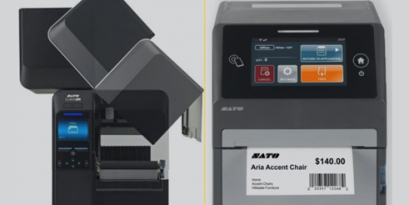
  • In-house production using a dedicated thermal transfer printer (SATO, CAB) and labelling software (NiceLabel, BarTender, Cablabel).
  • Custom orders from a specialized supplier for industrial volumes and technical substrates.
  • Hybrid approach: series pre-printing by the supplier, plus on-site personalization at the time of application.

For harsh environments, SBE Direct’s high‑resistance industrial labels cover needs in polyester, polypropylene, aluminum, and UV/chemical/high‑temperature‑resistant materials.

Step 4: Connect to a Management System

A physical identifier only has value when it is linked to a structured software system. Three levels of integration are possible, depending on the company’s maturity:

  • Dedicated asset management software: SAM (SBE Asset Manager), ScanAsset. Ideal for getting started quickly.
  • ERP module: SAP, Oracle, Sage. Best choice if an ERP system is already in place and widely adopted.
  • Custom business database: For very specific, high‑volume requirements.

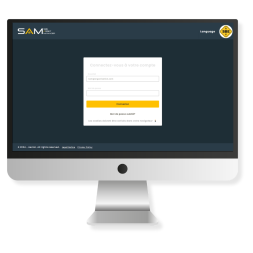
To structure asset tracking quickly, the SAM asset management software interfaces with handheld terminals and RFID readers to synchronize data in real time.

Step 5: Maintain and Evolve

Traceability is not a one‑off project; it is an ongoing process. Three best practices ensure the long‑term sustainability of the system:

  • Regularly check the readability of markings (a quarterly audit is recommended).
  • Keep data up to date in the software (data quality equals traceability quality).
  • Gradually evolve toward complementary technologies (for example, moving from barcodes to UHF RFID when volumes justify it).

Related products

Continue reading...
These articles too might interest you.

Industrial automation: definition, technologies and use cases

Industrial automation is transforming the productivity of French factories, with gains of up to 30%. But without reliable traceability, no automated line can deliver on its promises. This guide breaks down the key technologies, programmable controllers, sensors, and RFID and their real-world use cases across industry, logistics, and construction.
Product News
Melissa Oumaouche
107 views

UHF RFID Explained: Frequency, Technology & Industrial Applications

UHF RFID technology (860–960 MHz) enables the simultaneous reading of hundreds of tags at distances of up to 15 meters, with no line-of-sight requirement, where barcodes still demand manual, one-at-a-time scanning. It has established itself as the global standard for automated traceability across industries as diverse as logistics, retail, healthcare, and industrial asset management. Its key advantages include data accuracy exceeding 99%, an 80–90% reduction in cycle count time, and an ROI typically achieved within 12 to 18 months. Its only notable limitations involve sensitivity to metal surfaces and liquids, which require the use of On-Metal tags (also referred to as metal-mount RFID tags) in demanding industrial environments.

Product News
Melissa Oumaouche
1414 views

What is the best SATO industrial label printer?

You need to change your industrial label printer and you want to invest in the best SATO printer on the market, but you don’t know which product to choose? In this article, we will compare the SATO CL4NX Plus and CT4-LX to best suit your needs!

Product News
5486 views

Frequently asked questions

What Is a Traceability Label?

A traceability label is a physical identification medium (paper, polyester, aluminum, or RFID) applied to a product or asset to carry a unique identifier such as a serial number, barcode, Data Matrix code, or RFID chip. It links the physical object to data in the ERP or asset management software and enables tracking of its entire life cycle. SBE Direct offers a range of specialized industrial labels adapted to each environment.

What Are the Main Industrial Traceability Standards?

The main standards are ISO 9001:2015 (clause 7.5.3), GS1 standards (GTIN, GLN, GS1 Digital Link), the European MDR 2017/745 regulation (UDI for medical devices), FSMA for the food industry, and ISO 18000-63 for UHF RFID. Aerospace and automotive add EN 9100 and IATF 16949, with mandatory 3.1 material certificates.

What Is the Retention Period for Traceability Labels?

It depends on the material: 2 to 5 years for standard polypropylene, 7 to 10 years for metallized polyester, over 20 years for laser‑engraved anodized aluminum, and lifetime durability for metal nameplates. For harsh environments (chemicals, high temperatures, UV), aluminum should be preferred. For digital data, plan on at least 10 years of retention in regulated industries, and even longer in the medical and aerospace sectors.

How to Choose the Right Traceability Technology for Your Company

Four criteria determine the choice: environment (dry indoor → barcodes; outdoor or harsh conditions → aluminum or Data Matrix DPM), read volume (single item reading → barcodes; bulk reading → UHF RFID), required security level (anti-fraud → VOID labels, holograms, security seals), and budget (barcodes ≈ €0.01 per unit; RFID ≈ €0.10 to €1 per tag). When in doubt, request a detailed quotation.

See the author's articles
Melissa Oumaouche

With over 5 years of experience in creating content optimized for search engines, Mélissa is currently Marketing & Product Manager at SBE Direct, where she leads the product catalogue positioning across the e-commerce website and marketplaces, as well as the SEO content strategy in coordination with the marketing team she oversees.

We use cookies to improve your experience.