• New
Zebra TC22 TC27 battery rotation in the warehouse | SBE Direct

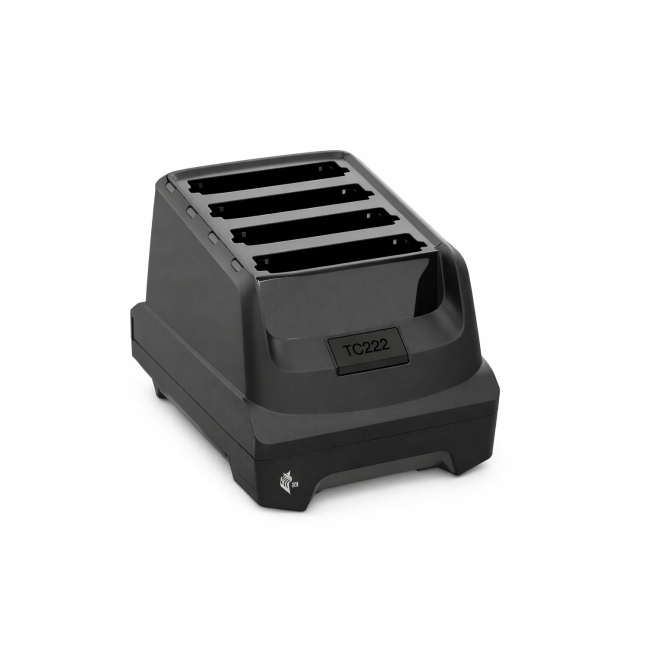
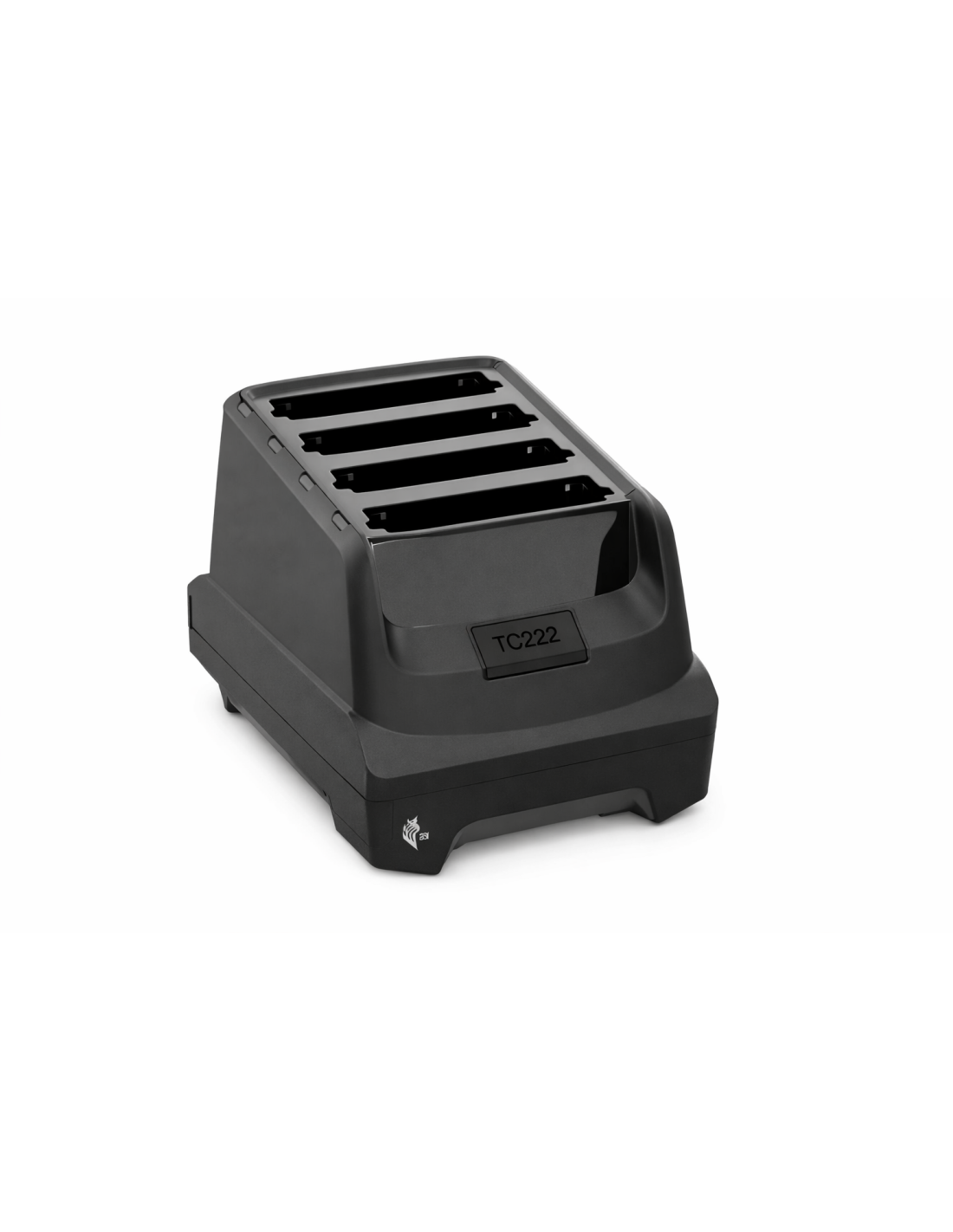
4-slot battery charger for Zebra TC22 and TC27

(?)
The base
  • Four batteries at once
  • Terminals never taken away
  • Built for TC22 and TC27
  • Supplied on its own
  • 1-year warranty
Quantity (The base)
Total : €586.80 excl. VAT

Product available for orders
 

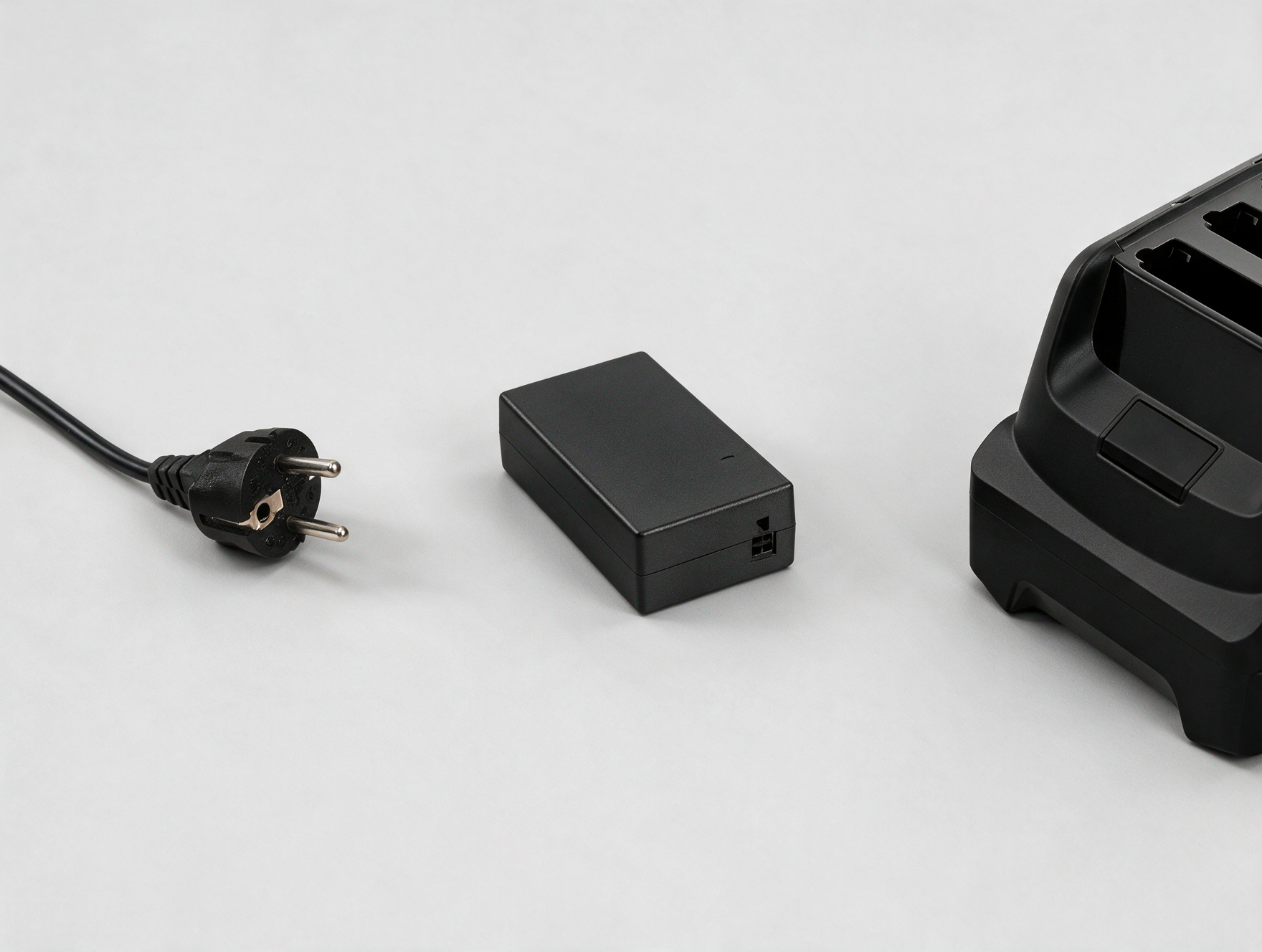
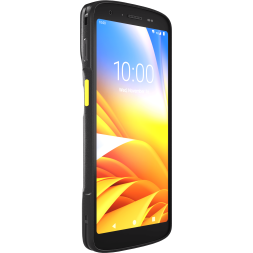
The 4-slot battery charger for Zebra TC22 and TC27 charges batteries on their own, away from the terminals. Four cells get ready while the devices stay in operators' hands, which changes how fleet availability works. At handover the swap takes seconds and the next shift starts on a full battery. It is supplied on its own: the power brick, DC cable and mains cord are ordered separately.

Four batteries charging, no terminal out of service

The difference from a cradle fits in one line: here the battery goes on the charger, not the device.

  • →Four bays: four Zebra TC22 or TC27 batteries charge together on a single unit.
  • →Terminals stay in service: no device leaves the floor while charging happens, unlike with a cradle.
  • →Built for TC22 and TC27: the charger is made for the batteries of these two references.
  • →Supplied on its own: no power brick, no DC cable and no mains cord in the box. All three are in the catalogue.
  • →Made for heavy use: a professional format for warehouses, logistics hubs and picking areas.
  • →1-year warranty: sold as a single unit, covered for twelve months.

Zebra TC22 / TC27 battery rotation: how it works

A charging cradle takes the terminal out of service for as long as it charges. On a site running two or three shifts, that means accepting part of the fleet will be unavailable at exactly the moment the handover needs it.

A battery charger reverses the constraint. Spare batteries get ready during the current shift, on a bench or a technical shelf, and the operator coming in swaps theirs in seconds. The Zebra TC22 or TC27 terminal never leaves circulation.

This is the pattern for continuous operations: goods-in in the morning, picking in the afternoon, outbound checks in the evening, on the same devices. Four charged batteries cover a full handover with no dead time.

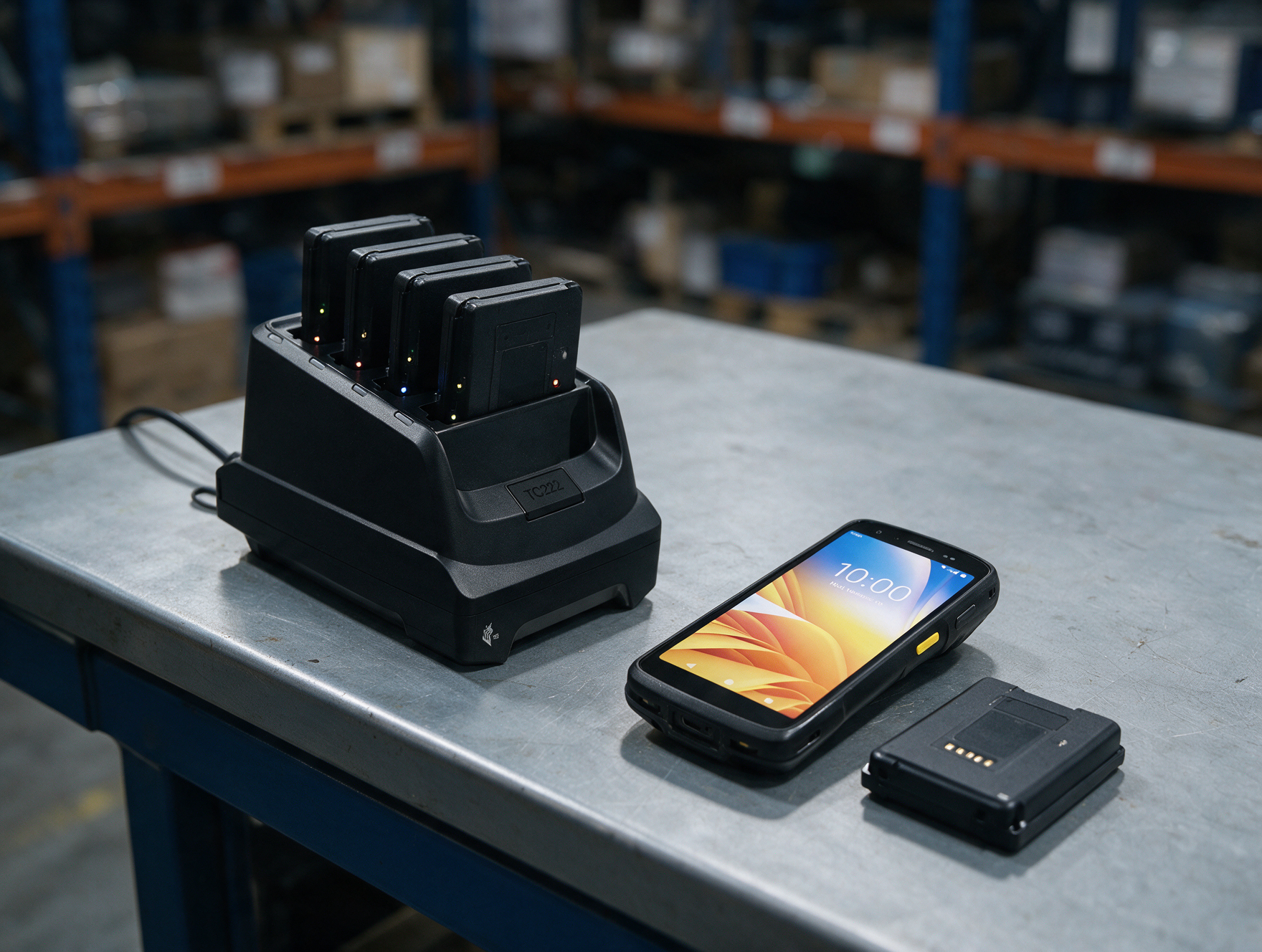
4-slot battery charger for Zebra TC22 / TC27 in a picking area

Doubling batteries rather than terminals

The trade-off is financial first. To avoid availability gaps, a site can buy extra terminals, or buy spare batteries and something to charge them with. The second option costs a fraction of the first.

It is also more flexible. A spare battery serves any device in the fleet, whereas an extra terminal is one more object to manage, configure and assign.

For a stock management operation running back-to-back shifts, the maths runs on daily handovers rather than headcount: the number of battery swaps per day is what sets how many charging bays to install.

Building the charger's power chain

The charger arrives bare. Three catalogue references connect it to the mains, in this order.

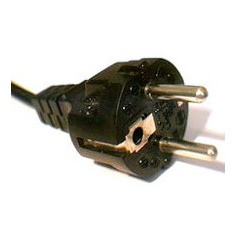
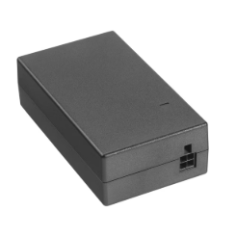
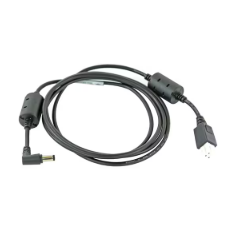
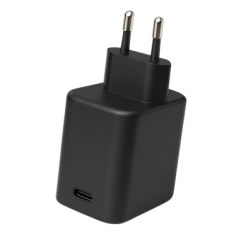
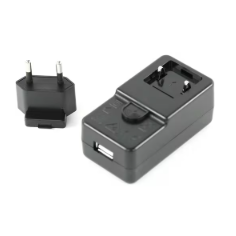
Mains cord, power brick and DC cable to order with the charger
Assembly orderItemSpecifications on record
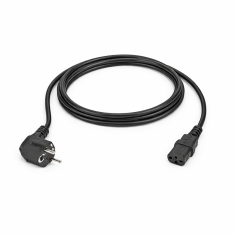
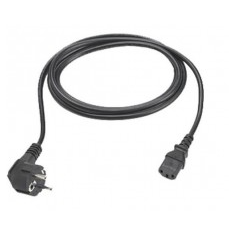
1. From the wall socketEU mains cordEuropean plug, 18 AWG, 6 A, 250 V, CE compliant
2. Current conversionPower brick12 V DC, 4.16 A, 50 W, level VI energy efficiency
3. On to the chargerDC cableConnection for 12 V bricks, intended for this charger

All three are here: EU mains cord, 12 V power brick and DC power cable. They are sold separately, and all three are needed to put the charger into service. The wider range sits under RFID accessories.

Where the battery charger fits among the site's charging kit

Zebra TC22 batteries charging in their four bays, terminal set down alongside

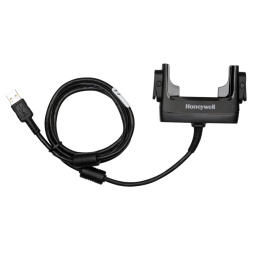
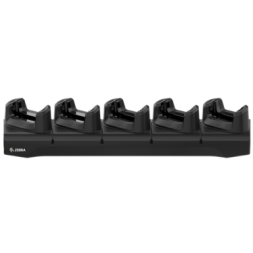
This charger replaces no cradle, it completes them. The 1-slot charging cradle equips an assigned post, the five-slot charging station equips a room where terminals come back together, and this one prepares batteries while both of those sit free. Three answers to three different moments of the day.

Watch the terminal reference. A fleet on Zebra RFD40 or TC22R needs the charger made for those models, as the batteries differ. Always start from the exact reference of the devices in service.

Plan the physical spot too. Four batteries on charge want a stable, ventilated surface away from traffic, with a socket of their own. Where devices get dropped, the rugged protective case protects the terminal but changes nothing about battery handling. The rest of the range sits under RFID readers.

Frequently asked questions

How many batteries does this charger take at once?▾

Four. All four bays are identical and work simultaneously, so a full handover can be prepared during the current shift.

Which batteries are compatible?▾

Those of the Zebra TC22 and TC27 terminals. For an RFD40 or TC22R fleet the catalogue has a separate charger, as batteries are not interchangeable between those families.

Does the charger come with its power supply?▾

No. It is supplied on its own, with no power brick, DC cable or mains cord. All three references are in the catalogue and all three are needed to put it into service.

Can a whole terminal be charged on it?▾

No, the bays take batteries only. To charge a terminal, the catalogue offers a 1-slot cradle and a five-slot shared station.

How do we size the number of bays for a fleet?▾

Count battery swaps per day rather than operators. Past four swaps per handover, a second charger becomes useful. For volume pricing, our technical team answers through a quotation request.

A Zebra TC22 or TC27 fleet to equip?

Sizing for the number of bays and the three power accessories.

Request a quotation →
Unit
The base
Conditioning
Individually
Guarantee
1 year
Zebra

Choose product attributes:

Ref. Unit price Buy
ACC-TC2-CHRGBTTR
1+
€586.80
ACC-TC2-4CHRGBTTR
1+
€586.80

You might also like

Customers who bought this product also bought:

We use cookies to improve your experience.