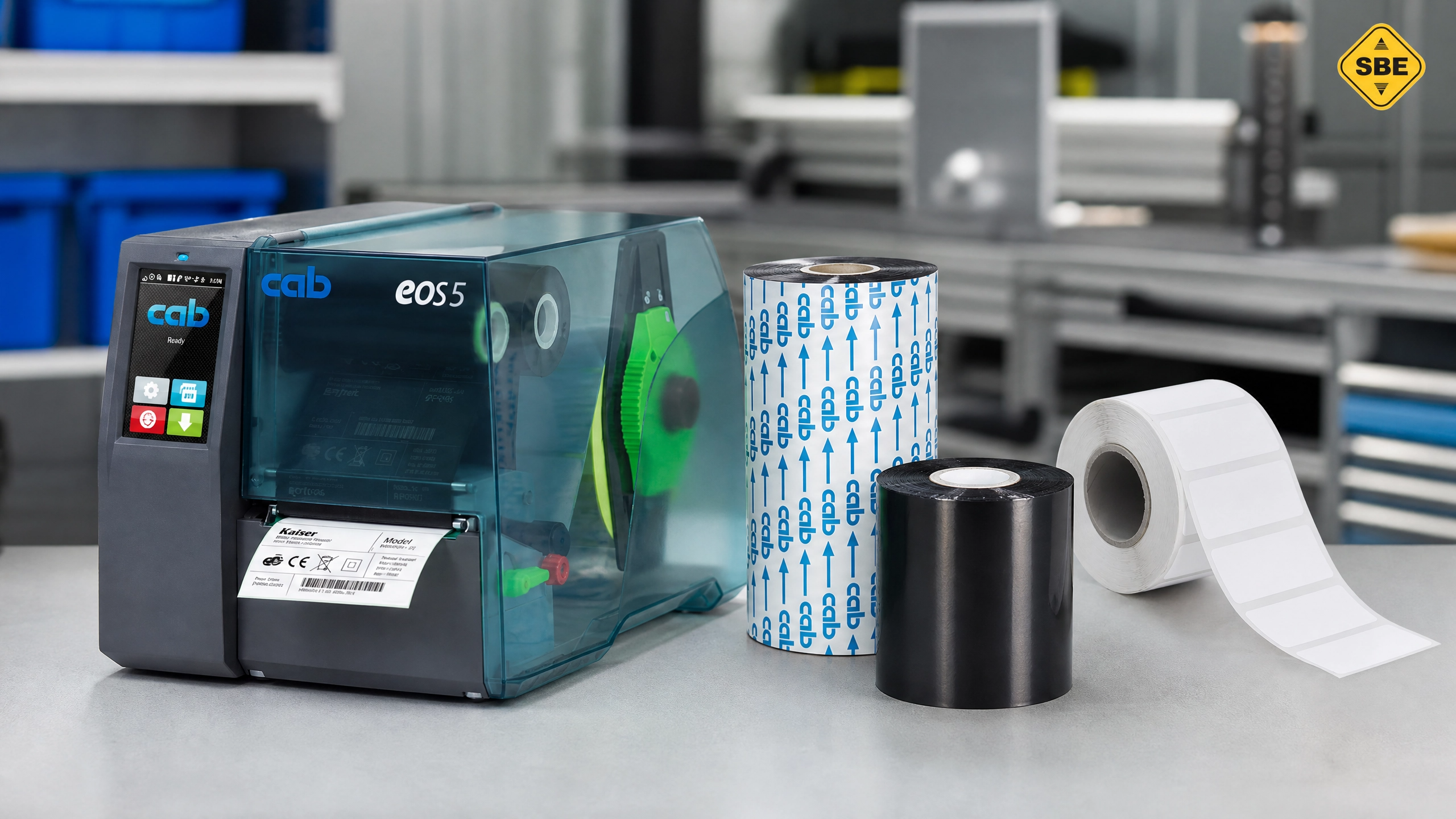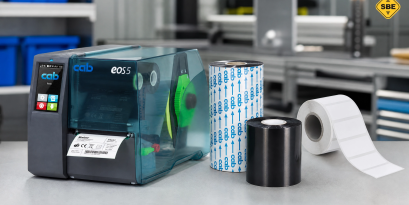
Thermal transfer printing has established itself as the dominant technology for industrial identification, barcoding, and logistics labeling. According to SNS Insider data, the global thermal transfer label market was worth USD 51.55 billion in 2025 and will reach USD 91.83 billion by 2035, driven by regulatory traceability and the rise of B2B e-commerce. When should you prefer a professional thermal transfer printer over a direct thermal printer? What service life can you expect from a label? Which ribbon should you choose between wax, wax-resin, and resin?

What is thermal transfer printing?

Thermal transfer printing is a digital printing technology that uses a heated print head to melt the ink on a ribbon and transfer it onto a label substrate. The ink becomes an integral part of the substrate after cooling, which delivers high resistance to UV, abrasion, heat, and chemicals. This technology dominates the barcode, logistics label, and industrial identification markets.

In detail, the process combines three elements: a linear thermal print head, a thermal transfer ribbon (wax, wax-resin, or resin), and a substrate (paper or synthetic), the type of thermal transfer label determining final durability. Heat, between 100 °C and 400 °C, melts the ink layer on the ribbon and applies it precisely onto the label.

The fingernail test for identifying a thermal transfer label:

  • Scratch the surface of the label with your fingernail.
  • If a black mark appears on the surface, you are holding a direct thermal label.
  • If nothing appears, you are holding a thermal transfer label.

How does a thermal transfer printer work?

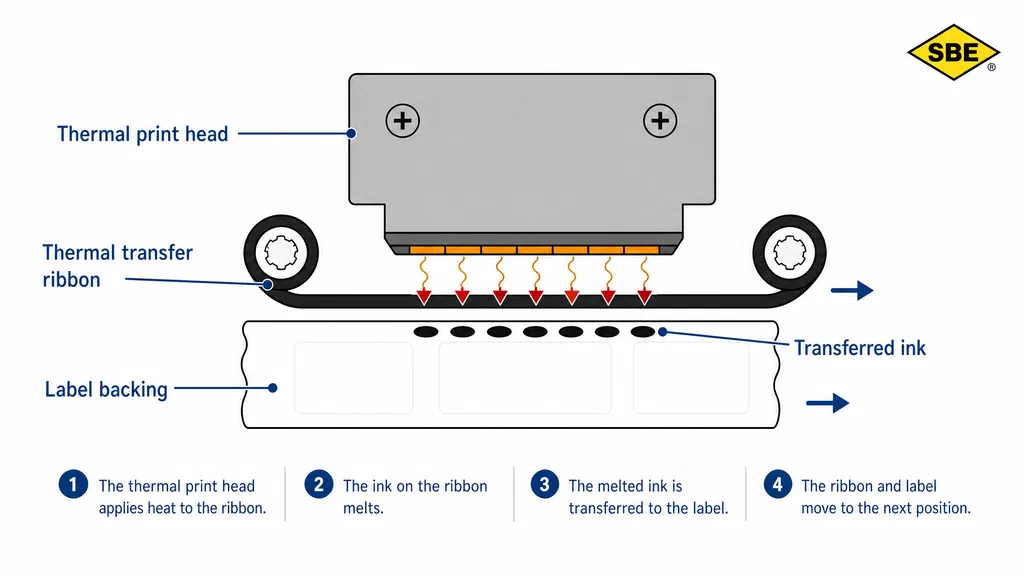
A thermal transfer printer works in four steps: the ink ribbon runs between the print head and the label; the resistors in the head locally heat the ribbon; the ink melts and transfers onto the substrate; and after cooling, the ink solidifies and the ribbon separates from the printed label. The cycle is parallel: a full line is printed with each pass of the head.

Flat Head or Near Edge print head

 Mécanisme de tête d'impression transfert thermique en contact avec un ruban carbone et des étiquettes dans une imprimante industrielle.

Two head technologies coexist and determine which ribbon is compatible:

  • Flat Head: the head presses the ribbon flat against the substrate. Ideal for printing on roll labels in office and light industrial settings. Compatible with most of the SATO and CAB printers in the SBE Direct range.
  • Near Edge: the head prints on the edge of the substrate at high speed, up to 56 cm/sec. Reserved for print & apply lines and for print-and-apply systems on flexible packaging.

Ribbons for near edge heads are not compatible with flat head heads and vice versa. Checking the printer technology before any consumable purchase is the first rule of a successful identification project.

Performance and resolution

Professional thermal transfer printers deliver verifiable industrial performance:

  • Print speed: from 15 to 56 cm/sec depending on the model.
  • Resolution: 203, 300 or 600 dpi depending on the need (2D barcodes, high-definition logos).
  • Print-head life: more than 50 km of printed substrate before replacement  three times the life expectancy of a direct-thermal head.
  • Print width: from 25 mm (narrow labels) to 110 mm (logistics labels).

Sortie d'une étiquette imprimée en haute résolution 600 dpi avec code-barres 2D et logos nets sur une imprimante professionnelle.

To manage your printer fleet and design your labels, SBE Direct distributes the label printing software NiceLabel Designer, Cablabel S3 Pro and BarTender.

The different types of thermal transfer ribbon

There are three types of thermal transfer ribbon: wax, wax-resin, and resin. The choice depends on the substrate to be printed and on environmental constraints. A poor ribbon–label match prematurely wears the print head and degrades barcode legibility.

Wax ribbon

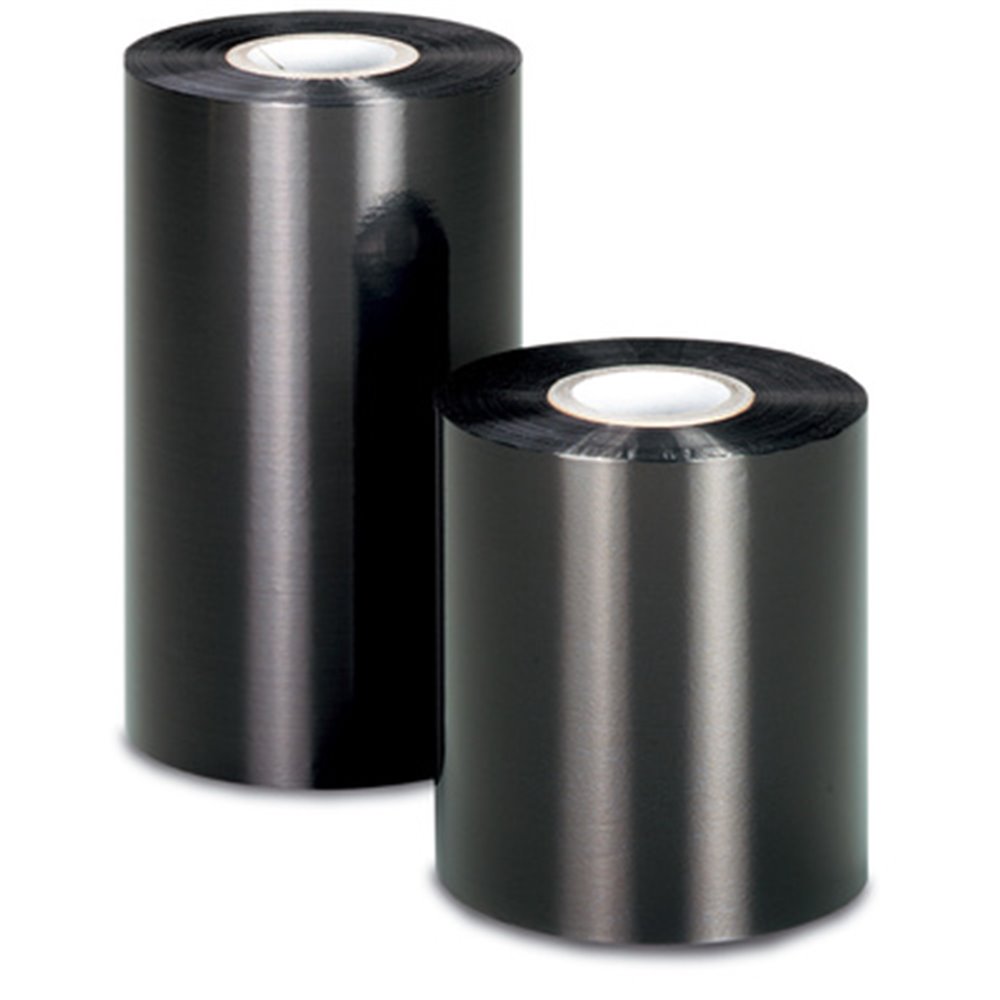
ruban cire pour imprimantes transfert thermique
  • Soft-wax-based ink, transfer at low temperature.
  • Most economical option in the range.
  • High print speed.
  • Low resistance to rubbing, abrasion and chemicals.
  • Ideal for: coated paper, offset paper, short-life logistics labels, in-store promotional labels.

Wax-resin (mixed) ribbon

  • Blend of soft wax and hard resin.
  • Medium resistance to rubbing and humidity.
  • Compatible with glossy paper, polypropylene and polyethylene.
  • Used for high-speed print & apply applications.

SBE Direct reference: RM71 and RM91 ranges for CAB printers.

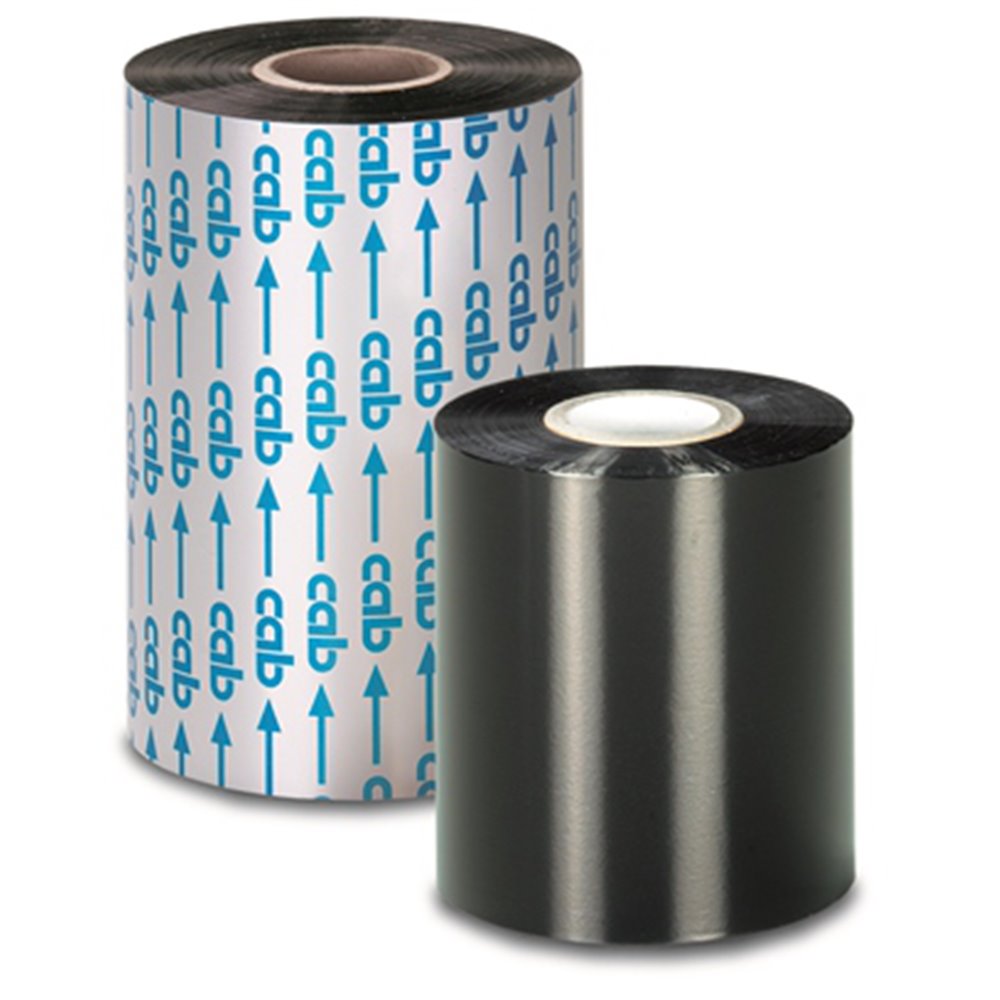
ruban cire-résine pour imprimantes CAB

Resin ribbon

Sélection de rubans transfert thermique multicolores (noir, rouge, vert, jaune) pour l'impression d'étiquettes industrielles haute performance.

100% resin ink, transfer at high temperature.

  • Maximum resistance to solvents, abrasion, UV, extreme temperatures (-55 °C to +155 °C).
  • Compliant with UL and CSA standards.
  • Essential for: nameplates, washable textile labels, chemical identification, automotive labelling, printed circuit boards.
  • Premium reference: AXR8 superior resin ribbon by ARMOR-IIMAK, available at SBE Direct.

For your textile needs, the special textile thermal transfer ink ribbon (TC11, So Black and So White ranges) withstands domestic and industrial washing.


Which labels should you use for thermal transfer printing?

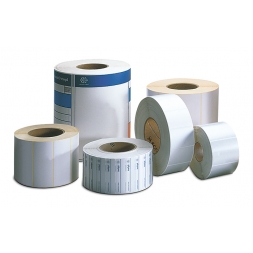
A thermal transfer label is a blank substrate, paper or synthetic, designed to receive a print through ribbon fusion. Unlike direct thermal labels, they contain no heat-sensitive coating and do not darken at ambient temperature. Their service life depends mainly on the ribbon–substrate combination chosen.

The main label families used in thermal transfer printing at SBE Direct:

  • Polypropylene labels: general use, inventory, fixed-asset management.
  • Polyester labels: high chemical and thermal resistance, ideal for industry and electronics.
  • VOID polyester labels: anti-fraud security, revealing the word "VOID" when peeled off.
  • Polyethylene labels: flexible, suited to curved surfaces.
  • Ultra-destructible labels: non-transferable, perfect against fraud.
  • Non-adhesive nylon: textile labels to be sewn into professional clothing.

Direct thermal or thermal transfer printing: what are the differences?

The fundamental difference between direct thermal and thermal transfer comes down to one point: the presence of an ink ribbon. Thermal transfer uses a ribbon that melts onto the label to create a durable image. Direct thermal uses a heat-sensitive label that darkens on contact with heat, with no ribbon. The first offers a service life of several years; the second, from a few months to two years, depending on the environment.

How a direct thermal printer works

A direct thermal printer heats the surface of the label directly. The heat-sensitive coating reacts to the print head's heat and darkens at the heated points. The process is single-step and simpler and faster to deploy, but its service life is limited. The image fades progressively under the effect of light, heat, or rubbing.

Direct thermal printers typically equip the following:

  • Retail tills (receipts).
  • Shipping departments (parcel labels).
  • Laboratories and hospitals (sample labels).
  • Weigh-and-price scales in mass retail.

Comparison: durability, cost and print quality

The table below summarises the eight most useful decision criteria when choosing between the two technologies in a B2B context.

CriteriaDirect Thermal (DT)Thermal Transfer (TT)Recommended Use — SBE Direct
Image lifespan6 months to 2 years5 to 10 years (resin)TT for fixed asset management
Printer cost€100 to €800€300 to €8,900TT for industrial volumes
Consumable costLabel onlyLabel + ribbonDT for very short-term use
UV resistanceLowHigh (resin)TT mandatory for outdoor use
Chemical resistanceLowHigh (resin)TT for pharma, automotive, chemicals
Abrasion resistanceLowHigh (wax-resin, resin)TT for long-distance logistics
Printhead longevityStandard×3 vs DTTT for high volumes
Available coloursBlack onlyBlack, red, blue, green, white, brownTT for colour signage

    Color thermal printing: only thermal transfer technology enables color printing in B2B. SBE Direct supplies colored ribbons on request (red, blue, green, white, and brown) for your visual coding needs.

    Which thermal printing offers the best service life?

    Le transfert thermique en ruban résine offre la meilleure durée de vie : 5 à 10 ans en intérieur, jusqu'à plusieurs années en extérieur sur supports synthétiques. À l'inverse, une étiquette thermique directe perd sa lisibilité en 6 à 24 mois selon l'exposition à la lumière et à la chaleur. Le facteur déterminant n'est pas seulement la technologie, mais aussi le couple support-encre choisi.

    Hiérarchie des durées de vie typiques observées sur le terrain :

    • Transfert thermique résine sur polyester  : 5 à 10 ans, voire plus en environnement contrôlé.
    • Transfert thermique cire-résine sur polypropylène : 2 à 5 ans.
    • Transfert thermique cire sur papier couché : 1 à 2 ans.
    • Thermique directe sur papier traité : 6 mois à 2 ans selon exposition.

    Advantages and drawbacks of thermal transfer printing

    Thermal transfer printing offers seven decisive advantages for B2B uses:

    AdvantagesDisadvantages
    Extreme durability: up to 10 years of readability with resin ribbon on synthetic mediaHigher total cost of ownership: ribbon is an additional consumable; for small volumes, direct thermal remains more cost-effective
    Media versatility: paper, polypropylene, polyester, polyethylene, polyimide, textile, metal, PVCConsumable logistics: ribbon must match the printer (Flat Head or Near Edge), label width and ink winding direction
    High print quality: 203 to 600 dpi resolution, high-density 1D and 2D barcodesDowntime for ribbon changes: ribbon and label lengths must be synchronised to optimise throughput
    Very competitive image cost: ~$0.16/m² of ribbon vs $0.55–$1.32 for inkjet
    Printhead longevity: prints over 50 km of substrate before replacement
    Colour flexibility: black, red, blue, green, white, brown available as standard
    Regulatory compliance: UL and CSA certified ribbons for pharma, electronics and chemical industries

    Thermal transfer has three main limitations to factor into a purchasing decision:

    • Higher total cost of ownership: the ribbon is an additional consumable on top of the label. On small one-off volumes, direct thermal remains more economical.
    • Logistical management of consumables: the ribbon must be strictly matched to the printer (Flat Head or Near Edge), to label width and to ink-side direction (inside or outside).
    • Downtime linked to ribbon changes: ribbon and label lengths must be synchronised to optimise output. Worth noting: a ribbon that is too narrow accelerates wear on the print head.

    Worth noting: a ribbon that is too narrow accelerates wear on the print head. The SBE Direct rule is simple: ribbon width must always be greater than or equal to label width.

    Industrial and professional applications

    Thermal transfer dominates seven industrial sectors where durability and traceability are critical.

    • Logistics and supply chain: long-distance parcel labels, GS1 barcodes, EAN-128 pallets.
    • Manufacturing industry: manufacturer's nameplates, spare-parts marking, production tracking.
    • Pharmacy and healthcare: batch labels, sample identification, GMP traceability.
    • Automotive: marking of printed circuit boards, under-bonnet labels, parts identification.
    • Chemicals and hazardous materials: ADR and GHS labels, solvent resistance.
    • Textile and clothing: care labels, sewn-in nylon labels, workshop traceability.

    Fixed-asset management: RFID inventory coupled with barcoding, B2B asset management.

    How to choose the right thermal transfer printer

    The choice of a thermal transfer printer rests on five framing questions, to be addressed in order before consulting any supplier:

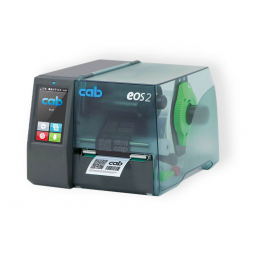
    • What daily label volume? Fewer than 500 a day: desktop printer (SATO CG2, WS4 or CAB EOS2). 500 to 5,000 a day: professional printer (SATO CT4-LX or CAB MACH 4S). More than 5,000 a day: industrial printer (SATO CL4NX Plus or CAB SQUIX 4).
    • What target label service life? Less than 6 months: consider direct thermal. More than 2 years: thermal transfer is mandatory.
    • What operating environment? Office, workshop, cold-storage warehouse, outdoor, cleanroom: each case calls for a different ribbon–label combination.
    • What print resolution? 203 dpi for standard barcodes, 300 dpi for dense 2D barcodes (DataMatrix, QR), 600 dpi for very fine logos and electronics marking.
    • What software integration? Check compatibility with your ERP, WMS, MES and labelling software (BarTender, NiceLabel, Cablabel S3).

    On budget, expect €100 to €800 for a desktop printer, €800 to €3,500 for a professional printer and up to €8,900 for top-end industrial models.

    Textile thermal transfer printer

    A specific case: the textile thermal transfer printer, such as the CAB SQUIX 4 MT prints directly onto non-adhesive nylon for sewn-in care labels. It uses special resin ribbons resistant to industrial washing. SBE Direct offers a complete kit textile printer + 15 ribbons + 15 rolls of nylon labels to start an in-house production workshop.

    Thermal transfer printing becomes the obvious choice as soon as service life, resistance, or print quality is critical to your business. Direct thermal keeps its relevance for short-life, very high-volume uses such as till receipts or sample labels. On a horizon longer than two years, thermal transfer remains unbeatable: 5 to 10 years of durability, seven available colors, compatibility with every synthetic substrate, and UL/CSA compliance for regulated sectors.

    To secure your identification project, three levers make the difference:

    • a tested ribbon–substrate combination,
    • a printer suited to the target volume,
    • and labelling software you have mastered.

    SBE Direct supports you on all three dimensions.

    Poursuivez votre lecture…
    Ces articles aussi pourraient vous intéresser.

    Thermal transfer printing: how it differs from direct thermal printing

    Thermal transfer printing dominates industrial identification, barcoding and B2B logistics: a global market worth USD 51.55 billion in 2025, set to reach USD 91.83 billion by 2035. This guide compares thermal transfer and direct thermal printing point by point across durability, print quality, cost and industrial applications. You'll find a full comparison table, the three ribbon types to know (wax, wax-resin, resin), a five-question decision framework to choose your printer, and the SBE Direct method for securing long-term identification projects.
    Product News
    Melissa Oumaouche
    71 views

    How Does a Thermal Printer Work: Printing Process Explained

    Thermal printing is a technology that uses heat to produce an image on a medium; no ink or cartridges are required. There are two main types: direct thermal, which is fast and cost-effective for short-lived applications, and thermal transfer, which offers greater durability for demanding environments. Choosing the right printer depends on the desired print lifespan, print volume, and operating conditions. Explore our complete guide to compare both technologies and find the model that fits your needs.
    Product News
    Melissa Oumaouche
    1215 views

    Thermal label printers : Thermal transfer VS direct thermal

    A printer is an essential office tool. Its invention has revolutionized a multitude of sectors. It is not simply a matter of projecting ink onto a blank sheet of paper. It is nevertheless a tool at the cutting edge of technology, combining several skills for various media and uses. So let us guide you through the world of thermal label printing and let us discover together the differences between thermal transfer printers and direct thermal printers!

    SBE advise you
    8546 views

    Questions fréquentes

    Quelle est la différence entre une imprimante thermique directe et une imprimante à transfert thermique ?

    L'imprimante thermique direct chauffe une étiquette thermosensible sans ruban (durée de vie : 6-24 mois). L'imprimante transfert thermique fait fondre un ruban encreur sur l'étiquette (durée de vie : 5 à 10 ans, résistante UV et aux produits chimiques Pour la gestion d'immobilisations ou l'extérieur, seul le transfert thermique est viable.

    Quels sont les inconvénients d'une imprimante thermique directe ?

    Quatre limites en B2B : durée de vie 6-24 mois, faible résistance UV et chimique, coût du support thermosensible supérieur au papier cire, et tête d'impression qui s'use trois fois plus vite. Usage pertinent uniquement : tickets de caisse, étiquettes d'expédition courte durée et balances poids-prix.

    Quels sont les 3 types de transfert thermique ?

    Les trois types de transfert thermique correspondent aux trois rubans : cire (papier couché, courte durée), cire-résine (synthétiques, print & apply) et résine (-55 °C à +155 °C, conforme UL/CSA, plaques signalétiques et chimie). 

    See the author's articles
    Melissa Oumaouche

    With over 5 years of experience in creating content optimized for search engines, Mélissa is currently Marketing & Product Manager at SBE Direct, where she leads the product catalogue positioning across the e-commerce website and marketplaces, as well as the SEO content strategy in coordination with the marketing team she oversees.

    We use cookies to improve your experience.