RFID in logistics answers a question most warehouse managers face: knowing, at any moment and without manual scanning, where every pallet, parcel, and item sits. Inventories completed in minutes, real-time traceability, shipping errors all but eliminated. The gains are concrete and measurable. A few questions remain: how the technology works, which frequency to choose, what a rollout costs, and how to connect it to your existing RFID and traceability solution. Here are the answers, point by point.

Key takeaways

  • An RFID system reads hundreds of labels from a distance and without line of sight, whereas barcodes require reading one at a time.
  • Inventory becomes 4 to 5 times faster, and traceability moves to real time.
  • UHF (860 to 960 MHz) is the warehouse standard thanks to a range of several meters.
  • The ROI of an RFID logistics project is generally seen within 12 to 18 months.
  • A passive UHF RFID label costs between €0.05 and €0.50 depending on order volume.

What Is RFID in Logistics?

RFID (Radio Frequency Identification) is an automatic identification technology that uses radio waves. In logistics, it reads the data on a label fixed to a pallet or parcel from a distance, with no contact and no line of sight. A reader interrogates the tag, which replies by sending back its unique identifier.

Definition and Operating Principle

An RFID logistics system relies on four components that communicate continuously:

  • The tag (or RFID chip): a label made of an antenna and a microchip, fixed to the goods, storing the reference, batch or destination.
  • The reader and its antenna: they emit an electromagnetic field that wakes the tags within range and collects their data.
  • The middleware: the software layer that filters readings, removes duplicates and formats the information.
  • The information system: the WMS or ERP, which records every event and delivers tracking in real time.

Under the EPC Gen2 standard (ISO/IEC 18000-63) that governs UHF RFID, a single reader identifies several hundred tags per second. This is what sets logistics RFID radically apart from a conventional optical read.

RFID vs Barcode: The Key Differences

A barcode must be read one at a time, in direct line of sight. RFID reads in bulk, through packaging, with no manual input. The table below sums up what separates the two approaches in the warehouse.

CriterionBarcodeRFID
Simultaneous readingOne at a timeHundreds of tags
Line of sightRequiredNot required
Manual entryFrequentEliminated
Rewritable dataNoYes
Real-time traceabilityLimitedFull
Unit costNear zero€0.05 to €0.50

The barcode keeps its place for small operations and low-density flows. As soon as volumes rise and traceability becomes critical, RFID takes the lead.

Passive or Active RFID Tag: Which to Choose in Logistics?

A passive tag carries no battery: powered by the reader's field, it costs little and lasts for decades. An active tag has a battery, reaches much further, but stays reserved for tracking high-value assets. For the vast majority of warehouse flows, the passive UHF tag is enough.

CriterionPassive tagActive tagRecommended use
BatteryNoneBuilt-inPassive for pallets and parcels
Range1 to 12 m10 to 100 m+Active for containers and vehicles
Unit cost€0.05 to €0.50€5 to €50Passive for high volumes
LifespanVirtually unlimited3 to 5 yearsPassive for the long term

RFID Frequencies Used in Logistics

RFID covers several frequency bands, each with its own range and uses. In the warehouse, UHF has become the norm because it combines long range with bulk reading. The other frequencies serve more specific needs.

LF, HF, UHF: A Comparison of Ranges and Uses

TypeFrequencyRangeUse in logistics
Low frequency (LF)125 to 134 kHzA few cm to 50 cmMetallic or damp environments, animal tagging
High frequency (HF)13.56 MHzUp to 1 mBadges, access control, unit traceability
Ultra-high frequency (UHF)860 to 960 MHz1 to 12 mPallets, dock portals, warehouse standard
Active tags433 MHz / 2.4 GHz10 to 100 m+Containers, vehicles, mobile assets

Why UHF Is the Warehouse Standard

In Europe, UHF RFID operates in the 865 to 868 MHz band set out by the EN 302 208 standard. Its range of several metres lets a dock portal read 100% of the tags on a passing pallet, and a fixed antenna inventory a whole rack with no intervention. This balance of range, speed and cost is what makes it the default choice.

The Real Benefits of RFID for Your Logistics Flows

RFID in logistics turns manual, time-consuming operations into automated, traceable flows. Five benefits stand out in the field: real-time traceability, faster inventory, fewer errors, loss prevention and stock optimisation.

Real-Time Traceability of Goods

Every pallet movement (inbound, outbound, zone transfer) is recorded automatically in the WMS. The operator has full visibility of where goods are at all times, with no walking around and no data entry. The data is accurate because it is never keyed in by hand.

Automated, Faster Inventory (4 to 5x Quicker)

An operator with an RFID handheld, or a robot fitted with antennas, moves along the aisles and inventories the warehouse without stopping operations. The gain is clear: a full RFID inventory in minutes rather than hours with a barcode, around 4 to 5 times faster.

Fewer Shipping and Picking Errors

An RFID portal on the loading dock compares pallet tags with the delivery note in real time. If a pallet heads for the wrong lorry, an alert fires immediately. The shipping error is fixed before it leaves the site.

Theft and Loss Prevention

Because each item is identified and tracked, discrepancies show up fast. An unjustified outbound movement triggers a check. It cuts shrinkage and limits the loss of reusable containers, which are often expensive to replace.

Stock Optimisation and Fewer Shortages

With stock known in real time, replenishment and stock management become precise. According to a study by the RFID Lab at the University of Arkansas, the technology reduces stock-outs by around 16%. Fewer shortages means fewer lost sales and a better service level.

RFID in Logistics: How to Genuinely Cut Costs

RFID in logistics cuts costs through three levers: productivity gained, data reliability and fewer costly errors. The key is to measure the return on investment and anticipate consumable prices.

Productivity Gains and Lower Labour Needs

Time spent scanning, re-keying, and correcting shrinks. Inventory hours, once spread over several days a year, now take minutes. Teams refocus on value-adding tasks rather than item-by-item reading.

Reliable Data and Fewer Costly Errors

A wrong shipment means a return, a customer dispute and a re-delivery. By removing manual entry, RFID makes these errors plummet. Reliable data also drives better replenishment and warehouse slotting decisions.

Average ROI of an RFID Project (12 to 18 Months)

On most warehouse rollouts, ROI is seen within 12 to 18 months. Running an inventory 4 to 5 times faster and eliminating shipping errors is often enough to pay back the installation in the first year. The calculation is best validated with a POC on a representative flow.

The Cost of a UHF RFID Label: What to Expect

The consumable stays marginal against the gains. Below are the orders of magnitude observed by label type.

RFID label typeIndicative priceUse context
Standard passive UHF€0.05 to €0.15Pallets, parcels, high volumes
Reinforced passive UHF€0.15 to €0.50Reused cartons, durable labelling
On-metal tag€0.50 to €3Metal surfaces, industrial bins
Active tag€5 to €50Containers, vehicles, high-value assets

RFID Logistics Labels: The Key Link in the System

No installation is better than its tags. The choice of RFID label drives read reliability, especially around metal or moisture. Three points deserve attention: UHF characteristics, fit to the environment, and integration with the carrier.

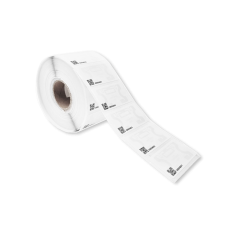
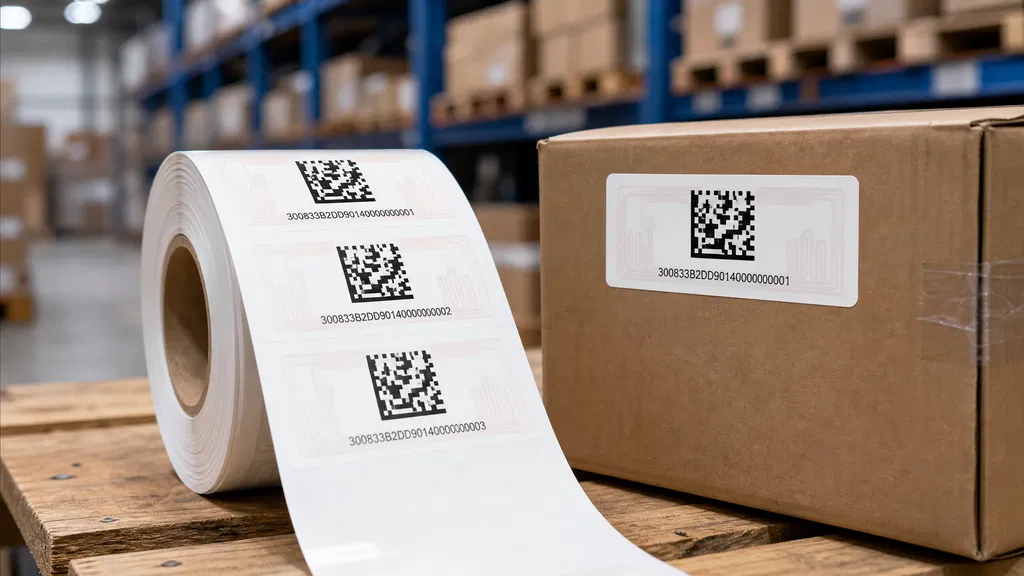
Roll of UHF RFID labels and a labelled logistics carton in a warehouse

UHF Labels: Characteristics and Printing (Thermal Transfer)

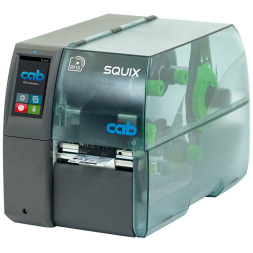
A UHF RFID label combines an inlay (antenna + chip) with a printable face. Printing is done by thermal transfer, which lays down a durable resin ink that stays legible even after handling. Thermal transfer printers and handheld terminals encode the chip and print the barcode or text in a single pass.

Choosing Your Label by Environment (On-Metal Tags, Damp Areas)

Metal and liquids disturb radio waves. On metal surfaces, on-metal tags are designed to overcome this. In damp or refrigerated areas, waterproof labels are the right pick. Our range of RFID labels and barcode scanners covers these field constraints.

Customisation and Integration with the Logistics Carrier

An RFID label fits directly onto the existing carrier: pallet label, carton, bin, or returnable container. It can carry the logo, the barcode, and regulatory wording while encoding the unique identifier. A single medium then carries both the visual information and the radio data.

Limitations and Drawbacks of RFID in Logistics

This technology is not a universal answer. Three limitations come up in the field: interference with metal and liquids, the upfront installation cost, and reading during unit picking. Knowing them avoids disappointment.

Interference with Metals and Liquids

Metal reflects waves, and water absorbs them. Without a suitable tag, read rates fall. The fix exists (on-metal tags, antenna placement), but it calls for a prior site study. This is the number one technical point to validate.

Upfront Installation Cost and Rollout Complexity

Portals, antennas, readers, middleware, and WMS integration represent an initial investment. The complexity lies less in the hardware than in clean integration with the information system. A poorly scoped project can disappoint, which is why a POC before scaling pays off.

Read Issues During Unit Picking

Reading a single item among hundreds of other tags can produce stray reads. For unit picking, a barcode or a close-range RFID reader is sometimes more precise. RFID and barcodes complement each other more than they compete.

RFID and WMS: An Essential Integration

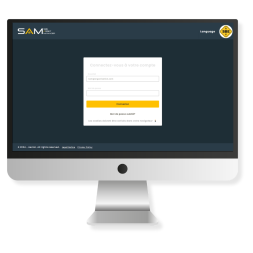
RFID without software only produces raw data. It is the middleware that turns those reads into usable events and passes them to the WMS. This software layer is therefore necessary: without it, there is no useful traceability and no reliable warehouse management.

The Role of the Middleware

The middleware performs three functions. It collects and filters reads to weed out duplicates and false positives. It passes events to the WMS in real time (zone entry, wrong pallet routing). It drives alerts and the operator display for an immediate response.

Compatibility with Your Existing Information System

In the great majority of cases, the technology slots onto an existing WMS, whether proprietary or an off-the-shelf system. The middleware acts as a translator between the readers and your software. Compatibility is validated during the audit, before any hardware purchase.

RFID Use Cases by Sector

RFID and logistics combine differently across sectors, because field constraints vary widely. Four sectors show the technology's versatility well.

Distribution and Retail

Products are tagged from manufacturing. At the warehouse, inventory runs continuously, sometimes by robots, without stopping order preparation. The result: permanent inventory and far fewer shelf shortages.

RFID inventory of clothing in a store using a handheld reader and smartphone

Food and Cold-Chain Logistics

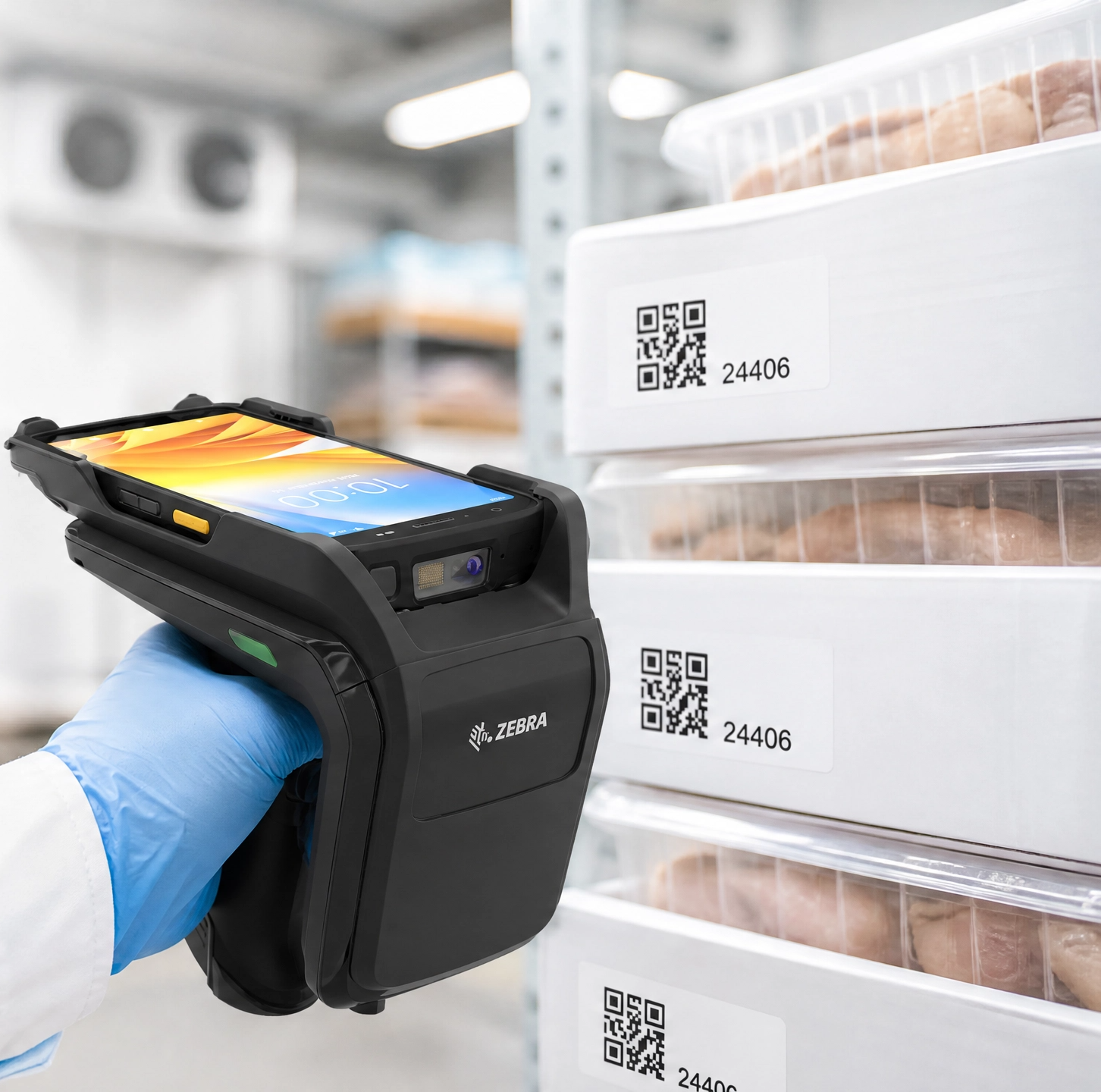
Handheld RFID reader scanning food products in a refrigerated cold-storage warehouse

It tracks batches, use-by dates, and storage conditions in refrigerated warehouses. Food traceability is thus secured on the regulatory side, which reduces the risk of product recalls.

Industry and Reusable Containers

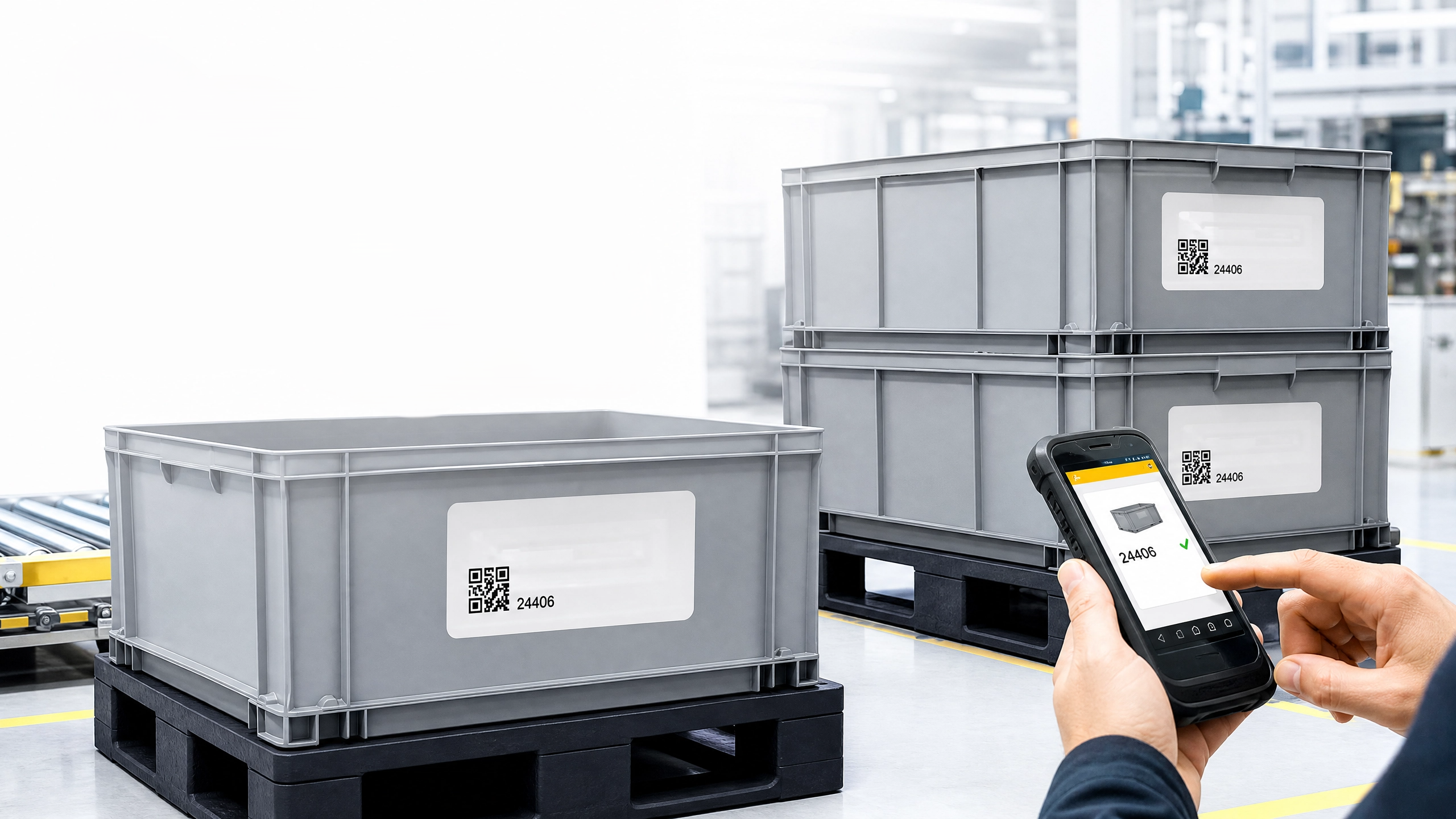
Tracking bins, returnable pallets, and tooling: RFID prevents container losses, optimizes rotations, and removes time-consuming item searches on the floor. Production gains in fluidity.

RFID tracking of reusable industrial bins and containers scanned with a smartphone

Transport and Cross-Docking

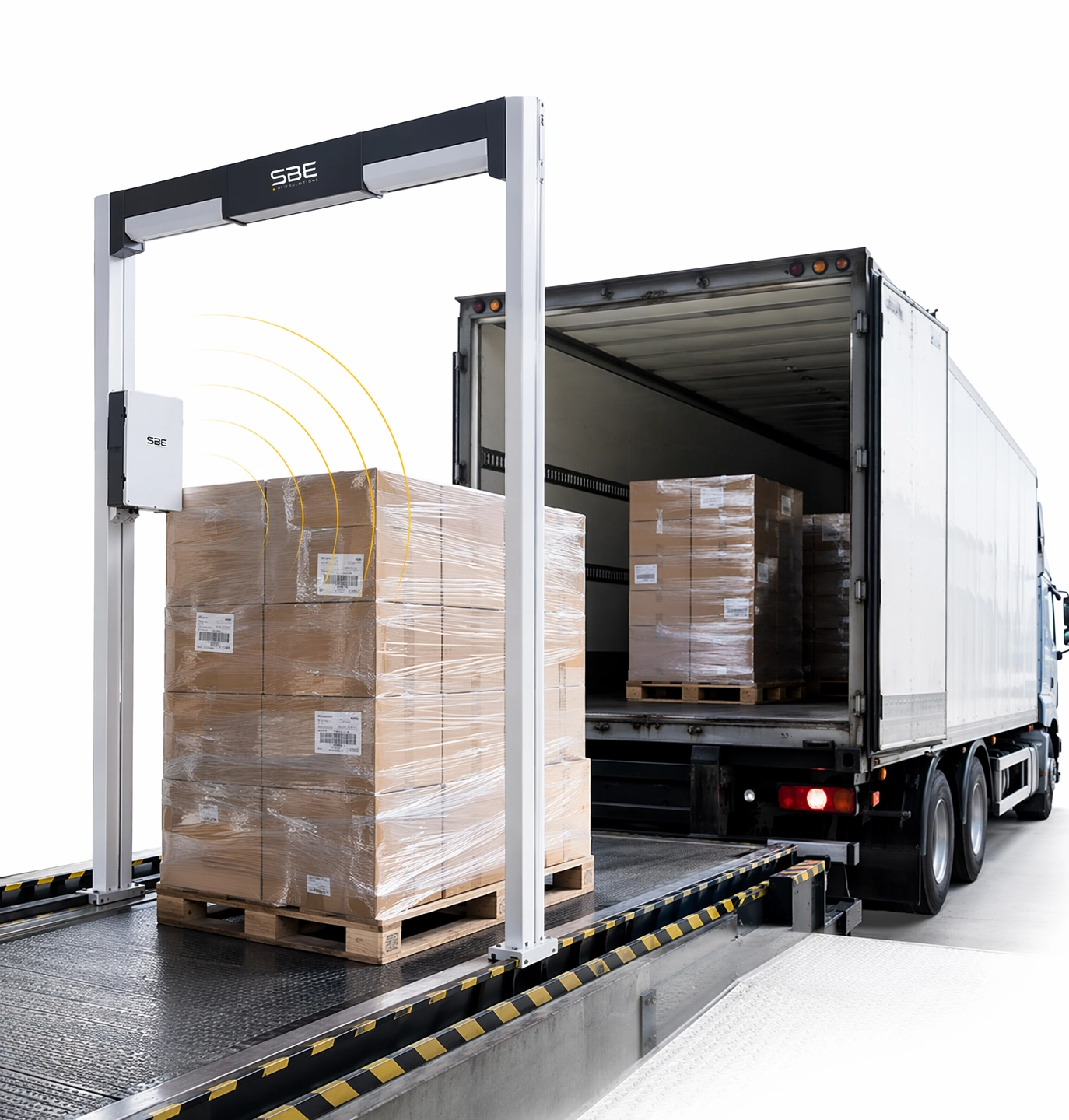
RFID dock portal checking pallets being loaded into a truck during cross-docking

On platforms, portals check in real time that each pallet heads for the right dock, the right lorry, and the right round. Routing errors are detected at once, before the vehicle departs.

Rolling Out an RFID Logistics Project: The Key Steps

A successful rollout follows a method. Three milestones structure the deployment, from the site audit to team training.

Site Audit and Flow Analysis

It all starts with observation: volumes, flows, physical constraints (metal, liquids, read distances). This audit determines feasibility and the choice of frequencies. It is the step that decides the success of everything that follows.

Choosing Hardware and Labels

Next comes the choice of tag type, frequency, readers and infrastructure (portal, tunnel or fixed antennas). The label is chosen to match the environment identified during the audit.

POC, Integration and Training

A POC validates the real gains on a pilot flow. Then comes integrating the middleware with the WMS, followed by training operators and IT teams. Tracking KPIs (inventory time, error rate, and shortages) measures the return on investment.

Properly sized, RFID becomes the backbone of the high-performing warehouse: inventory in minutes, real-time traceability, errors under control, and optimized stock. Success rests on three decisions: a thorough site audit, a label choice fit for the environment, and clean WMS integration. To scope your project, rely on an RFID and traceability solution built for the warehouse. Done well, RFID in logistics remains one of the most profitable investments a modern supply chain can make.

Continue reading…
These articles may also interest you.

RFID: Understand the Technology, Choose the Right System and Apply It in Your Business

RFID identifies your assets and people without contact, through packaging or a pocket. From the access badge to the pallet label, a chip and a reader are enough to read hundreds of items per second, where the barcode requires a visual read, one at a time. Discover how it works, its frequencies (LF, HF, UHF), its advantages and limitations, a comparison with NFC and the barcode, and how to choose the right RFID system for your business.
SBE advise you
Melissa Oumaouche
372751 views

RFID inventory: how to save time and reduce errors

RFID inventory replaces manual counting with fast, contactless reads, scanning hundreds of items in seconds using RFID tags and mobile terminals. You cut inventory errors by up to 90%, save 80–90% of time, and gain real-time visibility over your stock in logistics, retail, and industry. This guide explains how RFID inventory works, its concrete benefits (over 99% accuracy, real-time traceability, cost reduction), and the key steps to deploy it in your business with the right equipment: RFID tags, RFID readers, and RFID software.

Product News
Melissa Oumaouche
1556 views

UHF RFID Explained: Frequency, Technology & Industrial Applications

UHF RFID technology (860–960 MHz) enables the simultaneous reading of hundreds of tags at distances of up to 15 meters, with no line-of-sight requirement, where barcodes still demand manual, one-at-a-time scanning. It has established itself as the global standard for automated traceability across industries as diverse as logistics, retail, healthcare, and industrial asset management. Its key advantages include data accuracy exceeding 99%, an 80–90% reduction in cycle count time, and an ROI typically achieved within 12 to 18 months. Its only notable limitations involve sensitivity to metal surfaces and liquids, which require the use of On-Metal tags (also referred to as metal-mount RFID tags) in demanding industrial environments.

Product News
Melissa Oumaouche
2141 views

Frequently Asked Questions

Does RFID Work in a Warehouse with a Lot of Metal?

Yes, provided you choose the right tag. On-metal labels are designed to work on metal surfaces that would otherwise disturb the signal. A prior site study remains essential to position the antennas and validate read distances in the real environment.

What Is the Difference Between a Passive and an Active Tag?

A passive tag has no battery: powered by the reader, it costs little (€0.05 to €0.50) and lasts for decades. An active tag has a battery, reaches 100 metres and beyond, but costs several euros. The passive tag equips pallets and parcels; the active tag is reserved for high-value assets such as containers.

How Much Does an RFID Logistics Label Cost?

A passive UHF RFID label costs between €0.05 and €0.50 depending on the model and order volume. Special tags (on-metal, high-temperature) rise to a few euros. Against the productivity gains generated over the year, the cost of consumables stays marginal in an RFID logistics project.

Is RFID Compatible with My WMS?

In the great majority of cases, yes. Middleware links the RFID readers to your WMS, whether proprietary or an off-the-shelf system. Compatibility is checked during the initial audit, before any hardware investment, to avoid surprises at integration.

See the author's articles
Melissa Oumaouche

With over 5 years of experience in creating content optimized for search engines, Mélissa is currently Marketing & Product Manager at SBE Direct, where she leads the product catalogue positioning across the e-commerce website and marketplaces, as well as the SEO content strategy in coordination with the marketing team she oversees.

We use cookies to improve your experience.