This guide explains how to create a compliant, genuinely useful textile label: mandatory information, recommended details, standardised care symbols and the label types available. You will find a table of symbols and a step-by-step method.

A well-designed textile label does two things at once: it meets regulations and it helps whoever wears the garment. Composition, size, washing advice, origin: these are not mere details, they engage the brand's responsibility and reduce returns. Whether you are launching a clothing brand, marking workwear or equipping a workshop, the question is the same: what information to include, and how to fix it durably? This guide answers it simply, starting from your real obligations. To see the available supports, browse the textile labels range.

What Is a Textile Label and What Is It For?

A textile label is a label attached to a garment that carries the legal and practical information: composition, size, care and origin. It informs the buyer, meets regulations and ensures the garment is used well over time. It is fixed by sewing or by heat-sealing.

Beyond its decorative or brand role, the textile label has an information and compliance function. It stays with the garment throughout its life: that is why it must remain legible after many washes. Two families coexist: sewn labels and heat-sealed labels. The choice of information follows precise rules, detailed below.

Mandatory Information on a Textile Label

The main mandatory information is the composition: the fibre types and their percentages, for example 80% cotton, 20% polyester. It must appear in the language of the country of sale, be legible and durably fixed. Parts of animal origin (leather, fur) must also be indicated.

In Europe, textile fibre composition is governed by Regulation (EU) No 1007/2011, which sets fibre names and labelling rules. In practice, remember these obligations:

  • Fibre composition with percentages, from the largest to the smallest.
  • The language of the country of sale for the information.
  • Non-textile parts of animal origin indicated explicitly.
  • Durable fixing: the label must stay in place and legible, by sewing or wash-resistant marking.

Good to know: regulations can vary from one country to another, even within the European Union. Check the requirements of the target market before producing a batch.

Recommended but Optional Information

Three pieces of information are not mandatory but strongly recommended: the size, the origin of the garment and the care instructions. Size is even commercially essential, and care symbols reduce washing mistakes and therefore returns.

Size (in numbers or letters) guides the purchase: without it, selling is almost impossible. Watch out for size differences between countries. Origin, such as "made in France", adds value. Finally, care instructions help the user keep the garment and limit the brand's liability in case of poor washing. These instructions rely on standardised symbols, detailed in the next section.

Care Symbols (ISO 3758 Standard)

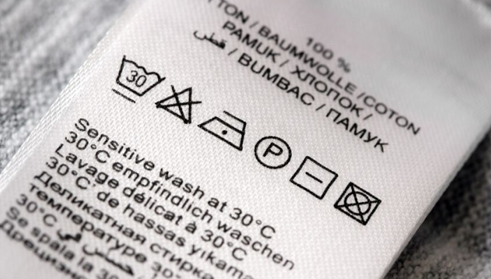
Care symbols follow the ISO 3758 standard and are always read in the same order: washing, bleaching, drying, ironing, dry cleaning. Each pictogram indicates permission, a ban (crossed-out symbol) or a temperature limit.

SymbolWhat it indicatesHow to read it
Washing (tub)Wash method and temperatureNumber = max temperature; hand = hand wash; crossed = no washing
Bleaching (triangle)Use of bleachEmpty triangle = allowed; crossed = not allowed
Drying (square)Tumble drying2 dots = normal; 1 dot = reduced heat; crossed = not allowed
Ironing (iron)Ironing temperature3 dots = high; 2 = medium; 1 = low; crossed = not allowed
Dry cleaning (circle)Professional treatmentLetter = allowed solvent; crossed = not allowed

The care label is strongly advised: it limits liability in case of an incident and reduces returns. In France, the use of these symbols is managed by COFREET, which holds the trademark.

Sew-On or Iron-On: The Types of Textile Label

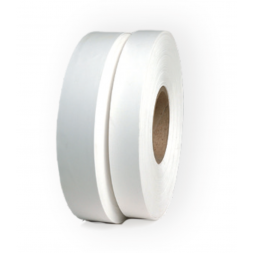
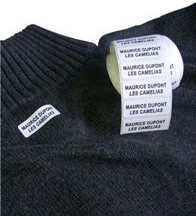
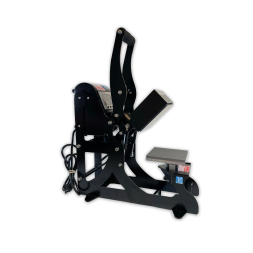
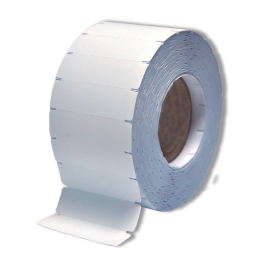
Two types dominate: the sew-on textile label, in nylon, very resistant and sewn onto any textile, and the iron-on label, fixed with a heat press. The first suits permanent, premium marking, the second a fast application without sewing.

The sew-on nylon textile label withstands washing and dry cleaning up to 95 °C. The iron-on label is fixed in a few seconds with the press. Both are easy to customise, provided you have the right printing equipment.

CriterionSew-on labelIron-on label
FixingSewingHeat press
ResistanceWashing and dry cleaning up to 95 °CWash-resistant
ApplicationLonger, very durableFast, no sewing
Typical useClothing brand, premiumFast marking, series

How to Create Your Textile Label, Step by Step

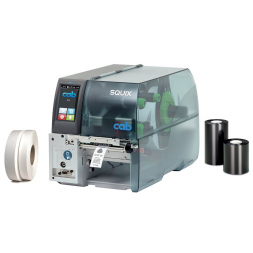
To create a textile label, define the information (composition, size, care, origin), choose the support (sew-on or iron-on), print with a thermal transfer printer and a resin ribbon, then fix the label by sewing or with a heat press. The right equipment ensures a label that survives washing.

  1. List the mandatory and recommended information to include.
  2. Choose the support: sew-on for durability, iron-on for speed.
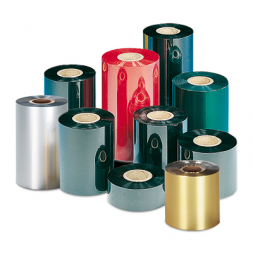
  3. Print with a thermal transfer printer and a special textile resin ribbon, which withstands washing.
  4. Fix the label: sewing for sew-on models, or a heat press for iron-on ones.
  5. Check legibility after a test wash before running the batch.

To start without assembling the equipment piece by piece, a textile label printing kit brings together printer, ribbons and labels.

Going Further: RFID Textile Labels and Traceability

A textile label can also carry an RFID chip. It then adds a layer of traceability: individual garment identification, industrial laundry tracking, kit management. This is the move from simple marking to a tracked asset.

For professional garments and linen, the RFID textile label is heat-sealed and withstands industrial washing. It lets you know at all times which garment is where, without visual reading. To understand this marking-plus-tracking combination, read our article on RFID and textile labels.

In Short: Creating a Useful, Compliant Textile Label

Start with the obligations: composition, language, durable fixing. Add what makes the label useful: size, origin and standardised care symbols. Then choose the support and printing equipment suited to your volume, and test wash resistance. If you also mark by flocking or heat-sealing, our guide to all about the textile heat press rounds out this approach. Well designed, a textile label informs, reassures and adds value to your garment.

Updated August 2026.

Continue reading...
These articles too might interest you.

Everything you need to know about barcodes and their readers

1D and 2D barcodes no longer replace each other, they work together. This guide breaks down the eight most-used formats (EAN-13, Code 128, Data Matrix, QR Code and more), the three scanner families and a decision matrix by industry, backed by ISO and GS1 standards. Seven simple criteria to pick the right hardware.
SBE advise you
Melissa Oumaouche
21596 views

All about the textile heat press

The textile heat press applies a design or a label onto fabric through heat and pressure, in just a few seconds. Flocking, flex, flock, press types, temperature settings, selection criteria and professional uses: this guide helps you choose the machine suited to your volume, from occasional marking to series production, right through to heat-sealing RFID textile labels for traceability.
Product News
Melissa Oumaouche
16073 views

Secure your products in shop with security labels

Tools, smartphones, alcohol, razor blades, jewellery and make-up are the products most coveted by thieves because of their high added value. Theft is a scourge for supermarkets and specialist retailers. It accounts for nearly 80% of "shrinkage", which represents all the goods that go missing, including stock management errors, supplier errors, breakage and waste. In Europe, France is one of the countries most affected by shrinkage with 6.5 billion euros lost, including more than 468 million euros for specialised distribution. It is mainly due to external/shoplifting (43%), internal/employee fraud (24%), suppliers (17.5%), then internal errors/administrative losses (16%). (source: 22/10/20, Stackr). To counter theft, it is therefore essential to invest in effective and reliable means such as anti-theft security labels. In this article, you will learn about the different types of anti-theft labels and their advantages.

SBE advise you
8819 views

FAQ - Textile Label

What information is mandatory on a clothing label?

The main mandatory information is the fibre composition with percentages (for example 80% cotton, 20% polyester), in the language of the country of sale. Parts of animal origin must be indicated, and the label must be legible and durably fixed. In Europe, these rules come under Regulation (EU) No 1007/2011. Size and care are not mandatory but strongly recommended.

How do you read the care symbols on a label?

The symbols follow the ISO 3758 standard and are always read in the same order: washing, bleaching, drying, ironing, dry cleaning. A crossed-out symbol means a ban; dots indicate a temperature or intensity. The tub is washing, the triangle bleaching, the square drying, the iron ironing and the circle dry cleaning.

Should you sew or iron on a textile label?

Both survive washing. The sew-on nylon label is the most durable and suits premium garments and clothing brands. The iron-on label is applied in a few seconds with a heat press, without sewing, which suits series and fast marking. The choice depends on the look you want and your production pace.

How do you print your own textile labels?

You need a thermal transfer printer and a special textile resin ribbon that withstands washing. You print the information on the chosen support (sew-on or iron-on), then fix the label. A printing kit brings together the printer, ribbons and labels to start straight away. A test wash before the batch avoids unpleasant surprises.

Create your compliant textile labels

Sew-on and iron-on labels, resin ribbons, heat press and a complete printing kit.

View textile labels →
See the author's articles
Melissa Oumaouche

With over 5 years of experience in creating content optimized for search engines, Mélissa is currently Marketing & Product Manager at SBE Direct, where she leads the product catalogue positioning across the e-commerce website and marketplaces, as well as the SEO content strategy in coordination with the marketing team she oversees.

We use cookies to improve your experience.