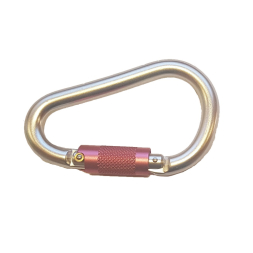
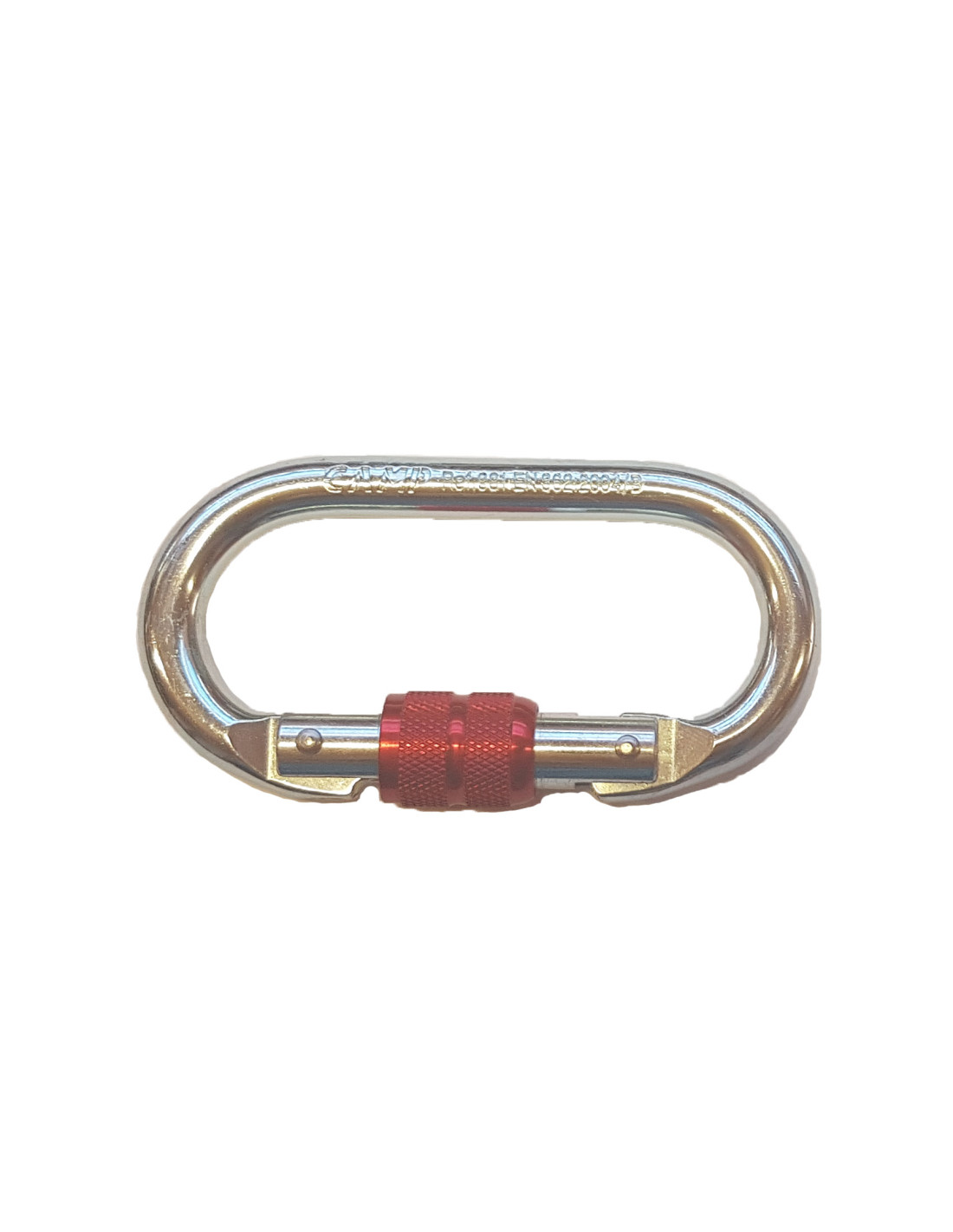
Steel oval carabiner - 1

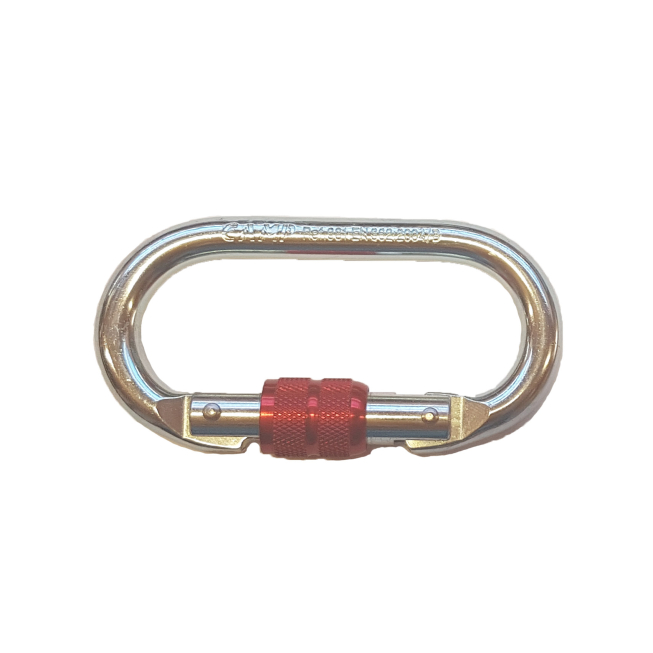
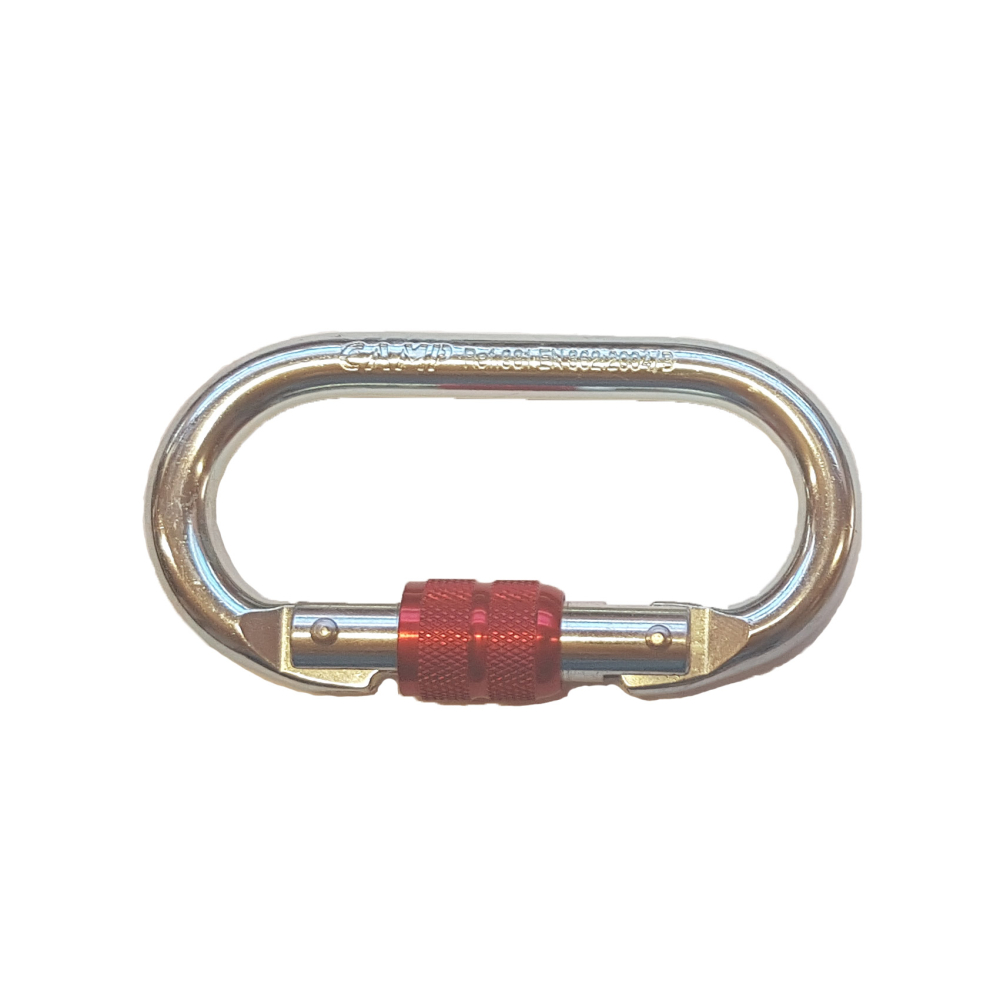
Steel oval carabiner - 16 mm gate, load centred on the axis

From €5.90 to €8.63 excl. VAT (?)
Individually
  • Symmetrical oval shape: the load settles in the centre, the connector does not tip 
  • 16 mm gate, the narrowest in the range: rated rings and harness D-rings 
  • Takes two elements side by side without one riding onto the other 
  • Locking gate compliant with EN 362: two deliberate actions to open 
  • Sold individually, with quantity break discounts 
Prices
Quantity (Individually)
Total : €145.04 excl. VAT

The minimum purchase order quantity for the product is 14.

✔️ In stock
Shipped within 2 days
 

The most predictable connector in a fall-arrest kit is not the strongest one, it is the one that keeps its orientation. This anti-fall equipment is a symmetrical oval: the load centres on the major axis instead of sliding into a corner, and the carabiner stays where the operator put it. 16 mm gate, locking closure, EN 362 compliance.

Steel oval carabiner: the key points

  • Symmetrical oval shape: the load settles in the centre, the connector does not tip.
  • 16 mm gate, the narrowest in the range: rated rings and harness D-rings.
  • Two elements side by side without one riding onto the other.
  • Locking gate compliant with EN 362: two deliberate actions to open.
  • Sold individually, with quantity break discounts.

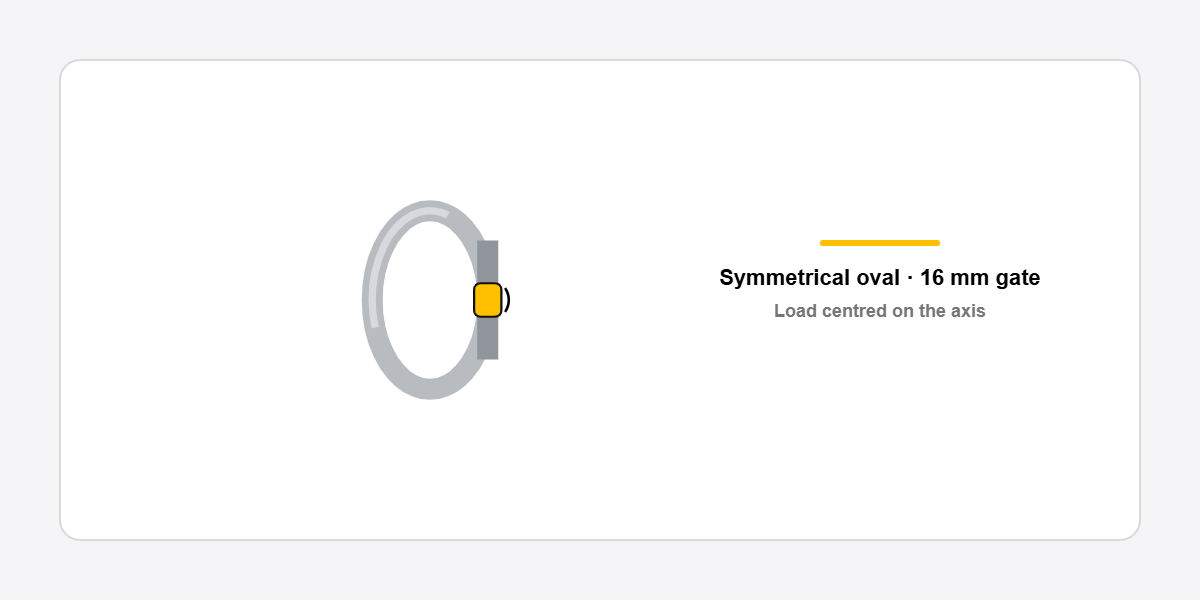
Oval geometry: a load that stays on the axis

A D-shaped carabiner pushes the load against its spine, its thickest section. An oval does the opposite: its symmetry splits the effort between spine and gate, and the load settles in the centre of the major axis instead of sliding into a corner. The connector does not tip, and takes two elements more readily: the loop of a flat sling and a lanyard eye stay side by side.

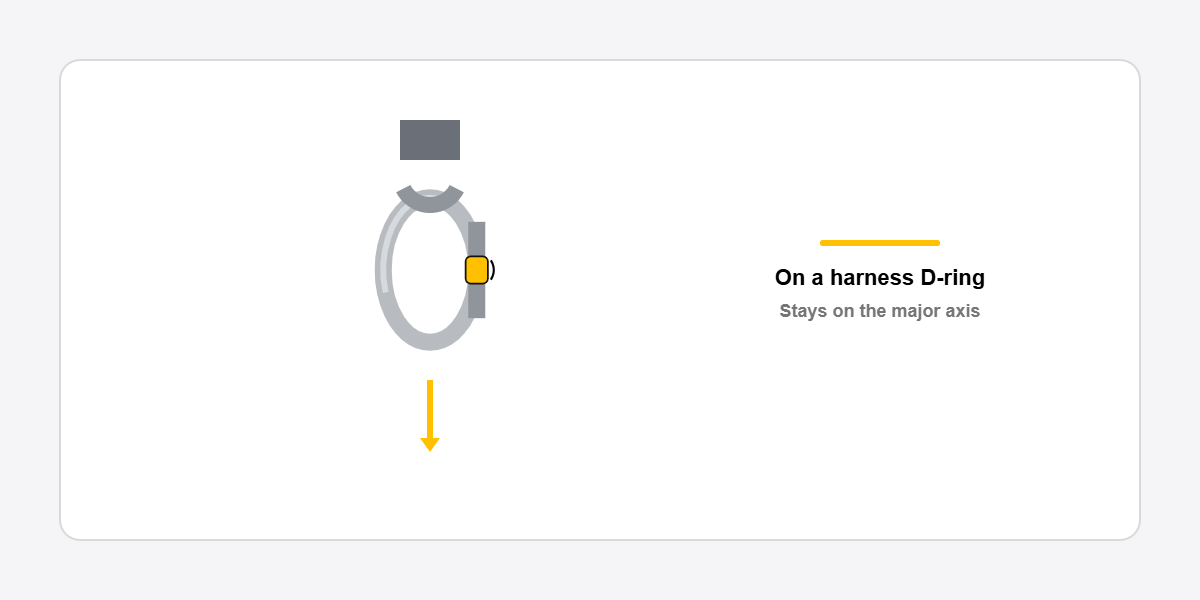
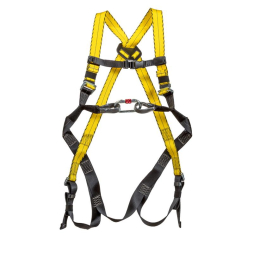
The trade-off is worth stating: at equal material and section, an oval does not reach the strength of a D. It is chosen for predictable behaviour. The 16 mm gate covers rated points: standard rings, the D-rings of a fall arrest harness with 2 attachment points, the end loop of a double strap energy absorbing lanyard. For a thick support you need the wide-gate carabiner 52 mm, with the twist lock carabiner 20 mm in between.

Oval carabiner – load centered on the axis

EN 362: two actions to open, one class to ask for

Oval carabiner – On a harness D-ring

EN 362 imposes a design rule you can check without tools: a locked connector must not be openable in fewer than two distinct, deliberate manual actions. A gate that springs shut is not enough, a locking device is required, and this reference has one.

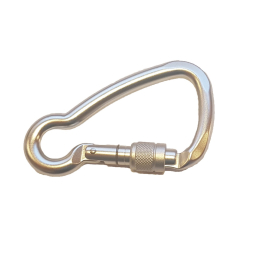
The standard sorts connectors into classes, which govern whether the connector may be loaded anywhere other than on its major axis. It is not recorded in our database: ask for it before you freeze a working method, as it appears on the marking. The locking type is not documented either, a screw sleeve as on the carabiner with 20 mm sleeve or an automatic sleeve. A fall-protection connector is inspected at least once a year, as is the connection string or the fall arrest device it connects to.

Steel oval carabiner FAQ

Why choose an oval rather than a D-shaped carabiner?

For predictability. A D concentrates the load on its spine and rates higher at equal section, but it reorients under movement. A symmetrical oval centres the load on the major axis and keeps its position. It is chosen where the connector must stay stable, or take two elements that should not overlap.

What material is this carabiner made from?

Our database contradicts itself: the name states steel, the internal description mentions a light alloy. We would rather tell you than decide for you. The manufacturer's data sheet can be requested before ordering if your risk assessment requires a specific material.

Is a 16 mm gate wide enough?

It is wide enough for every rated attachment point: standard rings, harness D-rings, lanyard end loops. It is not wide enough on a thick support, where a wide-gate connector is required. Check the actual section of your anchor points before deciding.

How often must an EN 362 connector be inspected?

At least once a year, by a competent person, with the inspection recorded. A connector is withdrawn as soon as it has taken a fall, even with no visible deformation, or as soon as its locking device no longer operates cleanly. The useful service life is stated by the manufacturer.

Price
From €5.90 to €8.63 excl. VAT
Unit
Individually
Conditioning
Individually
Certification
EN362
SBE
SP-EAC-69U
8011818107616

Choose product attributes:

Ref. Prices Unit price Buy
SP-EAC-69U Decreasing
14+
€10.36
28+
€8.71
42+
€7.08

You might also like

Customers who bought this product also bought:

We use cookies to improve your experience.