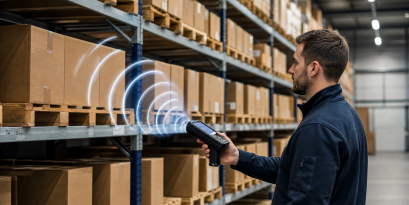
RFID geolocation chip answers a very practical need: finding a tagged object without hunting for it by hand. This article explains what an RFID geolocation chip can really track, how it differs from GPS and RTLS, and how to choose the right method for your environment.

A pallet truck that vanishes between two docks, a laptop that quietly moves to another department, and a file that drifts from floor to floor: every minute spent searching costs time and money. The RFID geolocation chip answers this location problem, but not always the way people expect. Can it track an object in real time, like a GPS? How far does it read? And when should you choose an RTLS instead? Here are clear answers, method by method.

What Is an RFID geolocation chip?

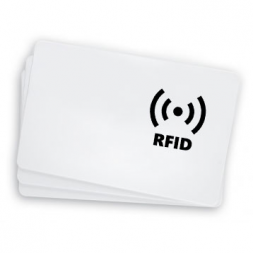
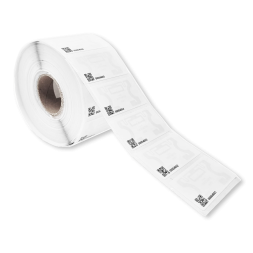
An RFID geolocation chip is a tiny electronic component that stores a unique identifier and transmits it by radio waves to a reader, with no contact and no line of sight. Paired with an antenna on a carrier (label, card, or badge), it forms a tag that identifies an object remotely, from a few centimeters to several meters away.

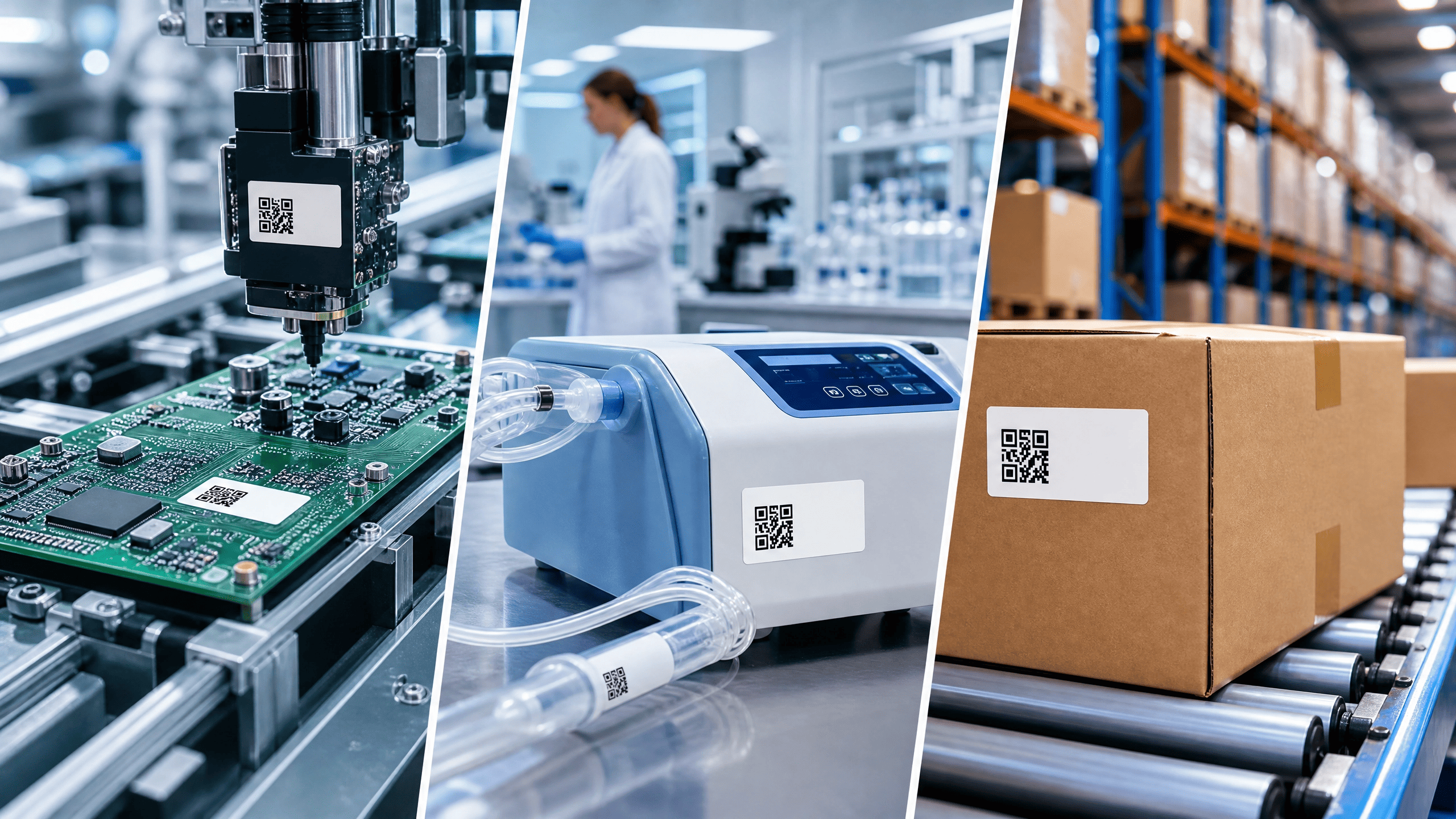
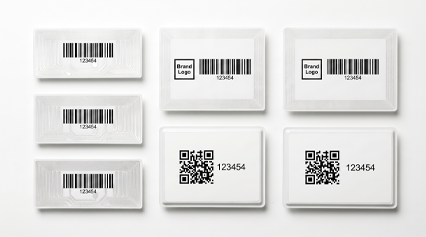
RFID geolocation chips and labels for object tracking

Definition and Operating Principle (Tag, Antenna, Radio Waves)

The principle has three steps. The reader emits a radio wave; the RFID geolocation chip, through its antenna, captures that energy and sends back its identifier; the reader interprets the signal. No wires, no visual scan: reading happens through the air, often through packaging. That is what sets RFID apart from barcodes, which require a direct line of sight.

The Components of an RFID System: Tag + Reader + Software

Any RFID geolocation chip solution relies on three building blocks.

  • The tag (chip plus antenna), attached to the object you want to track.
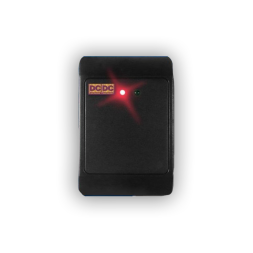
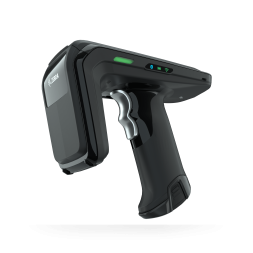
  • The reader and its antennas, fixed (gate, mast) or mobile (handheld terminal).
  • The management software, which turns raw reads into usable data: last known position, alerts, and history.

Active, Passive and Semi-Passive RFID geolocation chips: The Differences

The power source changes everything, starting with range.

  • Passive: no battery, powered by the reader's field. Range from a few centimeters in HF to 6-9 meters in UHF. Low cost, unlimited lifespan.
  • Semi-passive: a small battery powers the chip (sensors, memory) but not the transmission. Useful for tracking the temperature of a sensitive product.
  • Active: a built-in battery powers the transmission. Range of several tens of meters, ideal for tracking a high-value mobile asset.

RFID and Location: What Can You Really Track?

RFID mainly tells you that an object passed a precise point at a precise time. It excels at presence detection and mass identification. For a continuous, moving location, you need a dedicated architecture, and that nuance matters.

How RFID Locates an Object

An RFID geolocation chip relies on the known position of the readers. When a tag is read by the dock 3 antenna, you know the object was there at that second. By multiplying read points, you rebuild a path and a reliable last position, with no GPS or satellite.

Pass Detection vs Continuous Location: A Key Distinction

This is the point most articles miss. A passive chip performs pass detection: it says, "Seen here, at this time." Continuous tracking, showing an object move live on a map, is real-time location and requires an RTLS. Confusing the two leads to the wrong solution.

Read Range by Tag Type (From a Few cm to Several Metres)

Read distance depends on frequency and tag type.

  • LF (125 kHz): under 50 cm, robust near metal and liquids.
  • HF / NFC (13.56 MHz): up to about 1 meter.
  • UHF (860-960 MHz): 6 to 9 meters passive, ideal for inventory and logistics.
  • Active tag: several tens of meters.

RFID, GPS, RTLS: Which Location Technology for Which Need?

No technology is best in absolute terms: it depends on the environment and the precision you need. RFID identifies and detects; GPS covers the outdoors; RTLS locates indoors in real time.

RFID: Identification and Presence Detection

RFID shines at reading hundreds of tags in seconds, at a warehouse entrance or through a gate. It answers "Is it here?" and "Where did it pass?" not "Where exactly is it right now?"

GPS: Outdoor Location Over Long Distances

GPS tracks a moving object over long distances outdoors: trucks, containers, and machinery. It loses signal inside buildings, however, which is exactly where most company assets sit.

RTLS (UWB, BLE, Wi-Fi): Real-Time Indoor Location

An RTLS (Real-Time Location System) provides continuous indoor location. UWB reaches centimeter accuracy (often under 30 cm), while BLE and Wi-Fi place an object within a 3- to 5-meter zone. This is the answer to true real-time tracking indoors.

Comparison Table (Range, Accuracy, Cost, Use)

CriterionRFID geolocation chip (UHF)GPSRTLS (UWB / BLE)
Range6 to 9 m (passive)Global (outdoor)A few m to whole site
AccuracyRead point2 to 10 m< 30 cm (UWB)
Real-time trackingNo (detection)Yes (outdoor)Yes (indoor)
Ideal environmentWarehouse, storeRoad, open airWorkshop, hospital
Relative costLowMediumHigh
Typical useInventory, tracingFleet, transitLive asset location

Sources: RFID range by frequency (LF/HF/UHF); UWB accuracy ±30 cm and BLE/Wi-Fi 3-5 m (RTLS research, ISO/IEC 24730-2 and ISO 18000-63 standards).

The Four RFID Location Methods

When people talk about an RFID geolocation tag, they actually combine several approaches depending on the accuracy required. Here are the four methods, from simplest to finest.

The Pass Point (RFID Gates)

Gates fitted with antennas read every tag that crosses them. You get a series of time-stamped events: store entry, dock exit, and dispatch zone pass. Simple, robust, low cost.

Zoning (Tracking by Zone)

Several fixed readers split the space into zones. The system knows which zone the object is in without exact coordinates. Ideal for "Which workshop is that trolley in?"

BLE / Wi-Fi

BLE beacons or Wi-Fi access points estimate position by signal strength, with 3 to 5 metre accuracy. A good compromise for cost-controlled indoor tracking, already built on the existing network infrastructure.

UWB (Ultra Wide Band) for Centimetre Accuracy

UWB measures the signal's time of flight and reaches accuracy under 30 cm. This is the method for demanding real-time tracking: safety, production, and environments where every asset must be located to the nearest meter.

The Benefits of RFID Object Tracking

Unique Identification and Bulk Reading

Each tag carries a unique identifier, and a UHF reader reads hundreds of objects in seconds. Inventorying a zone drops from hours to minutes.

Time Saved: The End of Manual Searching

No more rummaging through shelving: the last known position sits in the software. Search time for a piece of equipment collapses.

Durability and Tag Resistance (Extreme Conditions)

Tags withstand humidity, temperature swings, and impacts. A passive tag has no battery: in practice, its lifespan is unlimited.

Lower Cost Than GPS/UWB

A passive tag costs a few cents, with no subscription or battery to replace. At high volumes, RFID remains the most economical location option.

Traceability and Real-Time Data

Every read feeds a dated, time-stamped record. You get a full history and instant alerts on abnormal movement.

The Limits of RFID for Location

Sensitivity to Metal and Liquids

Metal reflects waves, and water absorbs them. For these materials you need specific on-metal tags and careful placement, or the read rate drops.

No Continuous Tracking With Passive Tags

A passive tag only speaks when a reader queries it. Out of read range, the object is invisible: no continuous tracking without a dense reader network.

Infrastructure Required (Readers, Antennas)

Coverage depends on the readers and antennas installed. The finer the mesh, the better the location, but the higher the hardware investment.

RFID Object Tracking Use Cases

Logistics and Stock Management

Receiving, picking, and dispatch: RFID speeds up inventory and makes stock reliable. It removes the manual count that slows warehouse teams down.

Asset and Equipment Tracking

Computers, tools, and furniture: each asset gets an identifier and a last known position, the backbone of clean asset management.

Access Control and Anti-Theft Security

RFID cards and badges secure access, and a tag crossing an unauthorized gate triggers an immediate anti-theft alert.

Healthcare (Equipment, Medicines)

Hospitals and clinics locate pumps, trolleys, and medicine batches. Less time lost searching for equipment, fewer dispensing errors.

Industry and Work-in-Progress Tracking

On the line, RFID tracks work-in-progress and containers. You know production status station by station, with no manual entry.

How to Set Up an RFID Tracking Solution?

A successful rollout follows three steps, in order.

Identify the Objects to Track and Choose the Tags

List the objects, their material, and their environment. A metal container needs an on-metal tag; a cardboard box takes a standard UHF label.

Select the Right Location Technology

Pass detection enough? UHF RFID via gates. Need real-time tracking to the meter? UWB. Cost-controlled zone tracking? BLE or Wi-Fi.

Integrate the System With Your Management Software

Reads only matter once they reach a traceability software connected to your ERP or WMS to drive alerts and history.

Choosing the right method comes down to one question: do you need to know an object passed somewhere or to watch it move live? For the first, RFID is enough; for the second, add an RTLS layer. Sized correctly, an RFID geolocation chip turns object hunting into a simple glance at a screen.

Related products

Continue reading...
These articles too might interest you.

RFID en logistique : optimiser le suivi des flux et réduire les coûts

RFID in logistics lets you know, at any moment, where every pallet and every parcel is, with no manual entry. Stocktakes 4 to 5 times faster, real-time traceability, shipping errors kept in check: we walk through how it works, the frequencies, the costs and WMS integration, to help you scope your project with confidence.
Product News
Melissa Oumaouche
29 views

RFID inventory: how to save time and reduce errors

RFID inventory replaces manual counting with fast, contactless reads, scanning hundreds of items in seconds using RFID tags and mobile terminals. You cut inventory errors by up to 90%, save 80–90% of time, and gain real-time visibility over your stock in logistics, retail, and industry. This guide explains how RFID inventory works, its concrete benefits (over 99% accuracy, real-time traceability, cost reduction), and the key steps to deploy it in your business with the right equipment: RFID tags, RFID readers, and RFID software.
Product News
Melissa Oumaouche
1557 views

UHF RFID Explained: Frequency, Technology & Industrial Applications

UHF RFID technology (860–960 MHz) enables the simultaneous reading of hundreds of tags at distances of up to 15 meters, with no line-of-sight requirement, where barcodes still demand manual, one-at-a-time scanning. It has established itself as the global standard for automated traceability across industries as diverse as logistics, retail, healthcare, and industrial asset management. Its key advantages include data accuracy exceeding 99%, an 80–90% reduction in cycle count time, and an ROI typically achieved within 12 to 18 months. Its only notable limitations involve sensitivity to metal surfaces and liquids, which require the use of On-Metal tags (also referred to as metal-mount RFID tags) in demanding industrial environments.

Product News
Melissa Oumaouche
2145 views

Frequently asked questions

Can an RFID geolocation chip Locate an Object in Real Time?

Not with a standard passive tag, which performs pass detection: it reports an object only when it crosses a reader. For continuous real-time tracking, you need an active tag tied to a reader network or an RTLS (UWB, BLE). An RFID geolocation chip then gives a reliable last known position but not live movement unless dedicated infrastructure is in place.

What Is the Difference Between an RFID geolocation chip and a GPS Chip?

A GPS chip computes its own position via satellites and tracks an object outdoors over long distances. An RFID geolocation chip has no position of its own: it is read by a reader whose location is known. RFID excels indoors and at bulk reading; GPS, outdoors and on the move. The two are complementary, not competitors.

What Is the Range of an RFID geolocation chip?

It depends on frequency: under 50 cm in LF, about 1 meter in HF/NFC, 6 to 9 meters in passive UHF, and several tens of meters for an active battery tag. Environment (metals, liquids) and antenna power shift these values.

Does RFID Work on Metal Objects?

Yes, provided you use non-metal tags designed for it. Metal reflects waves: a standard tag stuck directly on it reads poorly. Specialized tags include a spacer that restores reliable reading on metal equipment and containers.

See the author's articles
Melissa Oumaouche

With over 5 years of experience in creating content optimized for search engines, Mélissa is currently Marketing & Product Manager at SBE Direct, where she leads the product catalogue positioning across the e-commerce website and marketplaces, as well as the SEO content strategy in coordination with the marketing team she oversees.

We use cookies to improve your experience.