Industrial automation has established itself as an essential competitive lever for French manufacturers. According to an IBM study published in November 2025, 60% of French executives already report significant productivity gains linked to automation and AI. But behind every automated line lies one fundamental requirement: ensuring the reliability of the data flowing between machines, operators, and information systems.

This is exactly where RFID traceability becomes strategic. How do you automate a factory inventory without manual scanning? How do you guarantee a continuous flow between production, logistics, and the ERP? Which RFID equipment should you choose to move to Industry 4.0 without starting from scratch?

Industrial automation: what is it?

Industrial automation refers to the set of techniques, machines, and systems that perform production tasks without direct human intervention. It relies on robotics, programmable logic controllers, sensors, control software, and identification technologies such as RFID to ensure the reliability of every step of the process.

In practice, the automation of industrial processes has three core objectives:

  • Reduce the operator workload on repetitive tasks.
  • Improve the quality and consistency of production.
  • Generate reliable data that can be exploited in real time.

According to Wikipedia, industrial automation is "the art of using machines to reduce the workload of the worker while improving productivity and quality."

This definition still holds, but it now gains a new dimension: data. Without reliable data, no smart machine can make the right decision. This is precisely why RFID technology has become a pillar of modern industry.

Key challenges of industrial automation

The challenges of industrial automation go far beyond pure productivity. They cover competitiveness, regulatory compliance, supply chain resilience, and the ability to leverage real-time data to run the factory.

According to the Bain & Company 2024 report, the combined adoption of robotics, AI, digital systems, and lean methods can boost industrial productivity by 30% to 50% in some sectors. On the shop floor, this translates into four strategic priorities:

  • Competitiveness: holding costs against Asian and Eastern European competition.
  • Responsiveness: adjusting production to demand variations in real time.
  • Compliance: tracing every batch, every product, and every piece of equipment from end to end.
  • Safety: reducing human risks on demanding or hazardous workstations.

Why is traceability at the heart of modern automation?

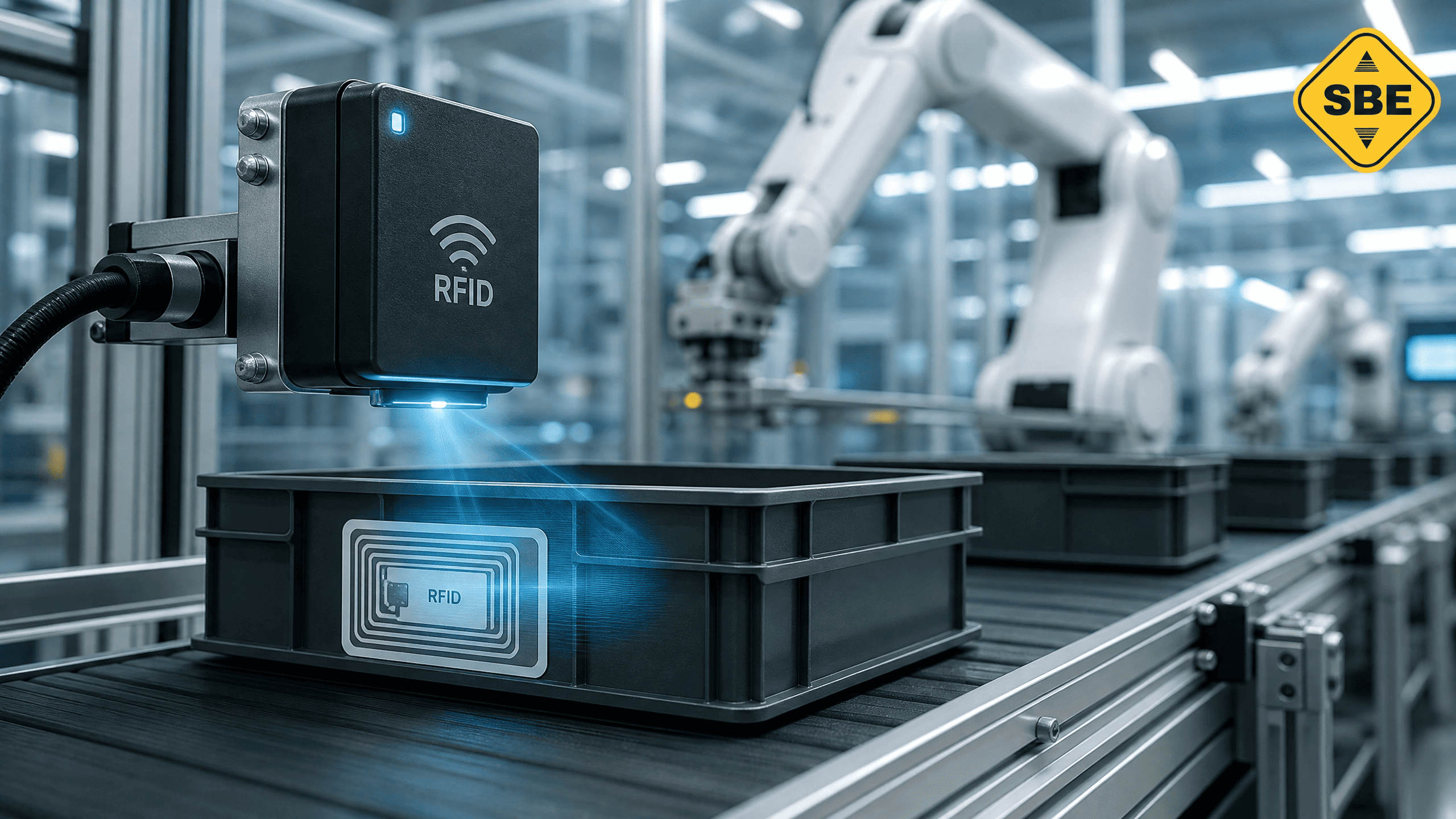
Traceability is the prerequisite for any reliable industrial automation. Without automatic identification of assets, tools, and products, no system can make a decision without human intervention. RFID meets this need precisely by delivering certain, instant, and contactless data.

The Industry 4.0 factory relies on three flows that must stay permanently synchronized: the physical flow (materials, products, tooling), the information flow (ERP, WMS, MES), and the decision flow (real-time control). Every break between these flows generates errors, downtime, or dormant stock.

In practice, RFID traceability feeds your asset management solution and your WMS directly, with no manual entry and no error re-keying.

The benefits of RFID for automating your processes

RFID delivers four measurable benefits to any industrial automation initiative: data reliability, execution speed, real-time visibility, and regulatory compliance. The table below summarizes the gains observed in the field.

BenefitBefore RFIDWith RFIDMeasured Gain
Physical inventoryManual counting or line-of-sight barcode scanningMulti-tag reading up to 200/second−90% time saved
Stock accuracy65 to 80%≥ 99%+20 to 35 points
Data entry errorsHigh (up to 5%)Near zero−99%
Asset visibilityPeriodic, sometimes monthlyContinuous real-time24/7

Reducing human errors and securing data reliability

RFID eliminates manual data entry, the leading source of errors in industrial environments. Each tag is read automatically, with no dependency on the operator or line of sight. The result is immediate: the data flowing into the ERP is accurate, dated, and time-stamped.

On a production line, this means a mislabeled product can no longer be shipped. On an equipment fleet, it ensures that no machine "disappears" between two inventory counts. For manufacturers using SBE Direct's UHF RFID labels, system accuracy exceeds 99%, compared with 65 to 80% with a conventional barcode.

Faster inventories and asset tracking

An RFID inventory takes on average 90% less time than a manual count. A storage area holding 5,000 SKUs can be inventoried in under 15 minutes, compared with half a day using a traditional barcode scan.

This speed transforms asset management at its core:

  • Inventory becomes daily rather than quarterly.
  • Discrepancies are detected in real time, not at the accounting close.
  • Operators free up time for higher-value tasks.

For field tracking, RFID readers and mobile terminals enable on-the-fly counting in aisles, workshops, or outdoor zones.

Real-time control of production and logistics

RFID feeds your control system with fresh data, continuously. Every movement of a pallet, part, or tool is captured instantly by the antennas or reading gates. This information is then transmitted to your WMS, ERP, or MES through standardized communication.

In practice, you know at any given moment:

  • Where your finished products are in the warehouse.
  • Which batches are being processed.
  • Which machines are running and which are idle.

This real-time control is the foundation of the Industry 4.0 concept: making the right decision with the right data, at the right time.

Regulatory compliance and end-to-end traceability

RFID meets the increasingly strict traceability requirements in food, pharma, defence and aerospace. Each label is encoded to the international ISO/IEC 18000-63 (EPC Gen2) standard, which defines the UHF air-interface protocol used by virtually every industrial RFID system in the world.

This technology guarantees end-to-end traceability: from raw material to end customer, through every stage of processing, storage, and transport. In the event of a product recall, the affected batch is isolated in minutes, not days.

Our RFID equipment to automate your traceability


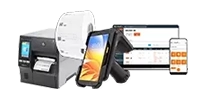
SBE Direct offers a complete and consistent RFID ecosystem: labels, readers, printers and software. Every building block integrates with the others and with your existing systems (ERP, WMS, MES). Here is how to build an end-to-end automated identification chain.

RFID equipment to automate your traceability

RFID labels and tags: the starting point of any automated identification

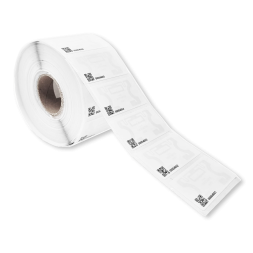
RFID labels are the foundation of any automated traceability solution. No tag, no data. No data, no automation. The choice of tag depends on the frequency (UHF, HF, NFC), the surface to be marked (cardboard, metal, textile, plastic) and the environment (temperature, humidity, washing).

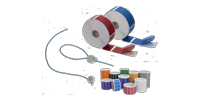
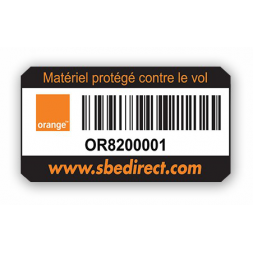
SBE Direct offers a full range of customizable UHF, HF and NFC RFID labels: rectangular, round, mini-labels, tear-proof PVC labels, adhesive or rewritable labels.

RFID readers and mobile terminals: capturing data in the field

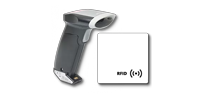
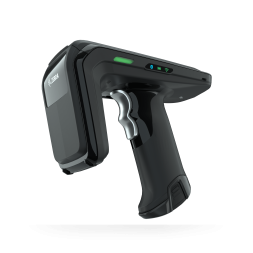
RFID readers capture the data emitted by tags and transmit it to your information system. They come in three main forms: mobile terminals, fixed readers (gates, wall-mounted antennas), and USB readers for administrative workstations.

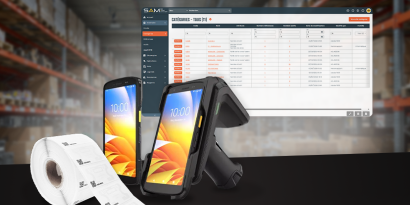
For field operations, SBE Direct notably distributes the Zebra TC22/TC27 scanner, a barcode and RFID mobile terminal built for demanding logistics environments. Explore the full range of SBE Direct RFID readers and mobile terminals to equip your operational teams. For combined barcode and RFID stock management, see also our stock management section.

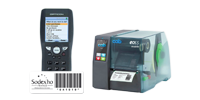
RFID printers: encode and customise your labels in-house

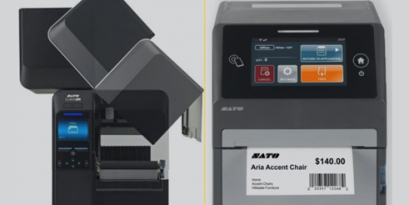
RFID printers let you print and encode your tags in a single operation, on your premises. You keep control over label production, avoid stock-outs, and customize each tag to your needs (EPC number, logo, variable data).

SBE Direct distributes the leading industrial brands, including Zebra, as well as SATO and CAB for high-throughput applications. The right model depends on volume, label format, and the targeted level of automation. For a detailed comparison, read our label printer buying guide.

RFID asset management software (SAM by SBE Direct)

An RFID software centralises the data captured by readers and turns it into actionable outputs: dashboards, alerts, reports, ERP integration. Without software, your RFID infrastructure stays silent.

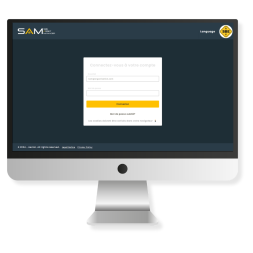
SAM (SBE Asset Manager) is the solution developed by SBE Direct to drive asset management in industrial environments. It automates inventories, manages access controls, triggers alerts on abnormal movements and interfaces with the market's leading ERP systems.

RFID use cases supporting automation, by sector

RFID adapts to almost every industrial sector. Here are three concrete use cases showing how SBE Direct supports its customers in their industrial automation journey.

Manufacturing and logistics: tool tracking and automated WMS flows

In a mechanical production plant, tool tracking is a critical issue: a lost cutting tool can halt an entire line. By tagging each tool with a UHF RFID tag and installing reading gates at key checkpoints, the company knows at all times where every item is.

Coupled with a WMS, RFID automates goods receipt, storage, and shipping. As pallets pass through a reading gate, the system updates stock levels in real time and automatically triggers replenishment orders. Field results: −90% data entry time and near-total elimination of shipping errors.

Construction: asset tracking and equipment theft prevention

In the construction sector, equipment theft on building sites accounts for nearly €1 billion per year in France. RFID asset tracking addresses this problem head-on: every tool, every piece of equipment, and every machine is identified, located, and tracked in real time.

A typical rollout combines shock- and UV-resistant UHF RFID labels, fixed readers at site entrances, and the SAM software to centralize data. The benefits are quickly measurable: reduced theft, no more lost tools, optimized equipment fleet management, and better rotation of machinery between sites.

Textile and laundry: ultra-fast inventory and long-lasting tags

In professional textiles and industrial laundries, every garment goes through dozens of wash cycles. Textile RFID labels, designed to withstand more than 200 high-temperature wash cycles, enable a full inventory in just a few minutes. The operator simply runs the linen through an RFID gate: the system identifies every item, updates stock levels and triggers replacement orders.

Related products

Continue reading...
These articles too might interest you.

RFID inventory: how to save time and reduce errors

RFID inventory replaces manual counting with fast, contactless reads, scanning hundreds of items in seconds using RFID tags and mobile terminals. You cut inventory errors by up to 90%, save 80–90% of time, and gain real-time visibility over your stock in logistics, retail, and industry. This guide explains how RFID inventory works, its concrete benefits (over 99% accuracy, real-time traceability, cost reduction), and the key steps to deploy it in your business with the right equipment: RFID tags, RFID readers, and RFID software.
Product News
Melissa Oumaouche
1085 views

UHF RFID Explained: Frequency, Technology & Industrial Applications

UHF RFID technology (860–960 MHz) enables the simultaneous reading of hundreds of tags at distances of up to 15 meters, with no line-of-sight requirement, where barcodes still demand manual, one-at-a-time scanning. It has established itself as the global standard for automated traceability across industries as diverse as logistics, retail, healthcare, and industrial asset management. Its key advantages include data accuracy exceeding 99%, an 80–90% reduction in cycle count time, and an ROI typically achieved within 12 to 18 months. Its only notable limitations involve sensitivity to metal surfaces and liquids, which require the use of On-Metal tags (also referred to as metal-mount RFID tags) in demanding industrial environments.

Product News
Melissa Oumaouche
1415 views

What is the best SATO industrial label printer?

You need to change your industrial label printer and you want to invest in the best SATO printer on the market, but you don’t know which product to choose? In this article, we will compare the SATO CL4NX Plus and CT4-LX to best suit your needs!

Product News
5488 views

Frequently asked questions

What are the main RFID use cases in industry?

RFID covers four families of use cases: inventory management, production traceability, tool and asset tracking and anti-theft security. In every case, UHF tags compliant with the ISO 18000-63 standard dominate thanks to their range of up to 9 metres and multi-tag reading capability.

Is RFID suitable for small and medium-sized businesses?

Yes, RFID is perfectly suited to SMEs. A starter kit (labels + mobile reader + SAM software) is accessible from a few thousand euros, with ROI achieved in 12 to 36 months. SMEs often benefit from a faster rollout thanks to a more controlled scope. SBE Direct offers modular kits to start with a single workshop and then extend to the entire company.

Can RFID be combined with existing systems (ERP, WMS)?

Yes, RFID integrates natively with the main ERP and WMS systems (SAP, Oracle, Sage, Microsoft Dynamics, Cegid). Integration is handled through a middleware or an API, with no need to replace your existing system. Readers transmit data to SAM by SBE Direct, which normalises it and pushes it into your ERP in real time. Our teams confirm compatibility during the audit phase.

What is the difference between UHF, HF and NFC RFID in industrial environments?

UHF RFID (860-960 MHz, ISO 18000-63) offers 6 to 9 metres of range and multi-tag reading: ideal for inventory and logistics. HF RFID (13.56 MHz) covers 10 to 50 cm and targets unit-level control at the identification point. NFC is an HF variant dedicated to smartphone exchanges. In industrial environments, UHF dominates traceability and the automation of industrial processes.

See the author's articles
Melissa Oumaouche

With over 5 years of experience in creating content optimized for search engines, Mélissa is currently Marketing & Product Manager at SBE Direct, where she leads the product catalogue positioning across the e-commerce website and marketplaces, as well as the SEO content strategy in coordination with the marketing team she oversees.

We use cookies to improve your experience.