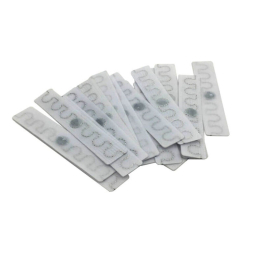
RFID Tags

RFID Tags

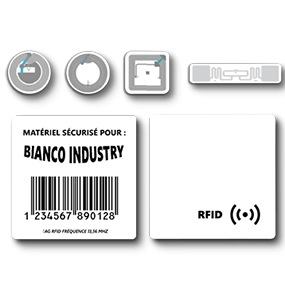
A RFID tag stores a unique identifier in a chip connected to a miniature antenna. When queried by a reader, it responds without requiring a direct line of sight, even through cardboard, inside a drawer, or from several metres away. Whereas a barcode requires each item to be scanned individually, an RFID reader can read dozens of tags simultaneously on the fly. This change in scale makes it possible to complete an annual inventory in just a few hours rather than several days.

Read more ↓
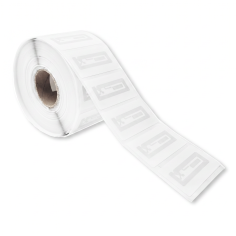
RFID Tag | SBE Direct

RFID label: the key points

  • Contactless reading : the chip answers the reader through cardboard, a drawer or at a distance.
  • Bulk reading : dozens of labels read on the fly, against one item at a time with a barcode.
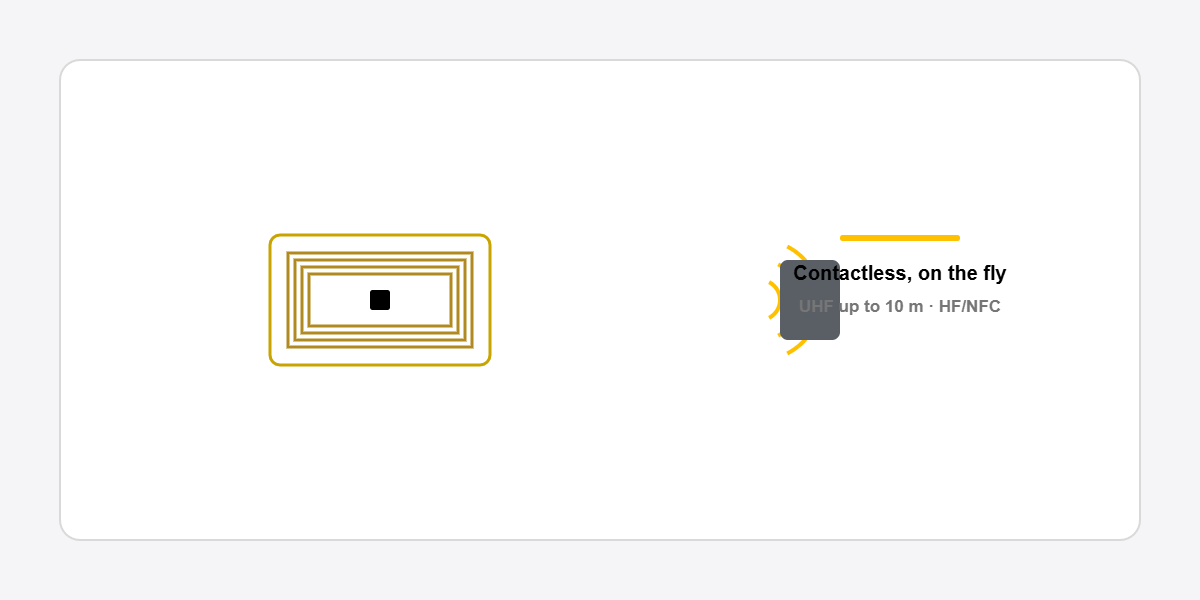
  • UHF or HF/NFC : up to 10 m for logistics, a few centimetres by smartphone for access.
  • Standard and On-Metal versions : stable reading even on steel, aluminium or stainless steel.
  • Blank or encoded at source : unprogrammed chip for your printers, or ready to apply.
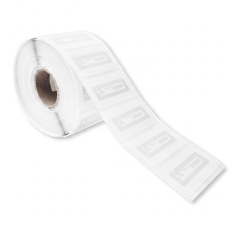
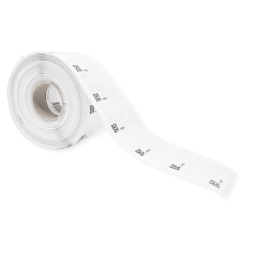
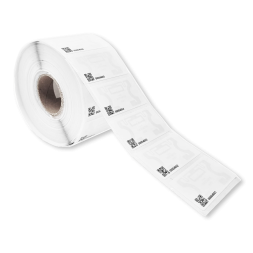
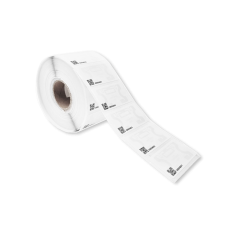
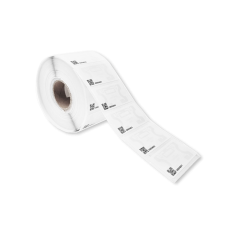
  • Rolls of 1,000 : on a 40 mm core, custom formats available.

HF/NFC or UHF: which frequency to choose

The frequency choice governs range and use. In HF/NFC (13.56 MHz), reading works from a few centimetres to a few tens of centimetres, and any Android or iOS smartphone reads the label without a dedicated app: it is the technology of badges, access control and product sheets consulted in the field.

In UHF (860-960 MHz), range climbs to several metres, up to 10 m in free field, with memory able to address fleets of over 100,000 references: it is the standard for logistics and asset inventory. It all builds on our RFID technology and traceability offer.

RFID reading diagram

HF/NFC and UHF comparison

CriterionHF / NFCUHF
Frequency13.56 MHz860-960 MHz
Rangea few cmup to 10 m
Readingsmartphone is enoughdedicated reader
Typical usebadges, access, fieldlogistics, inventory
Multiple readingone at a timehundreds/s

Standard or On-Metal: the surface changes everything

On-metal RFID diagram

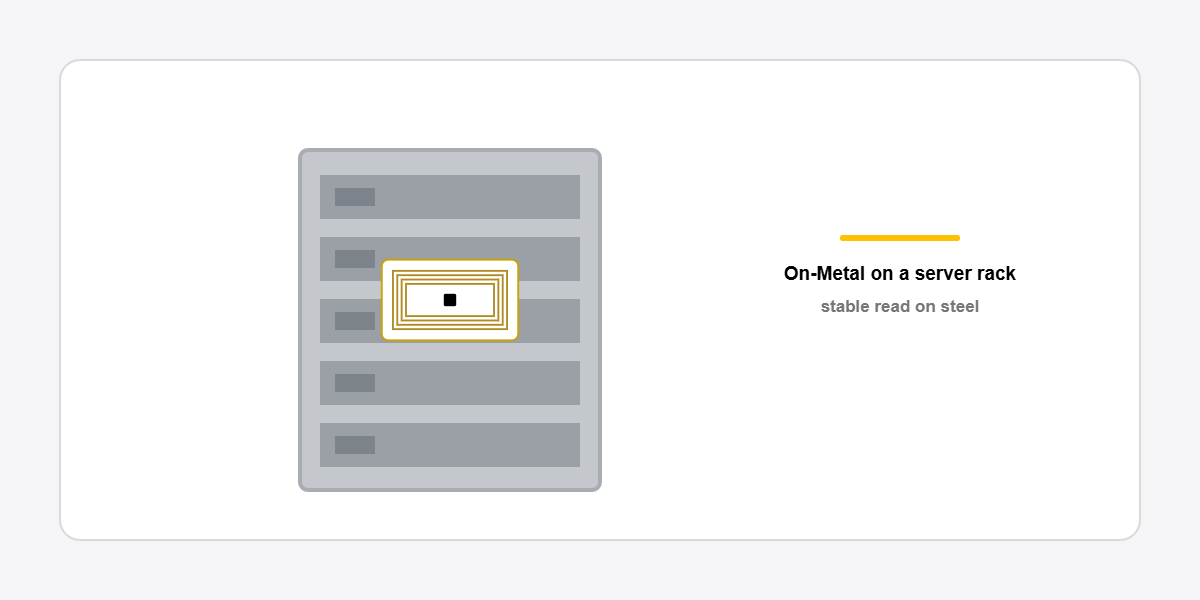
Placed directly on steel, aluminium or stainless steel, a standard RFID label sees its range fall to zero: the metal detunes the antenna. Our On-Metal versions include a technical PET substrate that decouples the antenna from the surface and restores stable reading. They come in 40x25, 55x15, 60x25, 80x40 or 86x54 mm, enough to mark a tool or a server rack.

The Standard versions, in PET wet inlay, cover all non-metallic surfaces: documents, plastic, wood, cardboard, furniture. For linen traceability, the heat-sealed textile RFID label withstands washing at 90 °C and autoclaving. The label is only one brick: it gains value with readers, mobile terminals and the SAM software repository.

RFID label FAQ

Does an RFID label need a battery?

No. Our labels are passive: they contain no power source. The reader's radio signal powers the chip for the exchange. No maintenance, no battery to replace; lifespan depends on the mechanical durability of the surface.

Can an already-encoded label be rewritten?

It depends on the memory area. The factory-etched UID is unique and unmodifiable, which guarantees uniqueness. The user memory (EPC in UHF, NDEF in HF/NFC) is rewritable: you update the content over the asset's life.

How many labels can a reader read at once?

In UHF, dozens to hundreds per second depending on the reader and density, thanks to an anti-collision protocol. In HF/NFC, one label at a time, deliberately, to avoid any ambiguity on an access check.

What happens if I put a Standard label on metal?

It will not read, or very erratically: metal reflects the waves and detunes the antenna. That is exactly why On-Metal versions exist. If in doubt, request a sample and test with your own reader before ordering in volume.

Do I need a professional reader or is a smartphone enough?

For HF/NFC, a recent smartphone is enough. For UHF, a dedicated reader is essential: no smartphone has an 860-960 MHz antenna. It is a point to settle early, as it drives the hardware budget.

Can a format outside the catalogue be made?

Yes. Custom manufacturing covers the format, chip, substrate and memory configuration. Minimum order of 10 rolls, with a one-off tooling fee of €600 charged once at format creation.

We use cookies to improve your experience.