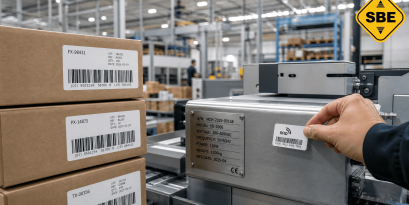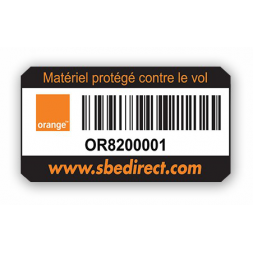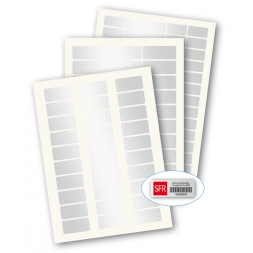
The tamper-evident label is now the most reliable way to prove that a product, packaging, or piece of equipment has not been opened between the factory and the end user. Applied in seconds, it leaves an irreversible mark the moment anyone tries to remove it and, together with other security labels, forms the first visual line of defense against fraud and counterfeiting.

The context makes this label more strategic than ever: 2025 OECD data relayed by Euronews values counterfeit imports into the European Union at €99 billion in 2021, or 4.7% of total imports.

For manufacturers, distributors, and logistics players, securing a product is no longer a matter of sealed packaging alone: you need to prove it has not been opened, duplicated, or substituted at every stage of the supply chain.

But how does a tamper-evident label actually work? Which types are available? In which sectors is it mandatory? How do you choose the right model for your substrate and security level? This article answers all of these questions, drawing on the regulations in force and SBE Direct's field experience in securing business assets.

What is a tamper-evident label?

A tamper-evident label is a security label designed to leave an irreversible mark the moment anyone tries to peel or open it. It works as a visual tamper indicator: once applied, removing it is either impossible or immediately detectable. It therefore protects a product, packaging, or piece of equipment against fraud, theft, and counterfeiting.

The principle relies on the deliberate fragility of the adhesive complex. Three mechanisms coexist:

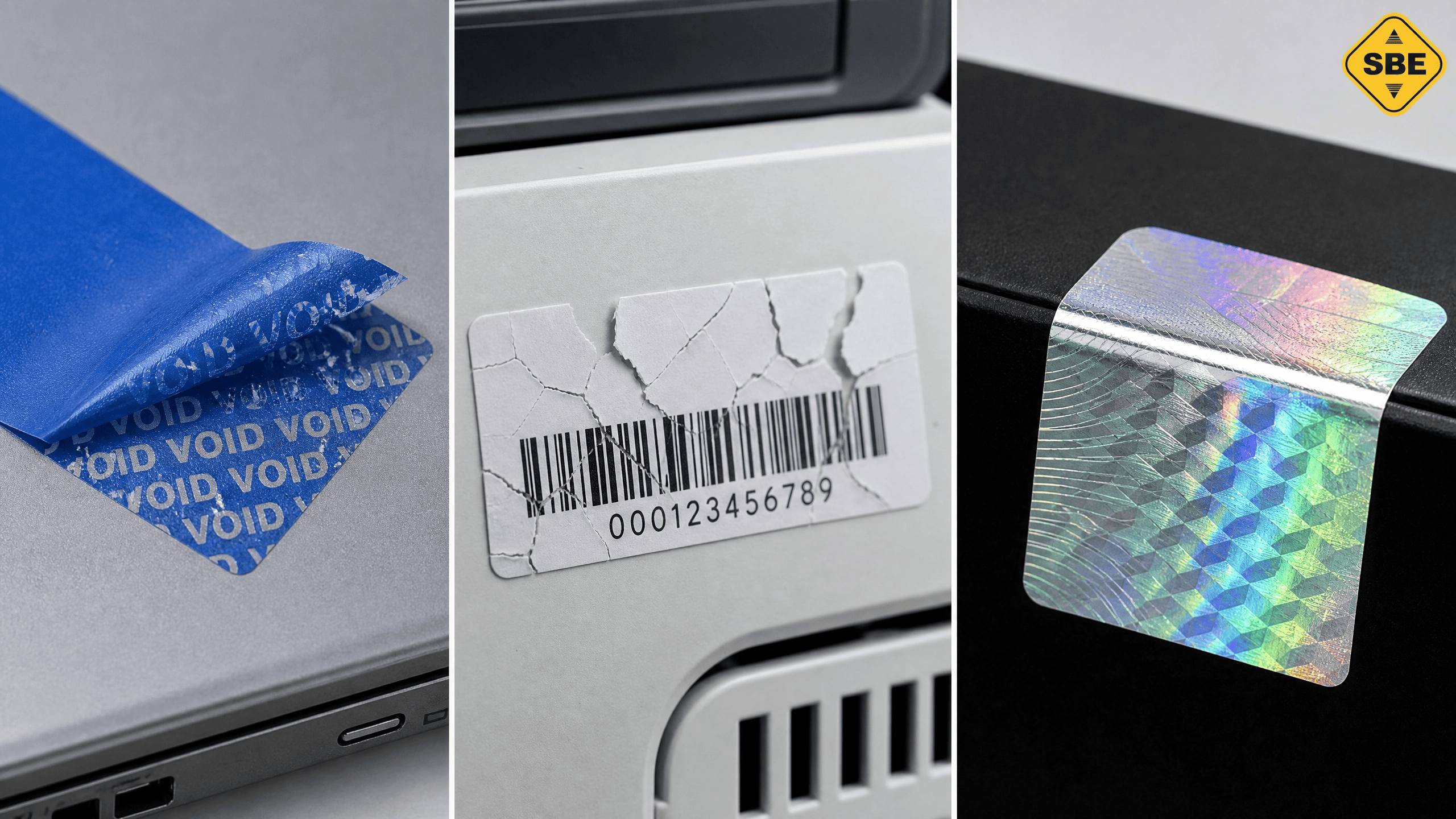
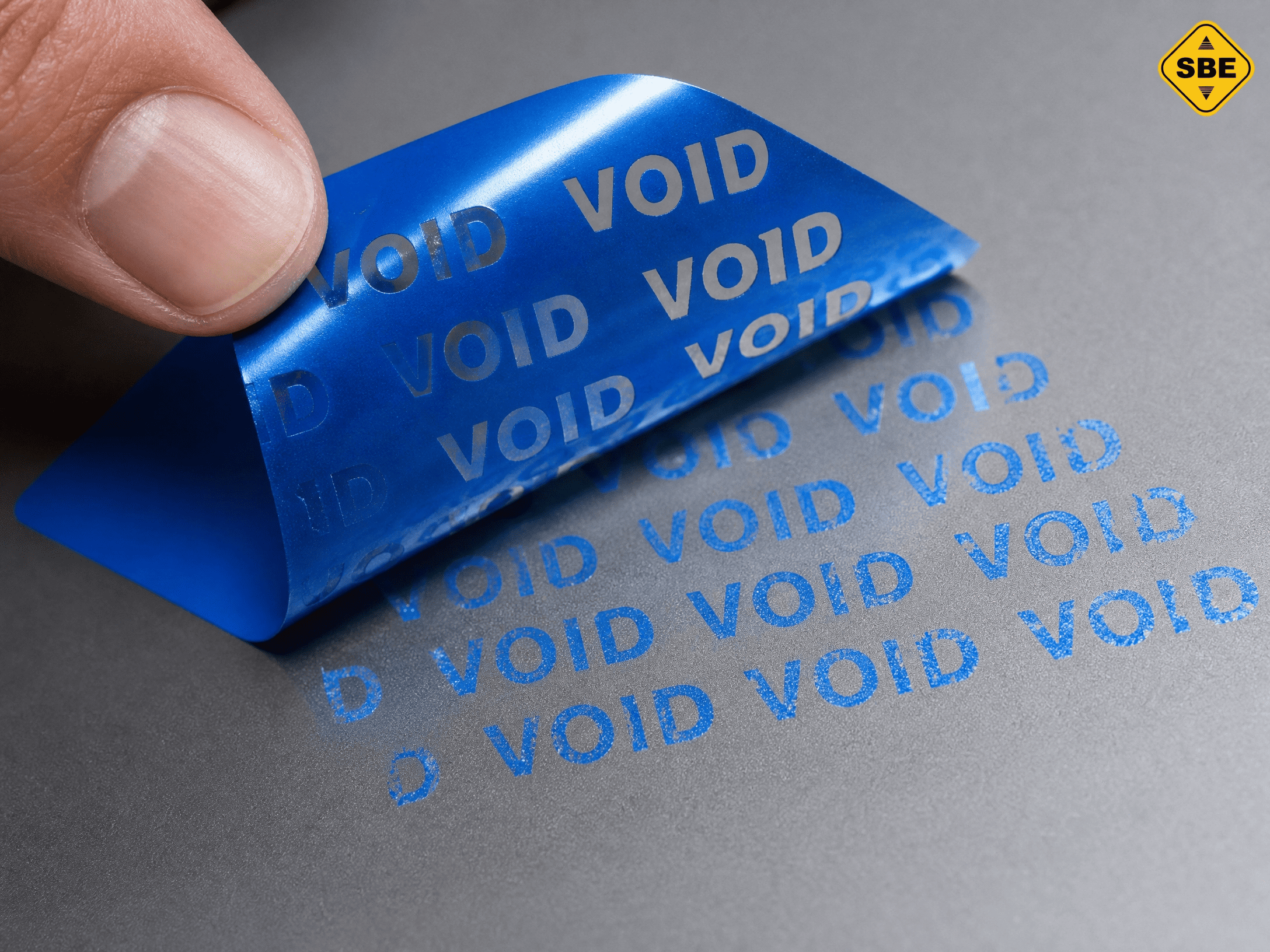
  • Layer delamination: a message appears (e.g. "VOID," checkerboard pattern) on the label or on the substrate.
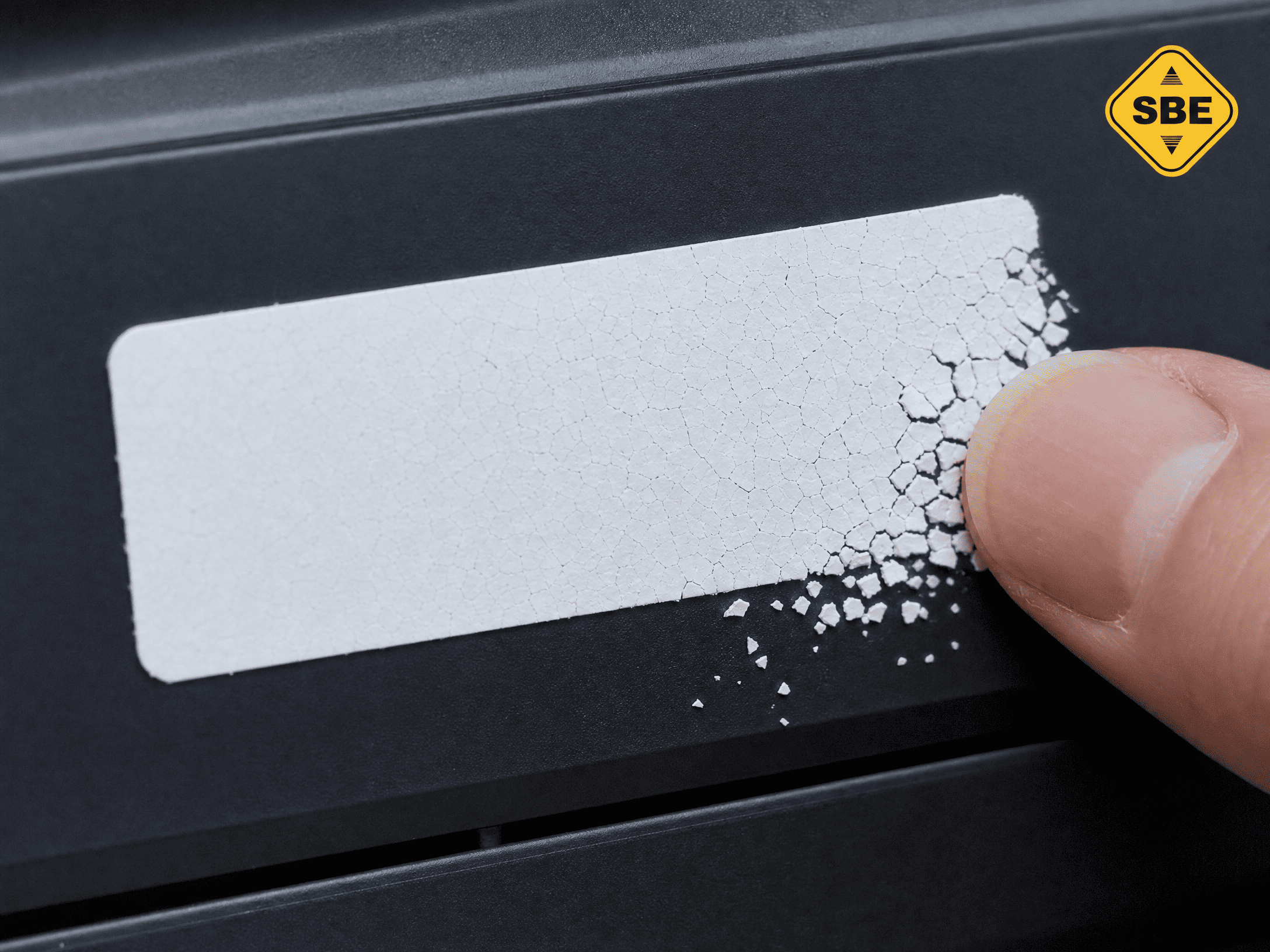
  • Mechanical destruction: the label breaks into fragments at the slightest pulling.
  • Chemical fusion: a cyanoacrylate adhesive permanently bonds the label to its substrate.

In every case, the goal is the same: making any handling visible and reuse impossible. This traceability of tampering is what distinguishes a tamper-evident security label from a simple self-adhesive label.

These two labels follow opposing logics:

CriteriaTamper-evident labelTear-resistant label
LogicIntentional fragilityMechanical resistance
Behaviour when removedDestroys or marks the surfaceRemains intact
PurposeDetect tamperingWithstand extreme conditions
Use casesSealing, warranty, anti-fraudIndustrial wiring, outdoor marking

A tear-proof label is built for longevity in harsh environments (UV, heat, and abrasion); that need is covered byultra-resistant labels in polyester or aluminum. A tamper-evident label, by contrast, is built for proof of integrity through controlled fragility.

The different types of tamper-evident security labels

The B2B market identifies four main families of tamper-evident labels: VOID, destructible, holographic, and pre-cut with security slits. Each relies on a different physical mechanism and meets a specific level of security. The choice depends on the substrate, the criticality of the product, and the visual message desired after a tampering attempt.

The VOID label

The VOID label is the most widely used tamper indicator. Made up of a three-layer complex (frangible acrylic adhesive, polyester carrier, surface treatment), it reveals the word "VOID" or a checkerboard pattern as soon as anyone tries to remove it.

Two variants exist:

  • With residue (partial transfer): the inscription remains both on the label and on the substrate.
  • Without residue : the trace only appears on the label; the substrate stays clean.

VOID labels withstand temperatures from -40 °C to +180 °C, humidity, UV and common solvents. They are the preferred choice for sealing parcels, IT equipment, confidential documents and sensitive inventories. For teams who print their own seals in-house, the blank VOID label in A4 sheets remains the most versatile format, compatible with a standard laser or inkjet printer.

The destructible (ultra-destructible) label

The destructible label, also known as an "eggshell" label, is made of a fragile PVC and an ultra-strong permanent adhesive. Any attempt at removal fragments it into small pieces that cannot be reassembled.

Technical features:

  • Synthetic destructible material.
  • High-tack permanent adhesive.
  • Resistance to solvents and high temperatures.
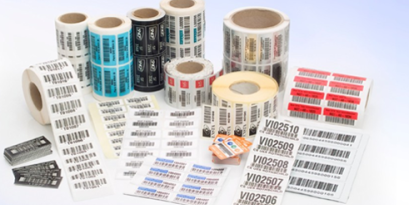
  • Available in rolls or customisable A4 sheets.

This type of label is used extensively for fixed-asset management and corporate inventories. It deters the theft of IT, audiovisual, or laboratory equipment by making any removal visible.

The holographic label

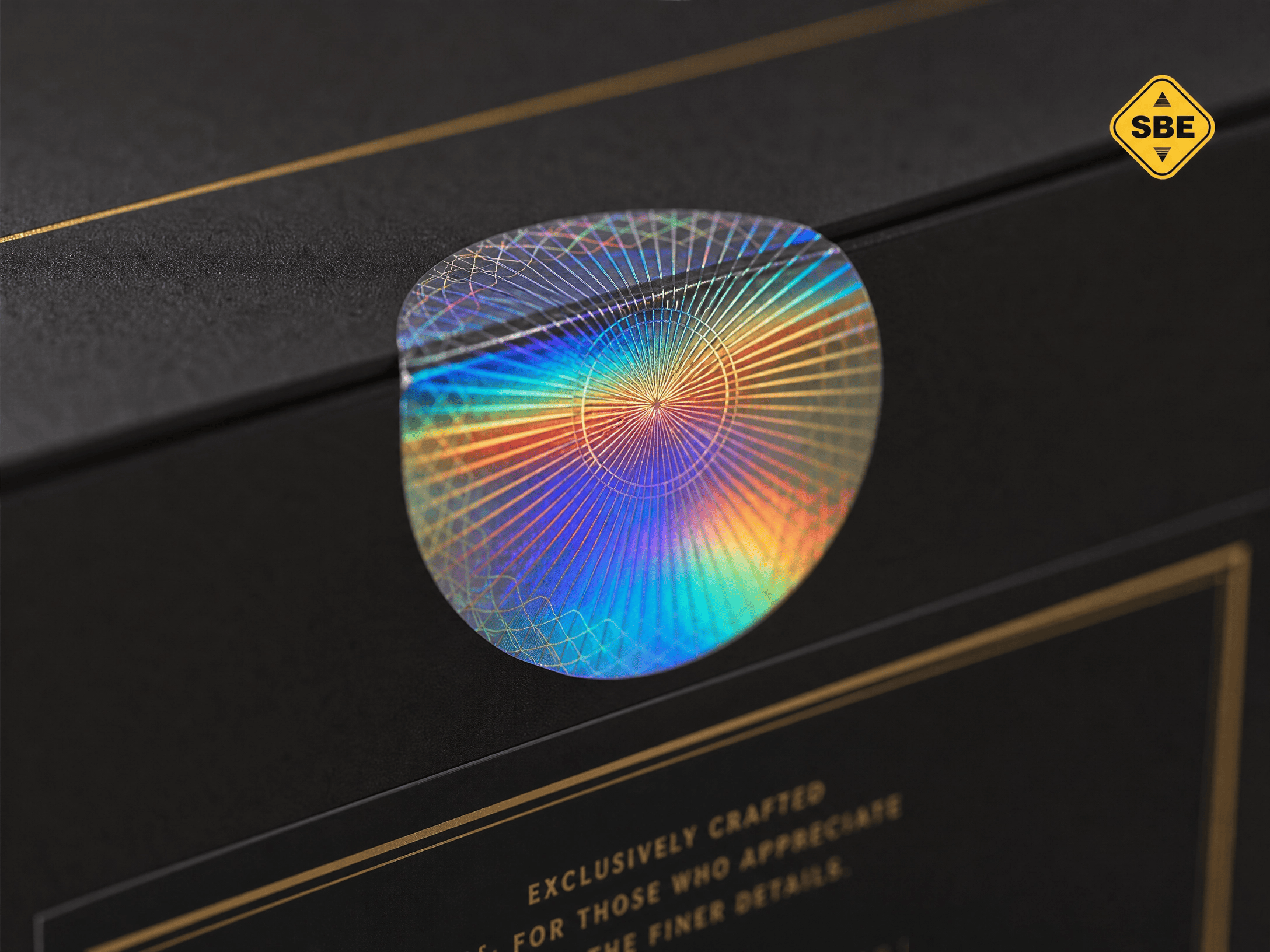
The holographic label combines tamper evidence with anti-counterfeiting. The holographic pattern is built into the complex: it is instantly recognizable and hard to reproduce, even with a professional printer.

Holography and integrated optically variable devices (OVDs) embedded in the labels are immediately recognizable and difficult to copy. Several visual layers can be added to reinforce protection.


It is particularly suited to luxury, pharmaceuticals, and high-end electronics, where the authentication challenge goes beyond simple tamper detection. The standard VOID anti-tamper authentication hologram security sticker, for example, combines a holographic pattern, a VOID tamper effect on removal, and unique laser numbering for individual traceability.

The pre-cut label (with security slits)

The pre-cut label is cut through with internal slits. At the slightest attempt at peeling, it tears along these lines and becomes impossible to cleanly reapply.

This technology is often built into polyester labels or warranty paper labels. It is used for:

  • Sealing cartons in logistics.
  • Manufacturer warranties on consumer goods.
  • Cosmetic and food packaging.

It offers an attractive trade-off between cost (low), security level (medium), and ease of application. It is one of the most common families in the anti-fraud label catalog, often combined with a barcode or QR code for traceability.

In which sectors should a tamper-evident label be used?

Tamper-evident labels are used in every sector where the integrity of a product, packaging or piece of equipment must be proven. Five sectors concentrate the bulk of usage:

  • logistics / e-commerce (parcel traceability),
  • IT / electronics (theft prevention and warranty),
  • food and beverage (freshness seal),
  • public sector (judicial and administrative seals),
  • pharma / cosmetics (regulatory obligation).

Faced with the rise of counterfeiting and the growing traceability requirements of European regulations, their use is becoming more widespread: they are no longer reserved for high-risk industries alone, but are becoming a default protective reflex for any company keen to preserve customer trust and the integrity of its supply chain.

Pharmaceutical and cosmetic industries


Since 9 February 2019, every prescription medicine package must include an anti-tampering device compliant with Commission Delegated Regulation (EU) 2016/161, transposing the European Commission's Falsified Medicines Directive. Laboratories rely heavily on VOID or pre-cut labels on secondary cartons. In cosmetics, the tamper-evident label certifies that a product has not been opened before purchase, providing reassurance for the end consumer.

Logistics, transport and e-commerce

Tive's 2026 supply chain risk analysis stresses that periods of geopolitical tension result in a higher risk of theft and falsification when freight sits in transit longer than expected. VOID or pre-cut labels seal parcels and allow the recipient to visually verify the integrity of the shipment. They are a standard for sensitive carriers (pharma, luxury, electronics).

IT and electronics

Manufacturers of computers, smartphones, and servers apply VOID labels on screws or chassis seams. Any unauthorized opening voids the warranty. In corporate environments, the tamper-evident & permanent label serves as an inventory label across the IT fleet to deter theft and trace assets.

Food and beverage

Warranty seals on jars, pots and tinned goods prove that the product has not been opened since leaving the factory. For certain sensitive products (dairy, ready meals), a tamper indicator is required both by distributors and by internal quality programmes. Pre-cut and destructible labels dominate this segment.

Public sector

Public authorities use VOID labels for seals on confidential files, evidence (police, justice, customs) and ballot boxes. Numbered holographic labels are also deployed for official documents and sensitive access badges.

How to choose the right tamper-evident label for your need

Choosing a tamper-evident security label rests on four criteria: the material (to suit the environment), the type of adhesive (to suit the substrate), the level of security required (simple indicator or total destruction) and the degree of customisation (numbering, barcode, hologram). The right trade-off guarantees tamper evidence without unnecessary over-spend.

Material choice: polyester, polyurethane, aluminium, acetate, double-acrylic

MaterialEnvironmentKey Advantage
PolyesterIndoor, temperate outdoorVersatile, great value for money
PolyurethaneCurved surfaces, vibrationsFlexibility and mechanical resistance
AluminiumIndustry, extreme temperaturesSolvent and UV resistance
AcetateThin labels, opticsTransparency and thinness
Double acrylicLong-term inventoryTamper-proof, double layer

For UV, solvent or extreme-temperature environments (-40 °C to +180 °C), prefer polyester or aluminium. For applications on rough or matte plastic substrates, polyurethane offers better adhesion.

Type of adhesive: permanent acrylic, cyanoacrylate, chemical resistance

Three families dominate:

  • Permanent acrylic adhesive: standard for VOID and destructible labels. Good resistance to water, oils and common chemicals.
  • Cyanoacrylate (cyano glue): used by SBE's tamper-evident & permanent label. Cures on contact with airborne humidity, fusing the label to the substrate. Full bond in 48 hours, initial seal in 10-15 minutes.
  • Special high-temperature or low-energy adhesives: required on PE, PP, silicone or very cold surfaces.

The level of security required

From simple indicator to maximum security:

  • Tamper indicator: VOID or pre-cut label, visual proof of an attempt.
  • Total destruction: destructible label, fragmentation on removal.
  • Unremovability: tamper-evident & permanent label (SBE patent) permanently fused with the substrate.
  • Anti-counterfeiting combination: holographic label with UV authentication ink + tamper indicator.

Customisation: printing, logo, barcode, QR code, numbering

Every tamper-evident label is customizable:

  • High-resolution black or color printing.
  • Logo and visual identity.
  • 1D or 2D barcode, or QR code.
  • Sequential laser numbering.
  • Custom VOID message (customer text in place of "VOID").

At high volumes, the color-printed VOID polyester anti-fraud label allows the logo, barcode, and sequential numbering to be combined on a single substrate, with a decreasing unit cost.

Summary table: which label for which use?

TypeMatériau typiqueAdhésifNiveau de sécuritéCas d'usage prioritaire
VOIDPolyesterAcrylique sécableÉlevé
témoin visuel
Scellé colis, IT, dossiers
DestructiblePVC ultra-destructiblePermanent puissantÉlevé
fragmentation
Inventaire, immobilisations
HolographiquePolyester métalliséAcrylique sécableTrès élevéLuxe, pharma, électronique
PrédécoupéePolyester ou papierPermanentMoyenLogistique, agroalimentaire
Inviolable & définitive
brevet SBE
PVC + polyester cristalCyanoacrylateMaximum
inarrachable
Parc IT, équipements stratégiques

Regulations and standards around tamper-evident labels

Several texts govern the use of tamper-evident labels, primarily in the pharmaceutical and food sectors. Directive 2011/62/EU, Commission Delegated Regulation (EU) 2016/161 and standard EN 16679:2014 set the European framework for medicine packaging. Other sector-specific requirements apply to food and beverage and to secure transport.

European Directive 2011/62/EU and Delegated Regulation (EU) 2016/161

Directive 2011/62/EU on falsified medicines was adopted on 1 July 2011 by the European Parliament and the Council. It is supplemented by Commission Delegated Regulation (EU) 2016/161, which sets out the characteristics of the safety features.

The text requires that "the outer packaging or, where there is no outer packaging, the immediate packaging of certain medicinal products must include […] a device allowing verification of whether the outer packaging has been tampered with" (Article 54, point o, of Directive 2001/83/EC as amended).

Tamper-evidence obligation on pharmaceutical packaging since February 2019

Since 9 February 2019, all prescription medicines placed on the EU market must be equipped with two devices: a unique identifier (GS1 2D Datamatrix serialization) and an anti-tampering device. As confirmed by Softgroup in its analysis of the European Falsified Medicines Directive, this obligation is fully in force: since 2019, all pharmaceutical products must fully meet the FMD requirements.

Standard EN 16679:2014: tamper-evident features for medicine packaging

Standard EN 16679:2014 was approved by CEN on 8 November 2014. It defines the technical requirements to demonstrate that packaging meets the tamper-evidence obligation of Directive 2001/83/EC as amended. Manufacturer UPM Raflatac specifies that the European Commission's Directorate-General for Health and Food Safety recommends following the new EN 16679:2014 standard.

Food and beverage: warranty-seal obligations

The food and beverage sector is not subject to a single European standard, but several distributors and quality schemes (IFS, BRC, and ISO 22000) require a warranty seal on sensitive products: dairy, tinned goods, ready meals, and honey. Pre-cut and destructible labels dominate this segment, often combined with a batch-traceability barcode.

How to apply a tamper-evident label

How a tamper-evident label is applied directly determines its effectiveness. Poor surface preparation, an air bubble or an unsuitable temperature can compromise tamper evidence. Three steps guarantee a successful application: preparation, application to suit the label type, final inspection.

Surface preparation

The surface must be:

Clean: free of dust or residue.

  • Dry: no traces of moisture (except cyanoacrylate adhesive, which cures on humidity).
  • Degreased: isopropyl alcohol recommended for metals and plastics.
  • Thermally stable: between +10 °C and +35 °C for most acrylic adhesives.

On porous surfaces (raw wood, kraft cardboard), plan for a bonding primer or choose a reinforced adhesive.

Application techniques by label type

  • VOID and destructible labels: flat application with even manual pressure from the center outwards. Maintain pressure for 5 seconds to activate the acrylic adhesive.
  • Holographic labels: same precautions; handle by the edges to preserve the pattern.
  • Pre-cut labels: apply away from curved or folded areas that would prematurely activate the security slits.
  • Tamper-evident & permanent label (cyanoacrylate): use the SBE application kit included (applicator, cotton-tipped swabs, and special glue). A few drops are enough. Applicator removal in 10-15 minutes, full bond in 48 hours.

Errors in pressure, temperature or pre-treatment account for most of the adhesion losses observed in the field; our detailed recommendations for applying a label so that it lasts cover the critical parameters by material, point by point.

Mistakes to avoid to guarantee tamper evidence

  • Air bubbles under the label: weak spots that make it easier to peel off.
  • Overly curved surfaces: insufficient adhesive at the edges.
  • Temperatures too low (<+5 °C): acrylic adhesive remains inactive.
  • Handling after application: leave at least 24 hours before exposure to solvents or moisture.
  • Reusing a label: a tamper-evident label is single-use. Any attempt at reuse breaks its function.

Why choose SBE Direct for your tamper-evident labels?

SBE Direct is one of the few French manufacturers offering a patented tamper-evident label, made in France and customizable on demand. With more than 30 years of expertise in asset identification and security and over 16,000 customers (large accounts, public bodies, and SMEs), SBE has supported its clients since 1992 across the entire security chain: design, production, application kit, and on-the-ground advice.

Exclusive patent on the tamper-evident & permanent label

The SBE tamper-evident & permanent label is a patented product, unique on the market. According to SBE Direct field data, this marking has been associated with a 96% drop in attempted theft observed across the 900,000 tamper-evident plates installed at SBE customers since the patent was filed.

Made up of four layers (rigid PVC, double-sided adhesive, high-resolution printing, and crystal polyester), it is bonded by cyanoacrylate to any raw or painted substrate. Resistance: 100% humidity, temperatures from -55°C to +90°C, UV, abrasion, and solvents.

A broad range: VOID, destructible, holographic, unremovable


The SBE Direct range covers the four families of tamper-evident labels: VOID labels in A4 sheets or rolls for everyday sealing, customizable ultra-destructible labels for asset inventory, holographic anti-fraud labels for authentication challenges, and the patented tamper-evident & permanent labels for strategic equipment.

Full customisation and French manufacturing

More than 80% of the SBE Direct range is manufactured in France. Customization options: color or black printing, logo, barcode, QR code, sequential numbering, custom VOID message. Volume-based pricing offers savings of up to -70%.

Application kit included, free samples, quote within 4 hours

Every order of tamper-evident & permanent labels is delivered with its complete application kit (applicators, swabs, and odorless cyanoacrylate glue). Free samples on request, an express quote within 4 hours, and shipping within 24-48 hours. Our dedicated guide on fraud prevention sets out the operational reflexes to avoid fraud with a security label, both in the field and across processes.

Choosing a tamper-evident label comes down to balancing four technology families (VOID, destructible, holographic, pre-cut), three adhesive types (acrylic, cyanoacrylate, specialized), and a range of materials depending on your environment.

For regulated uses (pharma, food, and beverage), compliance with EN 16679:2014 and Regulation (EU) 2016/161 is a prerequisite. For corporate inventories and the security of IT assets, the patented SBE tamper-evident & permanent label offers the most durable guarantee on the market.

Related products

Continue reading...
These articles too might interest you.

Product labelling: how to optimise traceability and compliance?

Product labelling identifies, informs, protects and traces any product placed on the European market. This guide details the six regulatory frameworks every B2B operator must master in 2026. You will learn which mandatory information applies to your sector, how to choose the right substrate (polyester, vinyl, anodised aluminium, destructible) and which DGCCRF penalties apply in the event of non-compliance up to a €750,000 fine and 2 years' imprisonment for misleading commercial practices. SBE Direct's labelling solutions, deployed across more than 900,000 tamper-evident plates at 16,000 B2B customers with up to -96% theft observed on marked assets, secure both regulatory compliance and traceability of your asset base.

Product News
Melissa Oumaouche
392 views

Industrial automation: definition, technologies and use cases

Industrial automation is transforming the productivity of French factories, with gains of up to 30%. But without reliable traceability, no automated line can deliver on its promises. This guide breaks down the key technologies, programmable controllers, sensors, and RFID and their real-world use cases across industry, logistics, and construction.
Product News
Melissa Oumaouche
356 views

How to choose the right asset labels?

How can you find a label to identify equipment that is reliable, cheap, effective, that sticks well and for a long time, and is high-end? Nothing easier at SBE. To find out at best among the wide range of professional labels we offer, here are some simple questions:

SBE advise you
12854 views

Frequently asked questions

Are tamper-evident labels mandatory in the pharmaceutical industry?

Yes. Since 9 February 2019, Commission Delegated Regulation (EU) 2016/161 has required an anti-tampering device on all prescription medicines placed on the European market. Standard EN 16679:2014 sets out the technical requirements for compliance. Non-compliance exposes operators to market withdrawal and health-authority penalties.

How much does a tamper-evident label cost?

The price of a tamper-evident label ranges from €0.16 to €1.33 excl. VAT per unit, depending on the technology, the material and the volume. Holographic labels and the SBE tamper-evident & permanent label fall within the premium segment. SBE Direct offers volume-based discounts of up to -70%.

How can you tell if a tamper-evident label has been tampered with?

Three signals: the appearance of a "VOID" message or checkerboard pattern, fragmentation of a destructible label, or air bubbles on a repositioned label. On holographic labels, the loss of the variable optical effect confirms the attempt. If in doubt, compare the laser sequential number against the inventory database.

What surfaces can a tamper-evident label be applied to?

SBE tamper-evident labels adhere to metals, rigid plastics, glass, painted wood, cardboard, and technical papers. Low-energy surfaces (PE, PP, silicone-coated) require a reinforced adhesive. Porous or greasy surfaces must be degreased with isopropyl alcohol. Application on highly curved surfaces should be avoided.

What is the difference between a VOID label and a destructible label?

The VOID label works by delamination: a "VOID" message appears when the label is peeled off. The destructible label fragments and cannot be reattached. VOID for parcel sealing; destructible for IT asset management. Both principles are combined in the SBE tamper-evident & permanent label.

Comment rationaliser nos processus de gestion des immobilisations pour gagner du temps et réduire les coûts ?

Standardisez vos procédures et automatisez vos inventaires pour gagner du temps et réduire les erreurs. Grâce à un logiciel centralisé, vous disposez d’une vue d’ensemble précise et accessible, simplifiant ainsi la gestion quotidienne de vos actifs.

See the author's articles
Melissa Oumaouche

With over 5 years of experience in creating content optimized for search engines, Mélissa is currently Marketing & Product Manager at SBE Direct, where she leads the product catalogue positioning across the e-commerce website and marketplaces, as well as the SEO content strategy in coordination with the marketing team she oversees.

We use cookies to improve your experience.