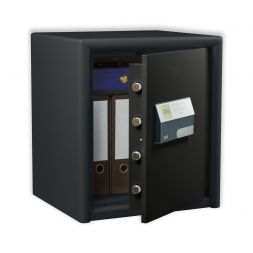
Knowing how to open an electronic safe is essential if you use it every day at home or at work. Normal use is simple, but problems can appear quickly: forgotten code, low batteries or a lock that blocks after several failed attempts. This complete guide explains how your electronic safe works, how to open it step by step, what to do when it won’t open, and which best practices help you avoid being locked out again.

How to open an electronic safe in any situation

Knowing how to open an electronic safe is essential if you use it every day at home or at work. Normal use is simple, but problems can appear quickly: forgotten codes, low batteries, or a lock that blocks after several failed attempts. This complete guide explains how your electronic safe works, how to open it step by step, what to do when it won’t open, and which best practices help you avoid being locked out again.

How does an electronic safe work?

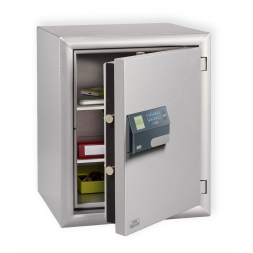
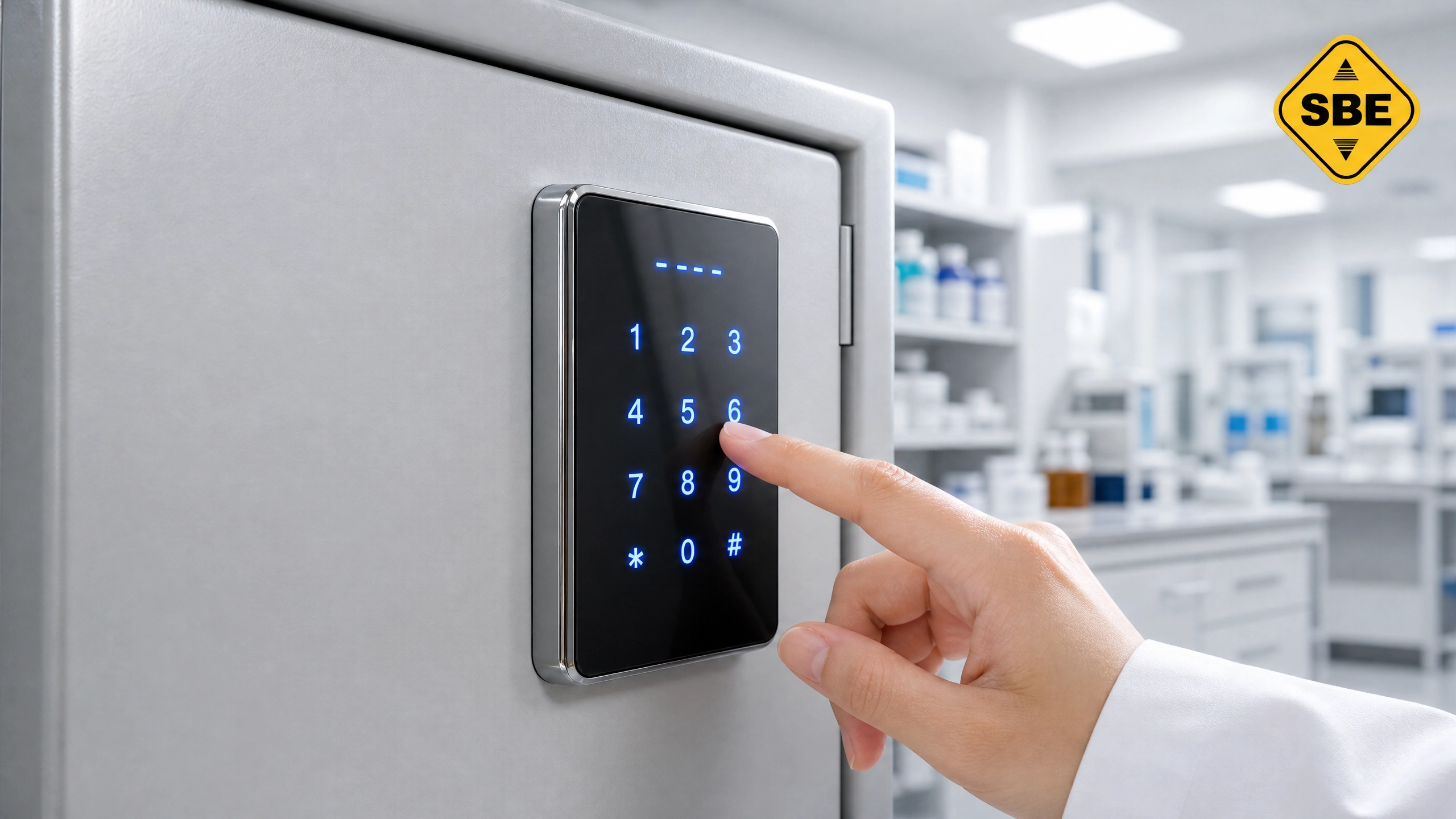
An electronic code safe opens via a numeric keypad connected to a motorized locking mechanism or steel locking bolts. The user enters a 3‑ to 8‑digit PIN code, and if the code is correct, the system automatically retracts the bolts and unlocks the door.

Electronic locks are gradually replacing traditional key locks because they are easier to use and manage in a multi-user environment. They are widely used in homes, offices, hotels, and retail stores to secure cash, documents, and valuables.

In most models, the system relies on three main components:

  • A backlit keypad.
  • An electronic circuit powered by batteries (often 4 x AA 1.5 V).
  • Steel locking bolts that retract when the safe opens.

On SBE Direct models such as the MAGNO safe, the locking and unlocking are handled by motorized bolts for greater user comfort and security. With the SECUTRONIC electronic lock, up to 1 million different combinations are possible, which significantly reduces the risk of brute-force attacks.

Opening your electronic safe in normal conditions

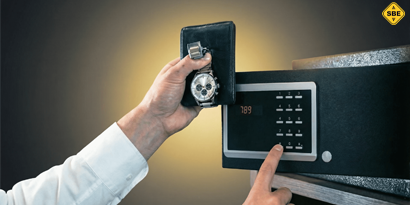
In normal conditions, opening an electronic safe takes less than 10 seconds on most models. The procedure is almost identical across the market.

Standard steps:

  1. Press the keypad activation button.
  2. Enter your personal code (3 to 8 digits depending on the model).
  3. Confirm by pressing the validation key (A, B, C, # or * depending on the model).
  4. A green LED lights up or a beep sounds: the code is accepted.

Turn the handle clockwise within 5 seconds to open the door.

Note: on many entry‑level models, the factory default user code is often set to 159 or another simple 3‑digit sequence. If a yellow LED flashes three times, test the default code listed in your user manual before trying other combinations.

Master code vs user code: what is the difference?

Most electronic safes distinguish between two levels of access: a master code (admin) and one or several user codes. This separation is essential for professional use and multi‑user environments.

Code TypeRoleWho holds it?
Master code (admin)Full access + code managementAdministrator / owner
User codeBasic safe accessEmployee, collaborator, guest

The master code lets you create, modify or delete user codes and activate advanced options on some locks.

At SBE Direct, the DIPLOMAT small safe offers 1 administrator code, up to 9 user codes, and as many as 20 biometric fingerprints, which is ideal for shared access in offices or agencies. ThePointsafe / PURE‑SAFE small safe allows one universal password and one user password that can be changed at any time, plus 5 fingerprint slots on biometric versions.

Why your electronic safe no longer opens

A blocked electronic safe is one of the most common situations users face. In most cases, the problem comes from one of the four causes below.

1. Forgotten code

This is the most frequent scenario. If you forget your PIN code, the keypad will refuse access, and repeated attempts will not help. Entering random codes only increases the risk of activating the lockout system.

Recommended actions:

  • Stop trying random codes after a few attempts.

  • Use the mechanical override key if your safe has one.

  • Contact the manufacturer with the model and serial numbers if you no longer have the code or key.

Avoid any forcing method (drilling, prying, impacts). You may irreversibly damage the mechanism and make professional opening more complex and expensive.

2. Low or dead batteries

Electronic safes are usually powered by internal batteries, with no need for a mains connection. This is the case for SBE Direct MAGNO and PURE‑SAFE models, which are powered by 4 x AA 1.5 V batteries.

Warning signs:

  • Weak battery indicator on the keypad
  • Dim or flickering display
  • Beeps or error messages when entering the code

On some models, you can temporarily power the safe by pressing a 9 V external battery against the emergency contacts near the keypad for a last emergency opening.

Important: if the safe remains unpowered for too long, some locks perform a full reset and may require reprogramming. This risk is easy to avoid with preventive battery replacement once or twice a year, especially for intensive professional use.

3. Lockout after several incorrect attempts

Many electronic safes integrate an anti‑tamper lockout system. After several incorrect codes, the lock is blocked for a defined period to discourage brute-force attacks.

Typical values (may vary by brand):

  • Entry‑level models: lockout after 3 wrong attempts, for about 20 seconds

  • Standard models: lockout after 3 to 5 wrong attempts, for 20 seconds to 5 minutes

During lockout, all codes are ignored. Wait until the lockout ends before trying again, and make sure you are entering the correct code. On some safes, removing and reinserting the batteries resets the attempt counter, but you still need a valid code or an override key to open the door afterwards.

4. Keypad or mechanism failure

Mechanical or electronic failure is rarer but possible:

  • Keypad no longer responds or only some keys work
  • Stuck or jammed bolts
  • Burnt or damaged electronic board

In that case, the mechanical override key is often the only way to access the contents quickly. If the key does not work either, a professional locksmith specializing in safes is required. Forcing the safe with unsuitable tools can cause irreversible damage and increase intervention costs.

Solutions to open a blocked electronic safe

Use the override key supplied with the safe

Most electronic safes from SBE Direct come with two mechanical override keys for emergency opening. This system works independently from the electronics and battery level.

Standard procedure:

  1. Remove the cover hiding the emergency keyhole (often near the keypad or handle).
  2. Insert the override key and turn it counterclockwise.
  3. At the same time, turn the opening handle clockwise to open the door.

Security advice: never store your emergency keys inside the safe itself. Keep them in another secure but accessible place, for example, a locked drawer in another room, a second safe, or with a trusted third party.

Contact the manufacturer with the serial number

If you have lost both the code and the key, only the manufacturer can legally help you open the safe. You will be asked to provide:

  • Proof of identity
  • Proof of purchase
  • Model and serial number of the safe (usually on a label at the back, under the safe, or in the documentation)

Without these elements, serious manufacturers will not provide an override code or new keys, as this would compromise security in case of theft or fraud.

Call a professional safe locksmith

As a last resort, you can call a locksmith specialized in safes and strongboxes. This solution is exceptional and often implies partial damage to the lock or door, depending on the opening technique used.

Professional intervention is justified when:

  • The keypad is dead and there is no override key
  • The mechanical key no longer turns despite correct insertion
  • You cannot obtain help from the manufacturer

The global market for physical safes will reach several billion dollars in the coming years, reflecting the robustness of these systems and their resistance to forced opening. This is why destructive methods are complex, time‑consuming, and costly.

How to change the code on an electronic safe

Changing the master code

Changing the master (admin) code is a simple procedure that must always be done with the door open for safety.

Typical steps:

  1. Open the safe with your current master code.
  2. Press the RESET button inside the door.
  3. Wait for the indicator light (often yellow) to turn on.
  4. Enter the new 3‑ to 8‑digit code.
  5. Confirm with the validation key: two beeps usually confirm that the new code is saved.

If the yellow LED flashes three times with three beeps, the code has not been registered. This often happens if you type too quickly or choose the same code as before. Repeat the procedure slowly and test the new code several times with the door open before closing the safe.

Adding or deleting a user code

User codes are managed from the master code. They let you give individual access to different people without sharing the admin code.

  • On the DIPLOMAT small safe, you can configure one admin code, up to nine user codes and up to twenty fingerprints, which is ideal for teams, agencies or small businesses.

  • On the MAGNO safe with electronic SECUTRONIC lock, you can program a general code and a user code that can be changed at any time.

Best practices to avoid being locked out again

Bien conserver sa clé de secours

  • Keep your emergency key safe (but separate).
  • Store override keys in a different place than the safe itself.
  • Use a locked drawer, another safe or a trusted person if needed.
  • Avoid obvious hiding places (top of a door frame, under a mat) and never leave the key within direct reach of the safe.

Replace batteries regularly

  • Replace batteries as soon as the low battery indicator appears.
  • Use good quality alkaline batteries (4 x AA 1.5 V) for optimal lifespan.
  • For intensive professional use, replace batteries preventively once a year or every 6–12 months.

Choose a memorable but secure code

Avoid very simple codes like 0000, 1234 or 1111.

  • Avoid dates that are too obvious (your birthday, wedding date) if several people might guess them.
  • Choose a 6‑digit code that is not consecutive and that you can memorize using your own personal logic (for example, a pattern on the keypad).
  • Never write the code near the safe or on its door. Use a password manager or a separate secure place instead.

Keep proof of purchase and serial number

  • Keep your invoice and the serial number of the safe in a secure digital folder or in printed form outside the safe.
  • These documents are essential if you need help from the manufacturer in case of lost code and keys

knowing how to open an electronic safe in any situation relies on three priorities: mastering the normal opening procedure, anticipating failures with an accessible override key and fresh batteries, and keeping all documents needed to contact the manufacturer. With the right safe model and a few simple habits, an electronic safe remains one of the most reliable and convenient security solutions for everyday use.

Continue reading...
These articles too might interest you.

How to open a combination safe?

Opening a combination safe requires method, not force. Dial rotation, disc alignment, direction of manipulation: this guide details every step to unlock your safe without stress or mistakes. You'll also discover the common pitfalls that jam the lock and how to avoid them. Forgotten code, lost emergency key, disc lock maintenance or switching to an electronic model: this article covers every scenario to support you in your daily use. Browse our selection of digital safes on SBE Direct.
Product News
Melissa Oumaouche
1579 views

What are the different locks on a safe?

A safe is a piece of furniture used to protect valuables from theft by using materials that are difficult to break into and a secure opening system. The lock of a safe is the central element of a safe, so it is important to choose the one that suits the secure contents and the management you want. There are several types of lock, from the classic to the most innovative. To help you make your choice, we will give you the specifics of each security lock.

SBE advise you
11422 views

How to best choose your office safe?

Commercial and industrial premises are the first target for thieves because they contain a large amount of computer equipment, confidential documents and sometimes money. Every year, more than 17,000 cases of burglary are recorded, with an average value of €2,900. These thefts, which account for more than 40% of burglaries in France, are only increasing in this period of health crisis when companies are deserted by employees to telework, leaving the way clear for thieves. It is therefore essential to secure company property as much as possible with a burglar-proof and fire-proof safe. SBE Direct offers a wide range of cost-effective security safes made in Germany. Available in various sizes, with a choice of locks, our security safes can meet any need.

SBE advise you
10375 views

Frequently asked questions

Can you open an electronic safe without the code and without the key?

In normal, legal conditions, you cannot simply open an electronic safe without the code and without the override key. If you have lost both, contact the manufacturer with proof of purchase and the serial number of the safe. As a last resort, a professional locksmith can intervene, but this may damage the lock or door and generate significant costs.

Can the batteries of an electronic safe run out while the door is closed?

Yes. Batteries power the standby circuit of the electronic system even when the door is closed. On SBE Direct MAGNO and PURE‑SAFE models powered by 4 x AA 1.5 V batteries, an alert is displayed as soon as the level becomes insufficient. To avoid a complete power loss, replace the batteries every 6 to 12 months depending on how often you use the safe.

How many attempts before an electronic safe locks out?

Most electronic safes lock after 3 to 5 incorrect attempts, depending on the model. The lockout period usually ranges from 20 seconds to 5 minutes, during which all codes are ignored. Wait until the end of the lockout and then carefully enter the correct code to avoid triggering another lockout cycle.

Is an electronic safe more reliable than a key‑lock safe?

Both types of safes offer comparable security levels when the lock and body are certified and correctly installed. Electronic safes offer extra advantages for multi‑user management, audit trails on high‑end models and easy code reset, with no need to change the lock. The MAGNO safe, for example, is available with different lock types and offers up to 1 million possible combinations with the SECUTRONIC electronic lock.

What should you do if the override key no longer works?

If the override key no longer opens the safe, do not force the lock with tools such as pliers, drills or screwdrivers. Contact the manufacturer with the model and serial numbers to request a diagnostic and possible replacement parts. If this is not possible, call a locksmith specialized in safes who can open the safe using professional techniques while limiting damage.

See the author's articles
Melissa Oumaouche

With over 5 years of experience in creating content optimized for search engines, Mélissa is currently Marketing & Product Manager at SBE Direct, where she leads the product catalogue positioning across the e-commerce website and marketplaces, as well as the SEO content strategy in coordination with the marketing team she oversees.

We use cookies to improve your experience.