Container seals: what the ISO 17712 standard actually requires

Container seals: what the ISO 17712 standard actually requires

Securing a container is not simply a matter of preventing its doors from being opened. In freight transport, the seal must make it possible to detect any tampering, to ensure the traceability of the load and to meet the requirements applicable to the supply chain.

ISO 17712:2013 is the international reference for the mechanical seals used on freight containers. It sets out a classification of seals according to their level of resistance and defines a range of requirements relating to their performance and their manufacture.

What exactly does the standard cover? What is the difference between an indicative seal, a security seal and a high security seal? Which tests are carried out? And above all, how do you choose an ISO 17712:2013 seal that suits a container?

Key points

  • →ISO 17712 defines three grades of mechanical seal: I (indicative), S (security) and H (high security).
  • →The edition in force is ISO 17712:2013.
  • →The grade depends on the application: sea container, trailer, internal flow or mail.
  • →A grade H seal is not a “tamper proof” seal. It withstands the tampering attempts defined by the standard.
  • →A certificate can be checked: laboratory, date, grade, model tested.

What is the ISO 17712 standard?

ISO 17712:2013, entitled Freight containers - Mechanical seals, establishes uniform procedures for the classification, acceptance and withdrawal of acceptance of mechanical seals intended for freight containers.

Its purpose is to provide a common framework for assessing the seals used to secure containers in international trade.

It therefore answers an essential question: what level of security does a mechanical seal actually provide?

The standard is not limited to the appearance or the dimensions of the device. It takes into account its mechanical performance, its ability to reveal a tampering attempt and certain security practices applied during its manufacture.

The edition currently in force is ISO 17712:2013, published in 2013 and confirmed following its review in 2023.

Why does ISO 17712 matter for containers?

A container may pass through many intermediaries before reaching its destination: warehouse, road haulier, port terminal, shipping line, customs authorities or logistics platform.

The seal is one of the elements that make it possible to control the integrity of the container between its point of departure and its destination.

Using one contributes to:

  • →Deterring unauthorised openings
  • →Identifying any tampering with the container
  • →Securing the goods carried
  • →Facilitating the checks carried out during transport
  • →Associating a seal number with a container or a shipment
  • →Strengthening the traceability of the supply chain

One word of caution: a seal is not, on its own, an absolute guarantee against theft or break-in. It must form part of an overall procedure covering its selection, storage, fitting, recording and inspection.

What are the three classes of seal defined by ISO 17712?

The standard distinguishes 3 main classes of mechanical seal, identified by the letters I, S and H.

I: indicative seals

Indicative seals, or class I, are mainly used to show that an opening has taken place.

They offer a relatively limited level of mechanical resistance and are generally suited to situations where the main objective is visual inspection and traceability rather than resistance to a serious tampering attempt.

They may be used on certain internal flows or to identify the opening of a container.

S: security seals

Class S seals offer greater mechanical resistance than indicative seals.

They strengthen the protection of the container while providing a visible indication when an attempted opening or a breakage has occurred.

They therefore sit at an intermediate level between the simple indicative seal and the high security device.

H: high security seals

Class H, for High Security, corresponds to the highest level of resistance provided for by this classification.

Grade H seals come in three mechanical families:

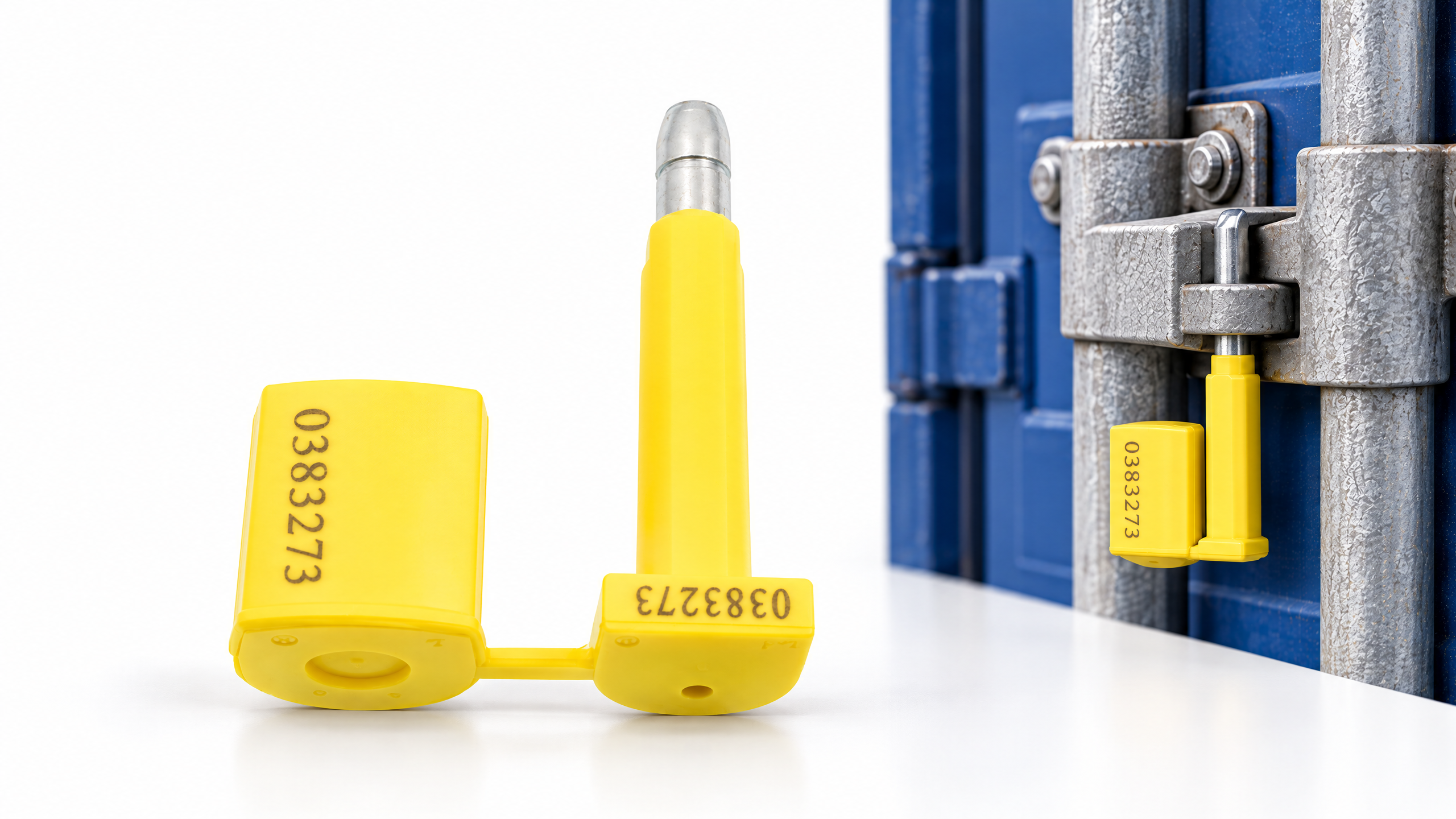
  • →the bolt seal: an 8 mm diameter metal pin inserted into a base;
  • →the threaded bolt seal: a threaded pin with a crimped nut, which can only be removed by destroying it;
  • →the bottle seal: a cable or a pin with a ratchet locking head.
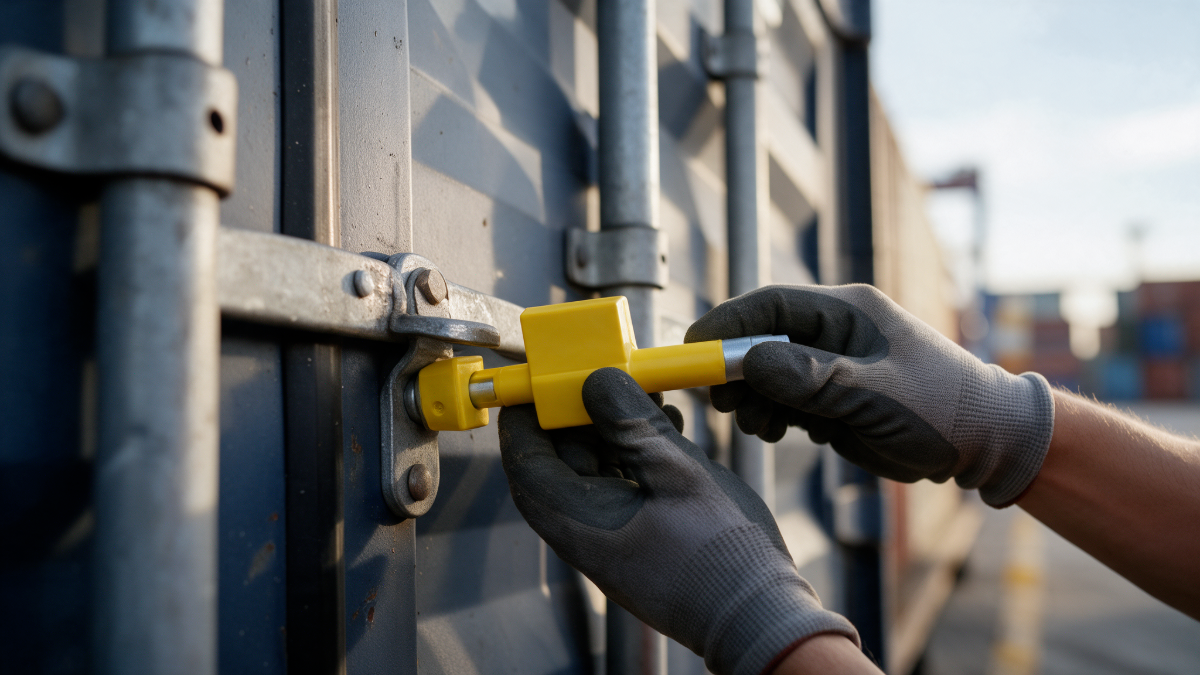
The pin must be pushed home until the base locks fully, otherwise the seal offers no resistance at all.

All three families can reach grade H. The grade depends on the tests carried out on the model, not on the family.

These devices are designed to offer significant mechanical resistance to attempted openings and generally require a suitable tool for their removal.

This category includes, among others:

  • →Bolt seals and threaded bolt seals
  • →Bottle type seals
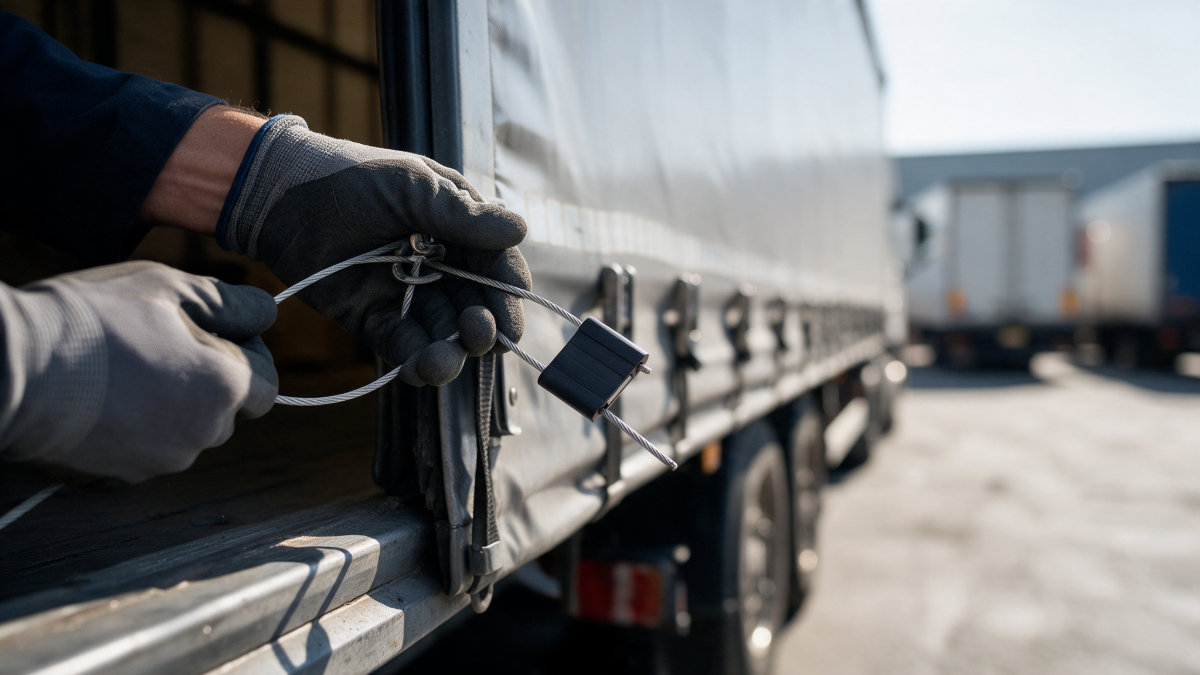
  • →Cable seals meeting the requirements of class H

This class is particularly important for sea containers, trailers and certain international shipments.

For cable seals, class H applies to cables of 3.5 mm and 5 mm in diameter. The 3.5 mm cables are rated at 1,200 kg, the 5 mm cables at 1,600 kg.

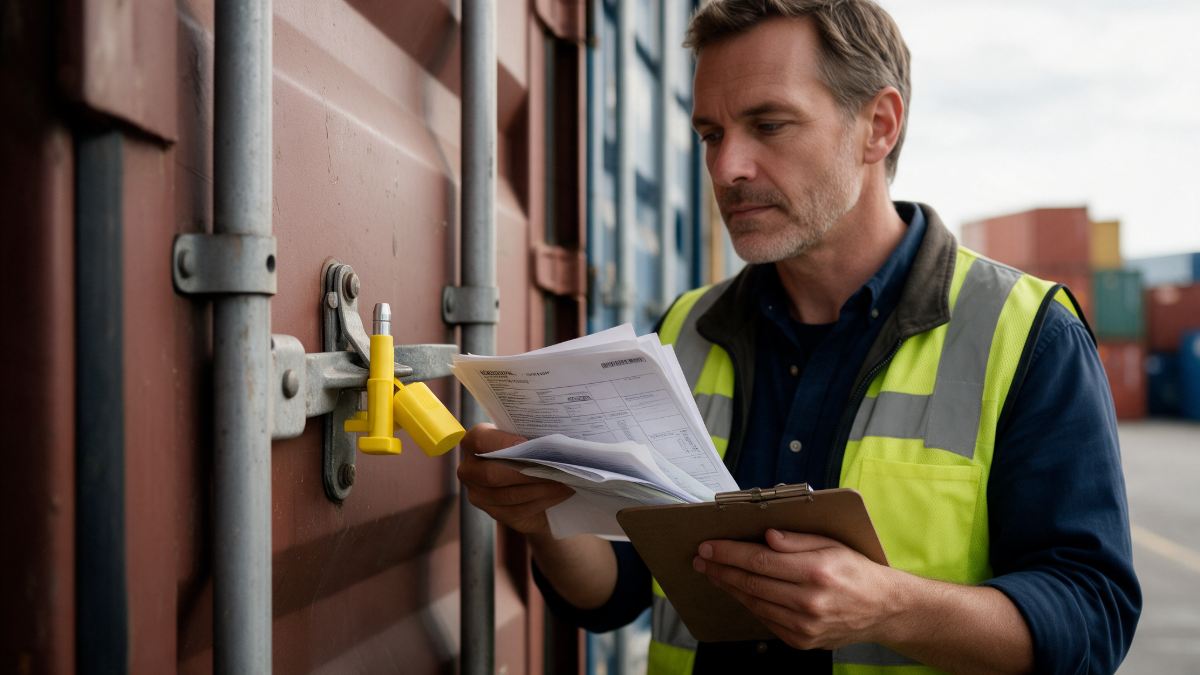
The SBE container seal (ref. MSEC-CL-LOC-BC) is a grade H bolt seal. It combines an 8 mm diameter pin with a 20 mm diameter ABS base, for a total length of 69 mm. It is sold in packs of 100, at €189.60 excl. VAT per 100.

Which grade for which flow?

Flow Recommended grade Why
Sea containerHThe level required for high risk shipments and enhanced customs checks.
Trailer, lorryH or SH covers higher risk journeys. S is enough for short journeys and a controlled site.
Internal flow (warehouse, workshop, transfer between sites)S or IThe seal signals an opening. The risk of organised break-in is low.
Mail, parcels, cash bagsIThe seal proves the integrity of the item. It is not intended to resist a break-in.

What requirements must a seal meet under ISO 17712?

The classification does not rest on a simple declaration by the manufacturer. Several dimensions are taken into account in order to assess the security of the device.

Mechanical performance: clause 5

Clause 5 covers the mechanical tests used to assess the physical resistance of the seal.

Depending on the type of device, it is subjected to different stresses in order to determine how it behaves when a force is applied to its locking mechanism.

The tests cover:

  • →Tensile strength
  • →Cutting or shear
  • →Bending
  • →Impact

The results are then used to determine the resistance class that corresponds to the seal.

For a professional buyer, it is therefore important not to rely on marketing claims such as “very strong” or “high security”. Compliance with ISO 17712:2013 must be supported by appropriate testing.

Tamper evidence: clause 6

A security seal must also make it possible to detect a tampering attempt.

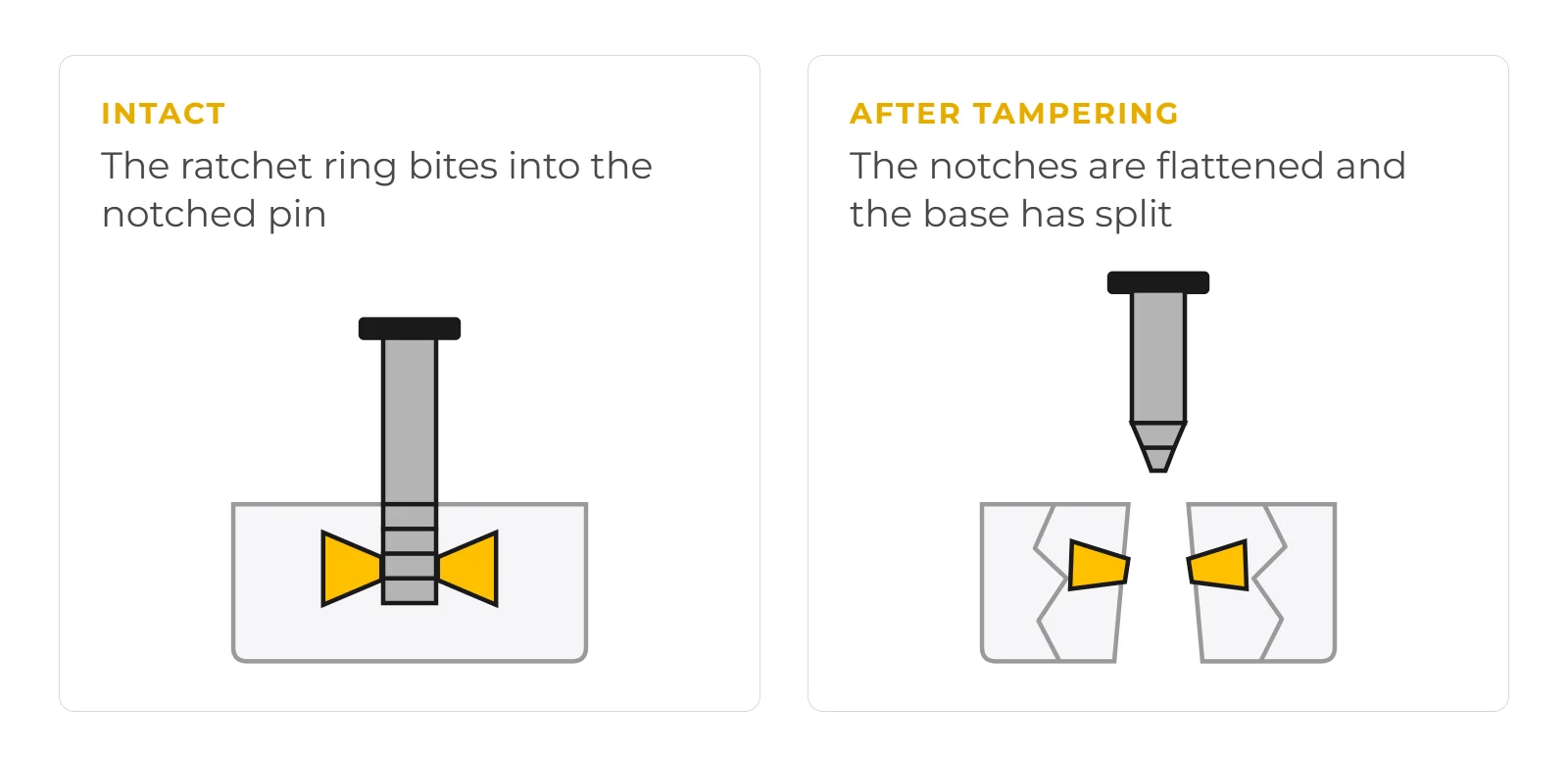
Clause 6 addresses the ability of the device to leave traces that reveal an attempt at alteration or opening.

The ratchet ring bites into the notches in one direction only. Tampering flattens those notches and splits the base, and neither mark closes back up.

This is a different matter from mechanical resistance alone: a device may be robust, yet it must also allow operators to identify an anomaly when the container is inspected.

The manufacturer's security practices: annex A

The standard also addresses the conditions under which seals are designed and manufactured.

Annex A covers the security practices put in place by the manufacturer in order to preserve the integrity of the seals and of their identification.

This concerns, for example, access control, traceability and the procedures applied during manufacture and storage.

Compliance with ISO 17712:2013 should therefore be seen as a whole: resistance of the product, detection of tampering and control of the manufacturing process.

How do you recognise a seal that complies with ISO 17712?

The words “security seal” do not automatically mean that a product belongs to class H.

Before choosing a product, several elements can be checked.

Check the exact reference to the standard

The technical data sheet or the product documentation must state compliance with ISO 17712:2013 and, where relevant, its classification.

For a high security seal, look for the words grade H or High Security.

Check the identification of the seal

Individual identification plays an essential role in traceability.

A unique number makes it possible to associate the device with the container and with the transport documents, in order to verify at every stage that the seal in place is the one fitted at departure.

Depending on the product, this identification may be completed by:

  • →A sequential number
  • →A barcode
  • →A QR code
  • →A logo
  • →Custom text

Ask for the compliance documents

Where a particular level of security is required by a customer, a carrier or an internal procedure, it is advisable to ask the supplier for the documents that allow the stated compliance to be verified.

The mere presence of the term “ISO 17712” on a commercial page should not replace documentary verification where your activity requires it.

Which ISO 17712 seals should you choose for a container?

The choice depends on the level of security sought, but also on the configuration of the container and on operational constraints.

The bolt seal for containers

The bolt seal, also known as a pin seal or sometimes a bottle seal, is one of the most common solutions for securing container doors.

For flows that require a high level of security, SBE Direct offers a container seal compliant with ISO 17712:2013 grade H. It consists of an ABS and polystyrene base together with an 8 mm diameter metal pin. The pin and the base carry the same unique number, which makes it easier to check the identification of the device.

This type of seal is particularly suited to securing:

  • →Freight containers
  • →Lorries
  • →Trailers
  • →Transport flows that require a high level of security

The cable seal for greater flexibility

The cable threads through the closing point and tightens to whatever length is needed, where a pin imposes a fixed diameter.

In some configurations, the cable seal is a useful alternative thanks to its adjustable closing system.

Where the closing point calls for more flexibility, SBE Direct offers a cable seal available in several diameters. The 3.5 mm and 5 mm versions are stated to comply with ISO 17712:2013 grade H.

The 3.5 mm cable has a stated tensile strength of 1,200 kg, against 1,600 kg for the 5 mm model.

These models combine:

  • →High mechanical resistance
  • →Adjustable closing
  • →Numbering
  • →Customisation options
  • →Use on various transport equipment

The choice between a bolt seal and a cable seal therefore depends on the configuration of the closing point and on the degree of flexibility sought, while always checking the classification of the model selected.

How do you fit and check a seal on a container correctly?

Choosing a compliant seal is not enough. Poor fitting or insufficient traceability can compromise the whole security arrangement.

1. Inspect the container before fitting

Before closing the container, check the condition of the doors, the handles and the closing points.

The aim is to make sure that no pre-existing anomaly compromises the sealing.

2. Check the seal number

The identification number must be recorded before or immediately after fitting.

It must match the information entered in the documents or in the shipment tracking system.

3. Fit the device correctly

The seal must be inserted into the closing point provided and fully locked.

Once fitted, check by hand that the mechanism is properly engaged.

4. Record the fitting

To strengthen traceability, record:

  • →The seal number
  • →The container number
  • →The date of fitting
  • →The shipment concerned
  • →The name or the department of the operator where the internal procedure provides for it

A photograph of the seal once fitted can also complete the documentary check.

5. Check the seal on arrival

Before any opening, check:

  • →That the seal is present
  • →Its number
  • →The absence of unusual marks
  • →The condition of the mechanism
  • →That it matches the information recorded at departure
The arrival check is done with the seal still in place: once it has been cut, the number proves nothing.

A different number, a missing seal or suspicious marks must lead to the inspection procedure laid down by the company being applied.

How to check an ISO 17712 certificate

A grade H seal is backed by a test certificate. Here is how to check it before buying.

Verification checklist

  • →The certificate refers to ISO 17712:2013, and not to an earlier version.
  • →The grade is stated: I, S or H.
  • →The testing laboratory is identified, with its contact details.
  • →The model tested matches the seal ordered: reference, material, dimensions.
  • →The test date is legible and earlier than the order.
  • →The certificate covers the grade claimed on the product sheet.
  • →The certificate number is unique and can be traced back to the laboratory.

What the certificate does not say

The certificate attests to the resistance of the model to the tests set out in the standard. It does not guarantee the absence of fraud on a seal already fitted. Checking the seal number, photographing it once fitted and keeping the documents traceable all remain necessary.

ISO 17712 and ISO/PAS 17712: not to be confused

ISO/PAS 17712 is a preliminary document (Publicly Available Specification), published before the full standard. ISO 17712:2013 is the standard in force since 2013.

In practice:

  • →A product sheet that cites “ISO/PAS 17712” refers to a working document, not to the current reference.
  • →A product sheet that cites “ISO 17712:2013” refers to the applicable version.
  • →A test certificate must cite ISO 17712:2013 and the grade obtained.

Ask for the exact version of the text cited. A reference without a year makes it impossible to know whether the seal was tested against the standard in force.

ISO 17712 and CTPAT: what is the difference?

ISO 17712:2013 and the American CTPAT programme should not be confused.

ISO 17712:2013 is an international standard covering mechanical seals for freight containers.

The Customs Trade Partnership Against Terrorism (CTPAT) is a supply chain security programme run by the United States customs authority.

Within the operations concerned, requirements relating to the use of high security seals compliant with ISO 17712:2013 may apply.

It is therefore incorrect to speak of a “CTPAT certified seal” as though there were an individual CTPAT certification for the product. The right approach is to check that the seal used meets the applicable ISO requirements and the procedures required within the supply chain concerned.

Why does traceability matter as much as resistance?

An extremely strong seal loses much of its value if nobody knows which number was fitted to the container.

Security therefore rests on two complementary dimensions:

  • →Physical resistance, which makes unauthorised opening of the container more difficult.
  • →Traceability, which makes it possible to detect a discrepancy between the device fitted at departure and the one present at an inspection or on arrival.

This is why unique numbering is so important.

In a structured organisation, it is also worth keeping a seal register to track storage, allocation, fitting and, where applicable, destruction.

More broadly, companies with varying needs for securing their flows can draw on several types of security seals for transport, with the level of resistance and the closing system selected according to the application concerned.

What should you do if the seal is broken or shows signs of tampering?

A damaged seal does not automatically mean that a theft has taken place. An opening may have been carried out as part of an authorised inspection.

Any anomaly must nevertheless be documented.

Depending on the procedures applicable to the shipment, it may be necessary to:

  • →Not open the container immediately
  • →Photograph the seal and the doors
  • →Record the number present
  • →Compare that number with the transport documents
  • →Report the anomaly to the parties concerned
  • →Record the circumstances of the finding
  • →Keep the evidence needed for any claim

Where a seal is removed and then replaced following an official inspection, the new identification must also be recorded in order to maintain the chain of traceability.

FAQ

What is the current version of the ISO 17712 standard?▾

The version currently in force is ISO 17712:2013. Published in May 2013, this edition was reviewed and confirmed in 2023.

Does an ISO 17712 seal prevent all break-ins?▾

No. A seal is one element of the security arrangement. It is intended to offer a defined level of resistance and to allow tampering to be detected. Its effectiveness also depends on how it is fitted, how it is checked and on the traceability put in place.

Which tests are carried out on ISO 17712 seals?▾

The mechanical tests assess different stresses such as tensile strength, cutting or shear, bending and impact. The standard also takes into account the ability to reveal tampering attempts.

How can you tell whether a seal complies with ISO 17712?▾

Check the exact reference to the standard, the class stated, the identification of the product and the compliance documents available from the supplier. For a high security application, look for classification H.

Where can you buy ISO 17712 seals?▾

To secure containers or other logistics flows, SBE Direct offers security seals for transport, including models intended for applications that require a high level of security. These include a bolt seal for containers and cable seals offered in grade H to ISO 17712:2013.

Seal your containers with the right grade

Bolt and cable seals in grade H, numbering and customisation. Quote within 24 hours.

See the transport seals →
Melissa Oumaouche
See the author's articles
Melissa Oumaouche

With over 5 years of experience in creating content optimized for search engines, Mélissa is currently Marketing & Product Manager at SBE Direct, where she leads the product catalogue positioning across the e-commerce website and marketplaces, as well as the SEO content strategy in coordination with the marketing team she oversees.

We use cookies to improve your experience.