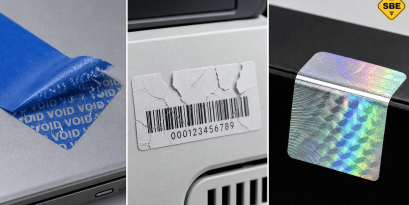
A security seal is often only noticed the day it goes missing. A parcel that arrives open, a technical cabinet visited overnight, and a fire extinguisher whose integrity no one can vouch for any more: each time, the same question comes back. Who opened it, and when? With nothing to prove it, the answer gets lost somewhere between sender and recipient.

That is the whole purpose of this small single-use lock: to block access, and above all to keep a record of it. The remaining challenge is choosing the right one. Between a plastic seal costing a few cents and a cable seal compliant with customs standards, the difference in protection is considerable. Let's look concretely at how they work, in which sectors they become essential, and what the regulations say.

What is a seal?

A security seal is a single-use closure device that guarantees the tamper-proofing of a container: a parcel, container, lorry, crate, or bag. Once fitted, it cannot be removed without being destroyed. Any opening leaves a visible sign of tampering. It therefore performs two complementary functions: physically securing access and tracing that container through a unique number.

The principle relies on a one-way locking mechanism: you tighten; you never loosen. To reopen, you have to cut the seal, which makes any breach immediately detectable. It is this logic of proof that distinguishes a true seal from a simple closure.

Seals are classified according to their resistance capacity. Indicative seals signal an opening but break by hand. Barrier seals offer real mechanical resistance and require a cutting tool. Sequential numbering, barcodes, or QR codes then make it possible to link each seal to a container and to a transport document.

Note: Before comparing models, first identify your real need. The useful benchmark remains "Which security seal for which use", because an e-commerce parcel and a maritime container do not require the same level of protection.

The main families of security seals

There are six main families of security seals: the pull-tight plastic seal, the adhesive seal (VOID label), the cable seal, the bolt seal, the lead seal, and the security bag. Each one suits a type of container and a different risk level. The right choice depends on the value of the goods and the environment of use.

1) Pull-tight plastic seals

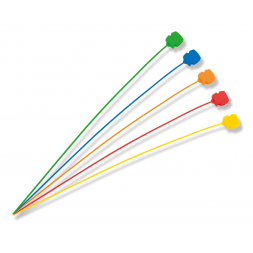
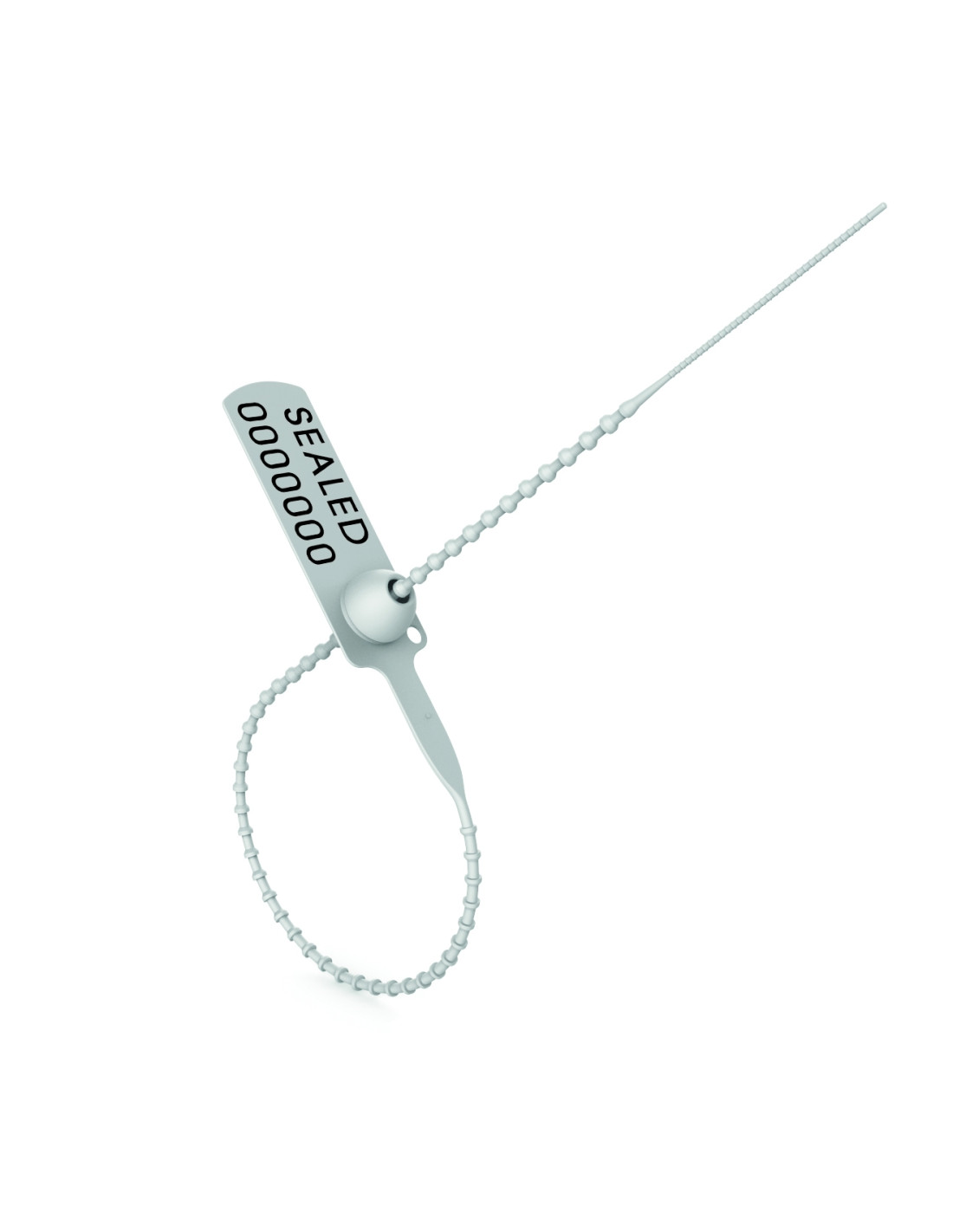
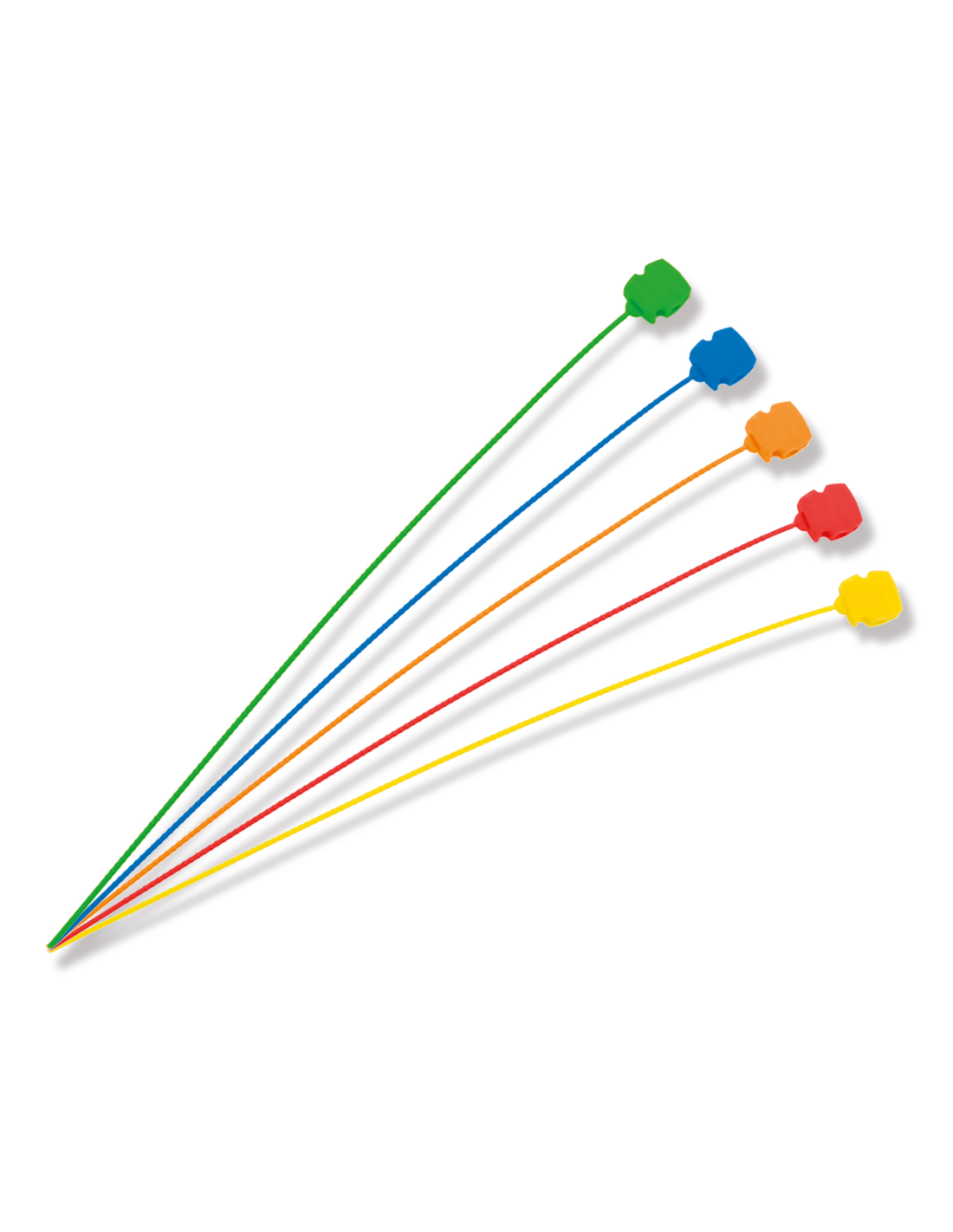
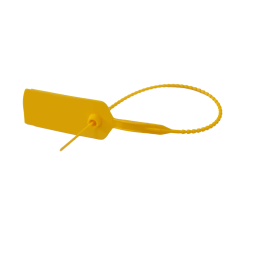
What is a plastic seal? A plastic strap (polypropylene or nylon) fitted with a toothed shaft that you tighten to the desired diameter. The mechanism is adjustable: it locks notch by notch, with no way back.

The principle: one-way tightening. To open, you have to cut the seal.

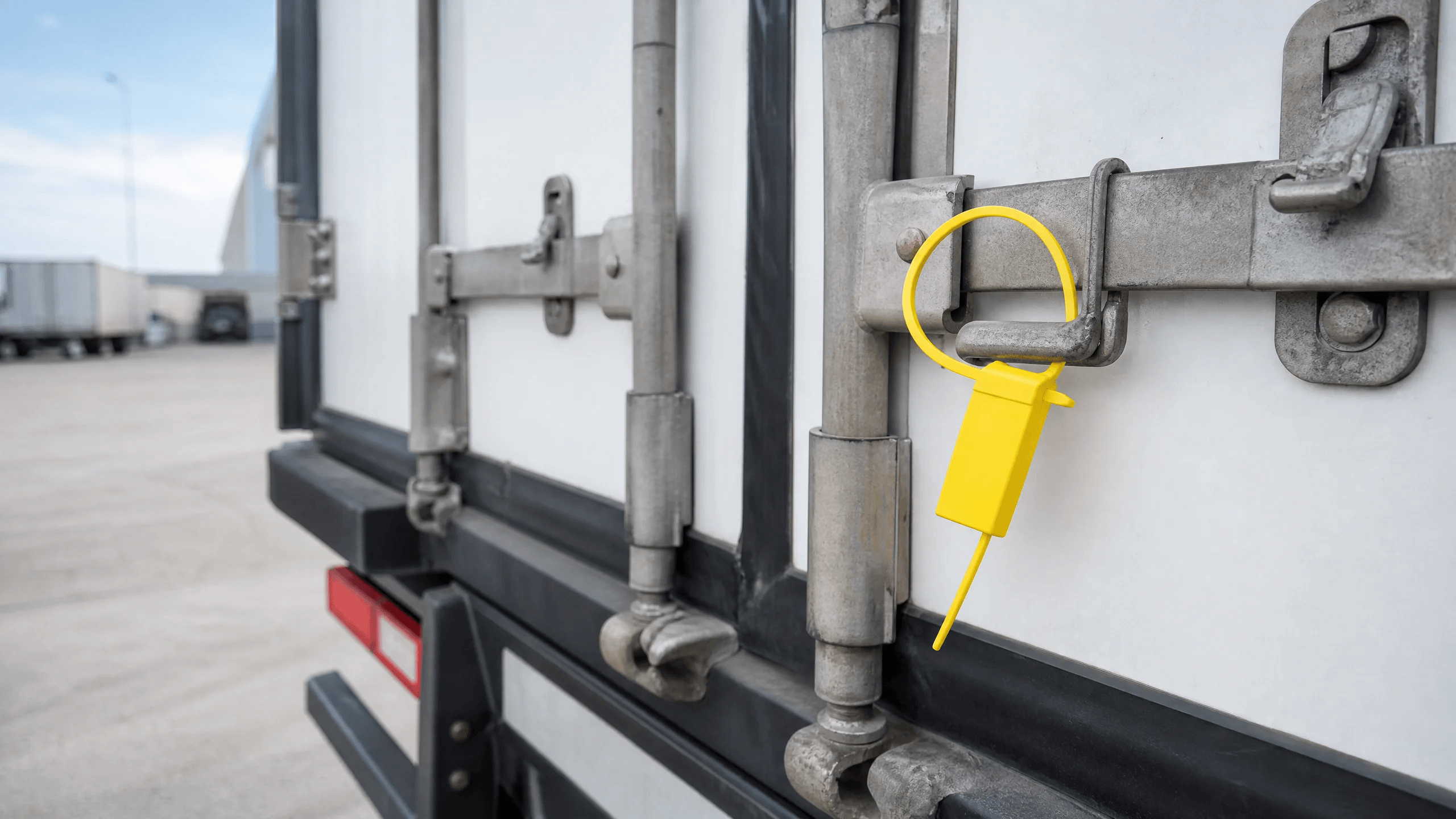
Why use it? for collection bags, shuttle bins, lorry doors, valves, or fire extinguishers.

The advantage: a good security/cost ratio and lengths available from a few centimetres to over 30 cm.

scellé plastique à serrage progressif SBE Direct pour sécuriser conteneurs et équipements

2) Adhesive seals / VOID labels

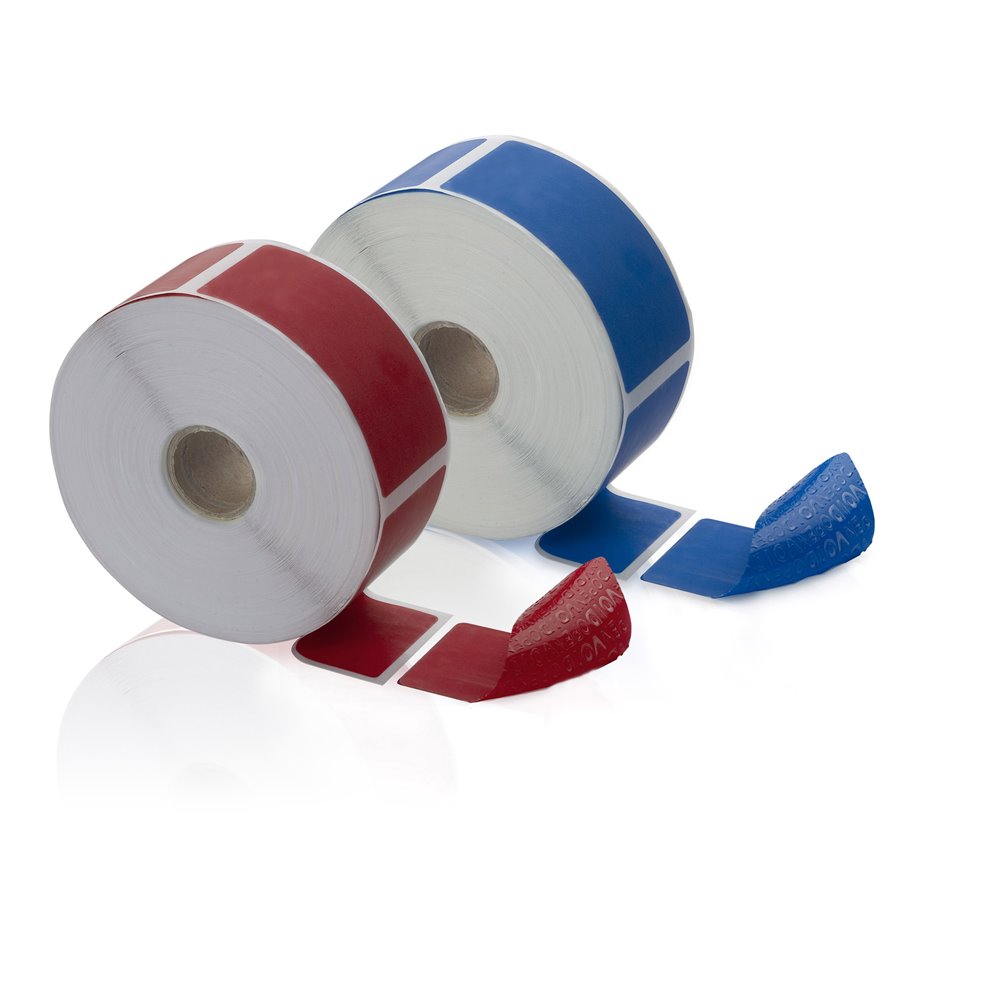
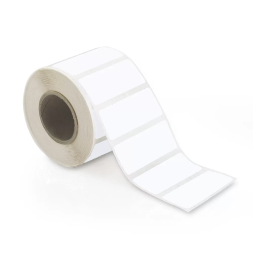
scellé adhésif anti-fraude et étiquette VOID témoin d'effraction sur emballage

Adhesive seals are self-adhesive security seal labels that reveal the word "VOID" (or a checkerboard pattern) as soon as you try to peel it off. The proof of opening is invisible before tampering, then irreversible.

The principle: a full or partial transfer adhesive that is destroyed on removal.

Why use it? for boxes, cartons, confidential files, and e-commerce parcels where proof of non-opening matters more than the physical barrier.

The advantage: quick application on a flat surface and integrated numbering for traceability.

3) Cable seals

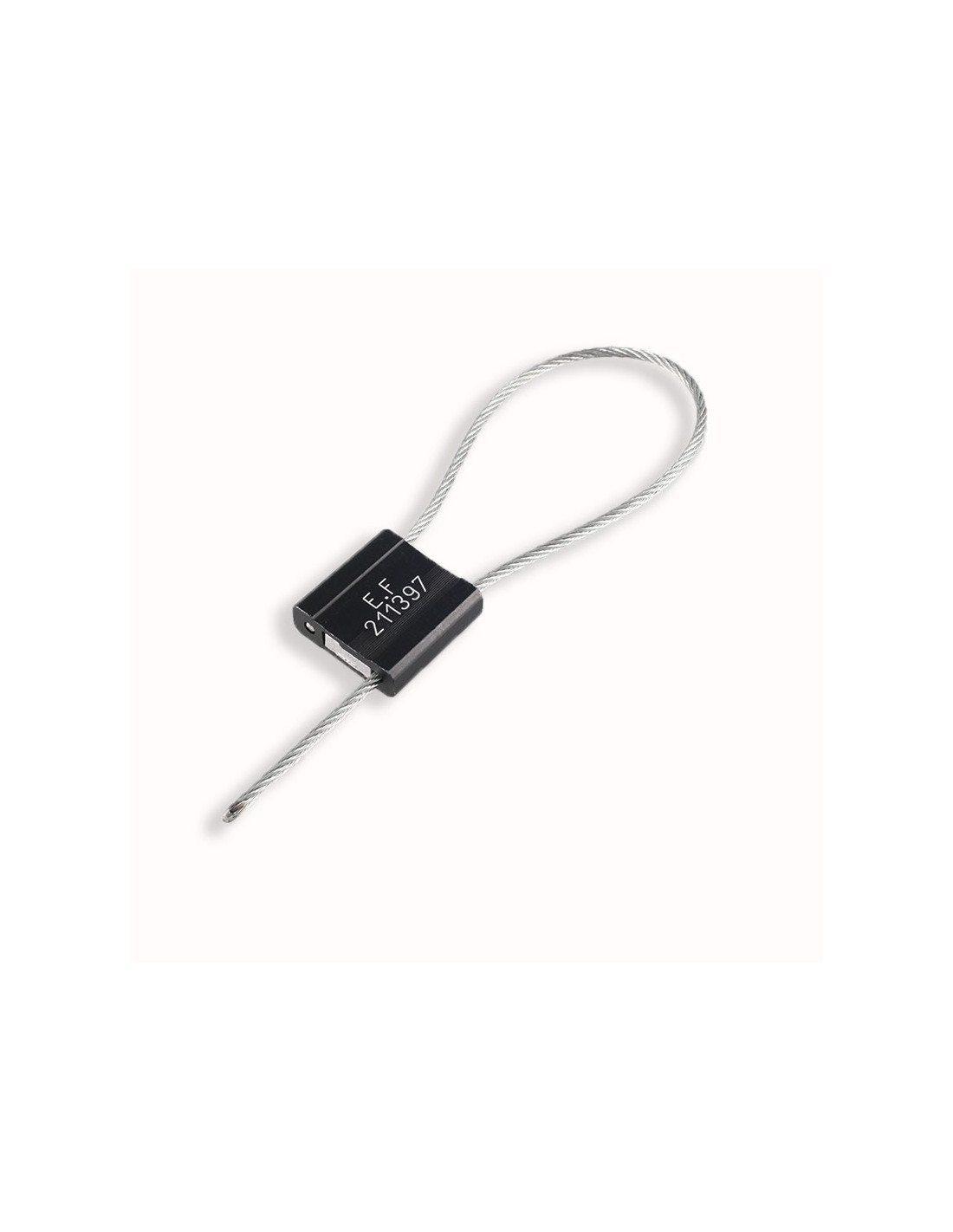
A cable seal is a metal seal made up of a galvanized steel cable and a locking body. The cable frays when cut to prevent any fraudulent re-locking.

The principle: loop tightening, adjustable over long lengths.

Why use it? for maritime containers, trailers, tankers, and high-risk industrial valves.

The advantage: high resistance to pulling, compatible with international customs requirements.

scellé câble en acier à verrouillage automatique pour fûts, conteneurs et vannes

4) Bolt seals

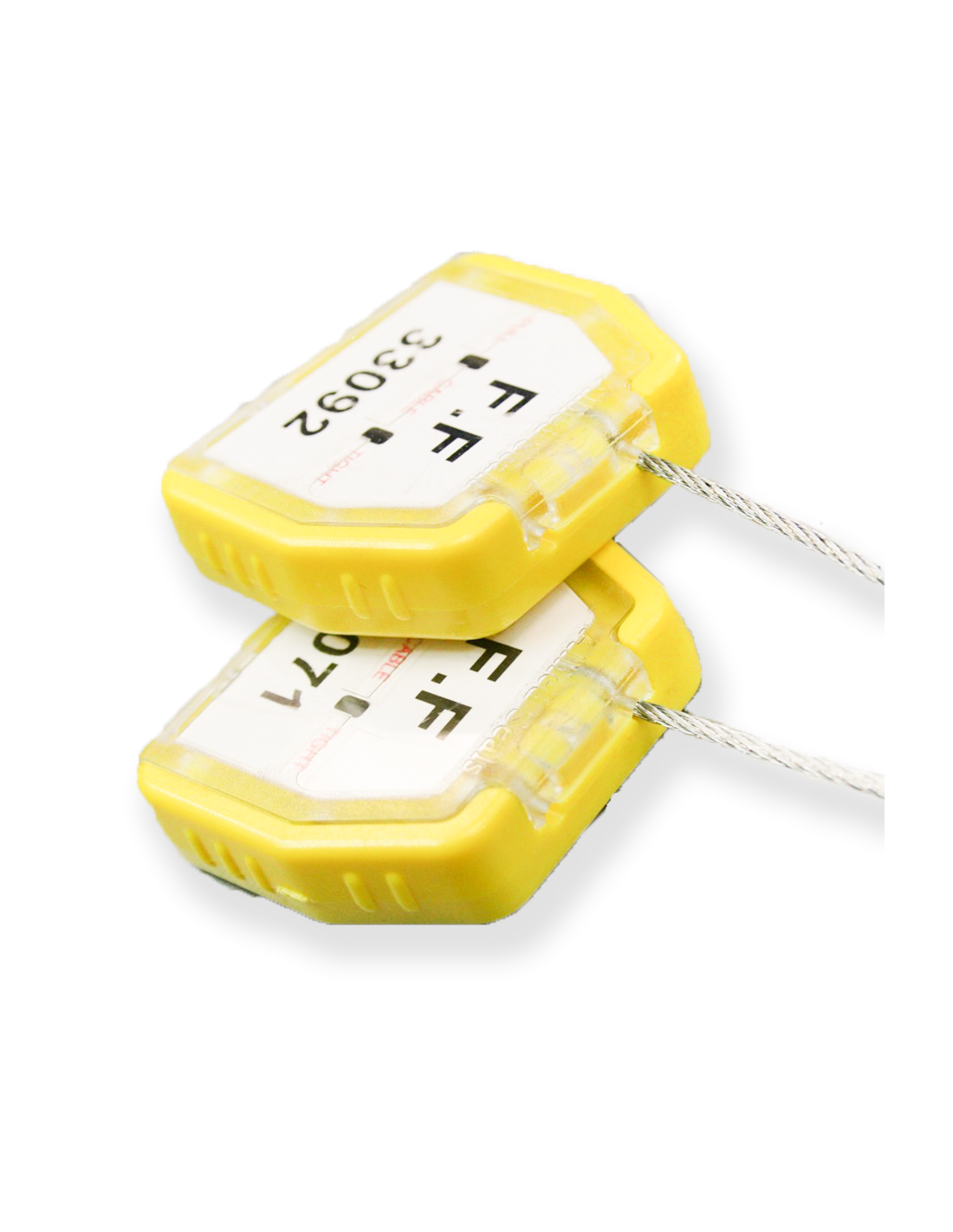
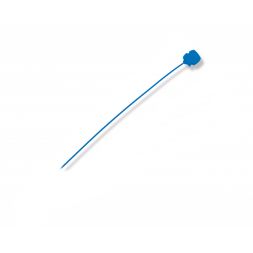
scellé cadenas plastique à fermeture automatique pour sacs, caisses et chariots.

A bolt seal is a single-use metal seal (sometimes called a padlock seal). It combines a strong mechanical barrier with a tamper-proof closure.

The principle: a steel body that locks permanently, removed only with a bolt cutter.

Why use it? for container and lorry doors in high-security international transport.

The advantage: the only type of seal recognized as high-security by the ISO 17712:2013 standard (grade H).

5) Lead seals

A lead seal (plastic, aluminum, or natural lead) is closed over a wire or beaded wire using sealing pliers. It is the historic seal, still used for meters and gas cylinders.

The principle: crushing the lead, which traps the wire and fixes the closure.

Why use it? for meters (water, gas, electricity), taximeters, terminals, and equipment under regulatory control.

The advantage: universal fitting and a low unit cost, with engraving possible for identification by department.

plomb à sceller avec fil et pince à plomber pour scellement compteurs et vannes.

6) Security bags

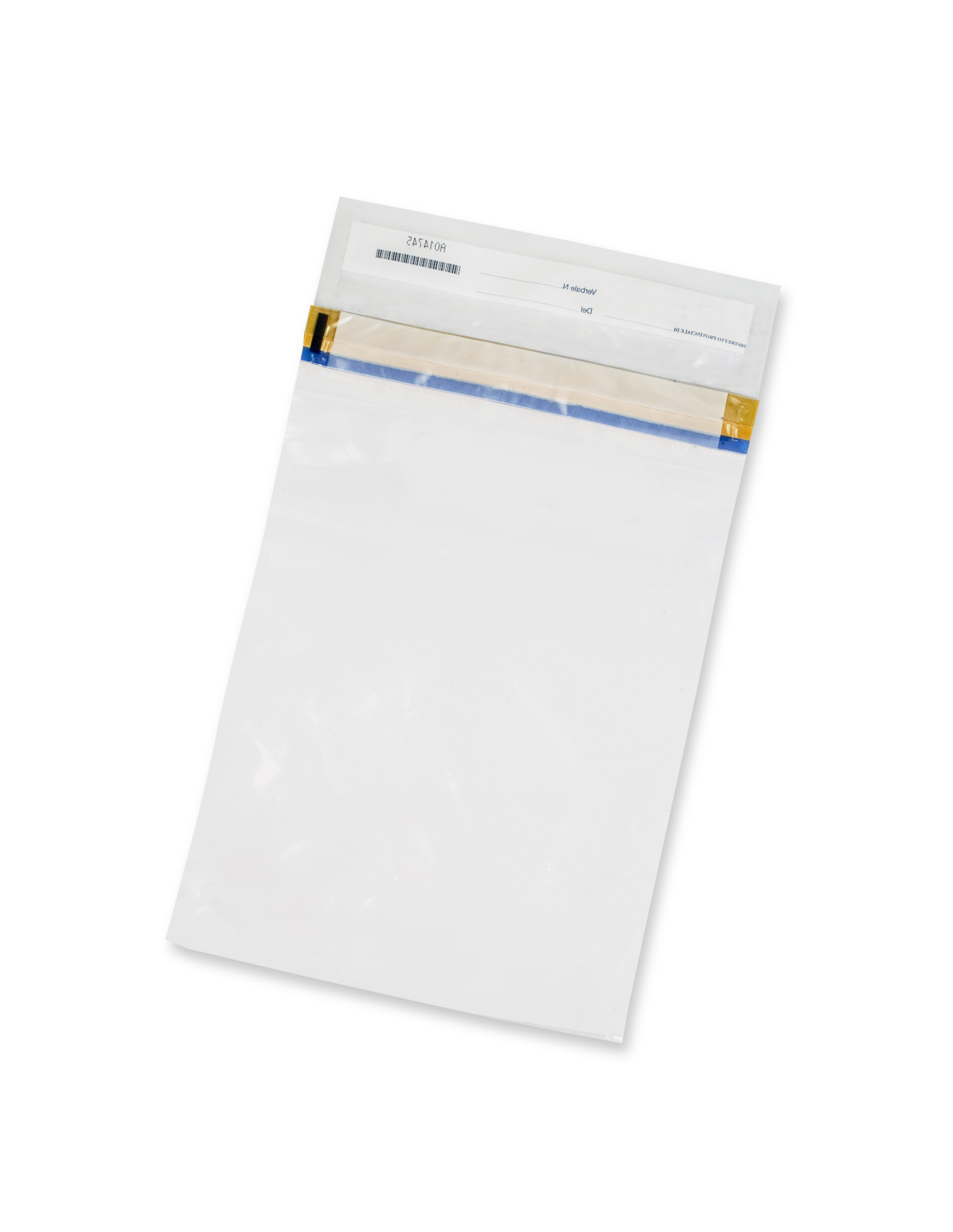
sachet scellé de sécurité inviolable pour transport de valeurs et objets sensibles.

A security bag is a bag or pouch with a built-in tamper-proof closure, intended for secure transport. Any opening destroys the closure system and reveals the tampering.

The principle: a numbered security adhesive strip, tear-proof and single-use.

Why use it? for cash-in-transit, valuables pouches, medical samples, and items under judicial seal.

The advantage: complete traceability of the container, from sender to recipient.

In which sectors is the security seal essential?

The security seal is essential as soon as a container changes hands without continuous supervision. Seven sectors use it daily, from long-distance transport to healthcare, by way of industry and banking. Each time, the stake is the same: proving non-opening between two points.

  • Transport & logistics: integrity of loads and proof of non-opening on delivery (containers, lorries, crates).
  • Industry & construction: securing valves, electrical cabinets, and safety equipment (fire extinguishers, fire hose reels).
  • Medical & healthcare: traceability of samples, sealing of pharmacy cabinets, integrity of blood bags.
  • Public administration & local authorities: meters, street furniture, and technical access under control.
  • Banking & insurance: cash-in-transit and sealed valuables pouches.
  • Retail & distribution: fighting shrinkage and protecting e-commerce parcels.
  • Internal security & defense: securing sensitive equipment and traceability of sealed applications.

Standards and regulations: what you need to know

Several standards govern security seals, especially once they cross a border. The international reference is the ISO 17712:2013 standard for freight containers; to this are added the TIR Convention, the ISPS Code, and traceability obligations. Here are the essentials.

1) ISO 17712:2013

According to the ISO 17712:2013 standard (Freight containers — Mechanical seals), seals are classified into three grades: "I" (indicative), "S" (security), and "H" (high security). Grade H, reserved for cable and bolt seals, can only be removed with a bolt cutter. The standard also imposes resistance tests and tamper-evidence requirements audited by an accredited body.

The American customs program C-TPAT, run by U.S. Customs and Border Protection, requires grade H seals for containers bound for the United States. It is today the reference criterion for maritime export.

2) NF EN 16725 / NF S 90-130

In addition to the international framework, certain French standards are cited for specific seals (notably judicial and adhesive), among them NF EN 16725 and NF S 90-130. Before relying on them in a specification, check the exact scope of each standard with AFNOR, as their field of application must be confirmed according to your precise use.

3) Customs regulations and the TIR Convention

The TIR Convention (International Road Transport), administered under the aegis of the UNECE, allows a customs-sealed lorry to cross several countries without reopening the goods at each border. The customs seal is authoritative: its number is recorded on the TIR carnet, and any unjustified breakage triggers an inspection.

4) ISPS Code

The ISPS Code (International Ship and Port Facility Security), adopted by the International Maritime Organization, governs the security of ships and port facilities. Within this framework, the sealing of containers and the monitoring of their integrity contribute to the maritime security chain.

5) Penalties

Breaking or counterfeiting a regulatory seal is not trivial. Depending on the context (customs, legal metrology, or judicial seal), an unauthorized seal breakage can lead to administrative, financial, or even criminal penalties. Fitting and removal are reserved for authorized persons: approved carrier, customs officer, officer, or network operator for meters.

6) Traceability obligations

Beyond the product, it is traceability that provides the proof. An effective seal comes with a register: sequential numbering, a barcode or QR code, the date fitted, the identity of the person who fitted it and reconciliation on arrival. For high volumes, UHF RFID automates this tracking.

Choosing the right security seal: the 5 key criteria

To choose the right security seal, five criteria are enough: the required security level, the environment of use, traceability, customization, and the volume/budget pairing. The table below links each need to the most suitable seal family.

If your priority is…The typical situationThe recommended seal
Invisible proof of openingE-commerce parcels, files, boxesAdhesive seal / VOID label
A good security/cost ratioBags, shuttle bins, fire extinguishersPull-tight plastic seal
High security for exportMaritime containers, trailersCable or bolt seal (ISO 17712 grade H)
Controlling a meterMeters, gas cylinders, terminalsLead seal
Transporting valuablesCash, samples, judicial sealsSecurity bag

The 5 criteria in detail:

  • Required security level: indicative, secure, or high security depending on the real risk.
  • Environment of use: resistance to temperatures, UV, chemicals, and humidity.
  • Traceability: sequential numbering, barcode, QR code, or UHF RFID for high volumes (more than 5,000 units/year).
  • Customization: logo, department color, and specific wording to identify a service or a site.
  • Volume and budget: volume discounts and the option to test with free samples before ordering in bulk.

Choosing a seal comes down to answering three questions: what needs to be proven, against which risk, and in which environment? A parcel calls for proof of opening, a container requires a metal barrier compliant with ISO 17712, and a meter calls for a regulatory lead seal. In all cases, a seal is only worth anything when linked to a traced number.

The useful reflex: define the security level, then the container, then traceability. Well fitted and well traced, the security seal remains the simplest way to secure and prove the integrity of your assets.

Related products

Continue reading…
These articles might also interest you.

Tamper-evident label: the complete guide to securing your products and equipment

Proving that a product has not been opened, substituted or tampered with between the factory and the end user: that is the promise of the tamper-evident label. Pharmaceutical regulations, parcel tracking, IT asset management, official seals the applications are numerous and the technologies varied. This complete guide helps you understand the mechanisms, identify the applicable standards and select the right solution for your needs.
Product News
Melissa Oumaouche
1409 views

Industrial traceability: identify, track, secure

Industrial traceability has become a strategic foundation in 2026: 14,484 product recalls recorded across Europe in 2024, an average cost of €10.5 million per major recall, and mounting regulatory pressure (ISO 9001, MDR, FSMA, GS1 standards). This comprehensive guide explains how to identify, track and secure your products and assets across the three levels of traceability (upstream, internal, downstream), how to choose between barcodes, Datamatrix, UHF RFID, aluminium plates and tamper-evident labels, and how to deploy a reliable system in five steps. A proven method, built on 30 years of SBE Direct expertise and more than 16,000 customers supported.
Product News
Melissa Oumaouche
609 views

Judicial seals: everything you need to know

This practical guide explains what a judicial seal is, its six main families, the French legal framework (Articles 56 and 434‑22 of the Code of Criminal Procedure), the international ISO 17712:2013 standard, and the key selection criteria for your line of work. You will find official AGRASC figures, legal retention periods, and tamper‑evident solutions offered by SBE Direct, a B2B supplier for public authorities and law‑enforcement agencies since 1992. A judicial seal secures evidence, seized items or sensitive documents as part of criminal, customs, or administrative proceedings, and each profession has its own technical requirements: police officers, bailiffs, customs officers, court‑appointed experts, or compliance managers. Which seal should you use on a seized container? How long must it be kept? What are the risks in case of seal tampering or removal? This comprehensive guide provides clear, referenced answers to all these questions.

Product News
Melissa Oumaouche
1594 views

Frequently asked questions

What is a security seal?

A security seal is a single-use closure device fitted to a container to guarantee its tamper-proofing. Once closed, it cannot be removed without being destroyed, which makes any opening visible. It performs two functions: a physical barrier (or witness) and traceability through numbering. It comes in plastic, metal, cable, lead, adhesive or in the form of a bag.

What are the different types of security seal?

There are six families: the pull-tight plastic seal, the adhesive seal (VOID label), the cable seal, the bolt seal, the lead seal, and the security bag. The first ones suit everyday uses at a controlled cost. Cable and bolt seals cover high security for export (ISO 17712 grade H). Lead seals equip meters; security bags handle the transport of valuables.

What does sealing mean?

Sealing means closing a container by means of a seal to prevent and reveal any unauthorized opening. The operation creates a control point: as long as the seal is intact and its number matches the register, the contents are deemed untampered. Sealing therefore involves both a physical action (fitting the seal) and an act of traceability (recording its number).

What are the different types of seals?

In a broad sense, we speak of indicative seals (opening witnesses, easy to remove) and barrier seals (strong mechanical resistance). To these is added the judicial seal, fitted by an authority to preserve evidence. The right type depends on the risk level, the container, and the regulatory obligations applicable to your sector.

See the author's articles
Melissa Oumaouche

With over 5 years of experience in creating content optimized for search engines, Mélissa is currently Marketing & Product Manager at SBE Direct, where she leads the product catalogue positioning across the e-commerce website and marketplaces, as well as the SEO content strategy in coordination with the marketing team she oversees.

We use cookies to improve your experience.