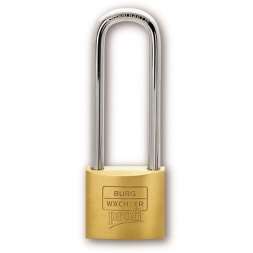
Padlocks are a simple and effective tool to protect against theft and break-ins. Choosing the right padlock may seem trivial. To guarantee optimal security, there are different levels of security of a padlock dictated by the EN 12320 standard. Discover with us all the tests that classify according to their strength!
What is the EN 12320 standard?
The main purpose of a security lock is to prevent possible theft or break-in attempts, so it is recommended to adapt the security level of the lock to the value of the object it protects. Therefore, a large number of padlocks are tested to determine the level of security, in order to establish a classification of the most resistant padlocks. The resistance of the padlocks is challenged in order to guarantee a transparent and optimal security level.
Adopted by the CEN (European Committee for Standardization), this EN 12320 standard is a European standard that covers security padlocks and padlock holders. The performance requirements and test methods address the strength, endurance, safety and general operation of padlock and safety padlock holders. This standard is mandatory for European equipment used in the building industry.
However, it extends to any security padlock as an indication and qualification. It is therefore recommended that manufacturers and other builders have their products tested to give them more weight in the market. The tests are performed to determine the level of security of the goods, corrosion resistance and finally the grade of endurance of the padlocks and padlock holders.
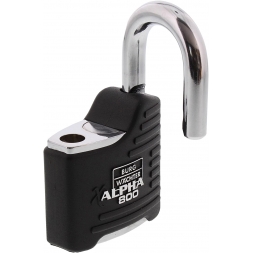
These levels range from 1 to 6, with class 1 padlocks being the least resistant (e.g.: combination or key padlocks of the ECO-COULEUR type for school lockers) and 6 being the highest level (e.g.: code or key padlocks of the ALPHA 800 type for construction equipment). In short, the European standard EN 12320 guarantees the technical performance, resistance and durability of your future security padlocks and reduces the risk of theft.
What do the security levels of padlocks mean?
Here is the summary table of the tests performed:
| Level EN 12320 | Unit | 1 | 2 | 3 | 4 | 5 | 6 |
|---|
| Prisoner key | - | - | - | - | YES | YES | YES |
|---|
| Minimum number of variants | - | 300 | 1 000 | 2 500 | 5 000 | 10 000 | 20 000 |
|---|
| Resistance to opening with a key close to a size | Nm | 1 | 1 | 1.5 | 1.5 | 1.5 | 1.5 |
|---|
| Tensile strength on the rotor | kN | - | - | 4 | 5 | 10 | 15 |
|---|
| Resistance to the torque applied to the rotor | Nm | - | 2.5 | 5 | 15 | 20 | 30 |
|---|
| Tensile strength of the handle | kN | 3 | 5 | 15 | 30 | 70 | 100 |
|---|
| Resistance to the torsion of the handle | Nm | 40 | 100 | 200 | 600 | 1 200 | 2 500 |
|---|
| Cutting resistance of the handle | kN | 6 | 15 | 25 | 45 | 70 | 100 |
|---|
| Resistance to body piercing | min | - | - | - | 2 | 4 | 8 |
|---|
| Resistance to body sawing | min | - | - | - | 2 | 4 | 8 |
|---|
| Manual attack | min | - | - | - | 3 | 5 | 10 |
|---|
- Rotor Pull Strength: The ability of the latch mechanism to withstand a certain tensile force
- Shackle Tensile Strength: The ability of the clasp to withstand a certain tensile force
| Levels EN 12320 | Unit | 1 | 2 | 3 | 4 | 5 | 6 |
|---|
| Low temperature impact resistance | T (C°) | - | - | -20 | -20 | -40 | -40 |
|---|
| m (g) | - | - | 1 250 | 3 050 | 6 550 | 7 150 |
|---|
| h (mm) | - | - | 800 | 1 000 | 1 400 | 1 500 |
|---|
- T (C°) : Temperature of the product during the impact test
- m (g) : Mass dropped during the impact test
My security padlock does not have the EN 12320 standard, is it really efficient?
However, there are many padlocks that do not comply with the EN 12320 standard and are therefore not classified. And for good reason, the tests are expensive and the padlock manufacturers select their most high-end products in order to standardize them.
However, a lock whose security functions are not classified is not systematically defective or non-resistant. It simply means that the manufacturer does not have the resources to standardize it.
However, you can refer to the specifications on the product sheets of the padlocks you are interested in and compare their numerical resistance to the security level tables above. This way, you will be able to have products of as good quality as standardized padlocks classified according to their security level, but at a reduced price!