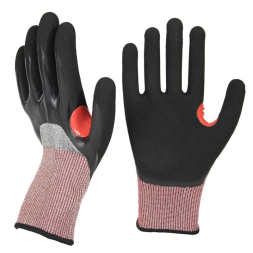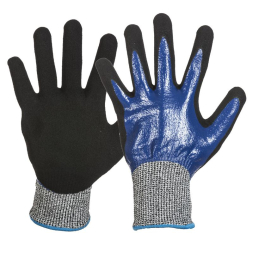
EN 388 is the European reference standard governing the mechanical protection of safety gloves against the risks of abrasion, cut, tear and puncture major risks, since nearly a quarter of workplace accidents involving time off work in France affect the hands. Choosing a compliant glove is a key step in any personal protective equipment (PPE) strategy in an industrial environment.

How do you read the pictogram? What do the numbers and letters mean? Which level should you choose for your activity? This guide answers all these questions and helps you select your safety gloves.

What is the EN 388 standard?

EN 388 is a European standard that defines the requirements, test methods and marking of protective gloves against mechanical risks. It assesses five performances: abrasion, cut (CoupTest), tear, puncture and ISO 13997 cut, plus optional protection against impacts.

This standard applies to all mechanical protection gloves sold in the European Union, from gardening gloves to the most technical industrial models. It is mandatory under Regulation (EU) 2016/425 on personal protective equipment, which requires the certification of any glove placed on the European market.

Two versions still coexist in the field:

  • EN 388:2003: the former version, withdrawn from the market in January 2023.
  • EN 388:2016+A1:2018: the current version, required for any product placed on the market since April 2019.

EN 388 always works in conjunction with the EN ISO 21420:2020 standard (formerly EN 420), which defines the general requirements common to all protective gloves: ergonomics, dexterity, CE marking, harmlessness of materials. The two standards are complementary, and a glove cannot display an EN 388 marking without first satisfying EN ISO 21420.

How to read the EN 388 pictogram?

The EN 388 pictogram depicts a hammer striking an anvil, followed by a series of 4 to 6 characters that indicate the glove's performance levels. Each position corresponds to a specific test, read from left to right: abrasion, CoupTest cut, tear, puncture, then optionally ISO 13997 cut and impact resistance.

A typical marking looks like 4X43CP or 4121:

  • 1st character: abrasion resistance (0 to 4)
  • 2nd character: CoupTest cut resistance (0 to 5 or X)
  • 3rd character: tear resistance (0 to 4)
  • 4th character: puncture resistance (0 to 4)
  • 5th character (EN 388:2016): ISO 13997 cut (A to F)
  • 6th character (EN 388:2016): impact resistance (P, F or absent)

Within the European standards ecosystem — EN 374 chemical, EN 407 heat, EN 511 cold, EN 60903 electrical — the EN 388 standard specifically covers mechanical risks. The higher the digit or letter in the pictogram, the better the glove's performance in the tested category.

The 4 historical levels (EN 388:2003 standard)

The EN 388:2003 version is based on four fundamental tests that remain integrated into the current version. These levels still appear on the majority of gloves marketed in Europe.

PositionTestMethodScaleMeaning of the maximum level
1st digitAbrasionAbrasive paper cycles1 to 48,000 cycles before perforation
2nd digitCut (CoupTest)Circular blade cycles1 to 520 cycles (index)
3rd digitTearForce in Newtons1 to 4≥ 75 N
4th digitPuncturePunch force in Newtons1 to 4≥ 150 N

Abrasion (1st digit)

The abrasion test measures the glove's durability against friction. A test specimen of the palm material is subjected to Klingspor PL31B abrasive paper (grit 180) under controlled pressure. The result is expressed as the number of cycles before a hole appears.

  • Level 1: 100 to 499 cycles
  • Level 2: 500 to 1,999 cycles
  • Level 3: 2,000 to 7,999 cycles
  • Level 4: ≥ 8,000 cycles

This wear resistance is crucial for long and repetitive handling in abrasive environments (handling cardboard boxes, palletising, industrial sorting).

Cut resistance – CoupTest (2nd digit)

The CoupTest measures resistance to a rotating circular blade that exerts constant pressure on the test specimen. The result expresses the ratio between the number of cycles needed to cut the tested material and the number of cycles needed to cut a cotton reference material.

  • Level 1: index 1.2
  • Level 5: index 20 or more

Known limitation: this test loses precision with modern high-performance materials (glass fibres, steel threads, HPPE), which quickly blunt the blade. It is precisely this limitation that prompted the addition of the ISO 13997 test in 2016.

Tear (3rd digit)

The tear test measures the force in Newtons required to propagate a pre-existing cut in the material. Four tests are carried out on the least resistant material. Level 4 guarantees resistance greater than or equal to 75 N.

Puncture (4th digit)

The puncture test consists of pushing a stylus punch through the palm of the glove held between two plates. The maximum force recorded determines the level, from level 1 (≥ 20 N) to level 4 (≥ 150 N).

Note: EN 388 puncture resistance does not guarantee protection against hypodermic needles. A specific test (ISO 13996 and the future ISO 23388) is required for the healthcare and waste-sorting professions.

The 2 levels added by the EN 388:2016 revision

The EN 388:2016+A1:2018 revision introduces two additional tests to address the limitations of the previous version. These two levels have become essential for correctly assessing high-resistance gloves and those fitted with protection on the back of the hand.

ISO 13997 cut resistance (TDM test)

The ISO 13997 test, also called TDM-100 (tomodynamometer), measures the force in Newtons required for a straight blade to pass through the sample over a distance of 20 mm. A new blade is used for each test, which guarantees a reliable measurement even on materials that blunt conventional blades. The table below shows the scale from A to F.

LetterMinimum cut force (Newtons)
A≥ 2 N
B≥ 5 N
C≥ 10 N
D≥ 15 N
E≥ 22 N
F≥ 30 N

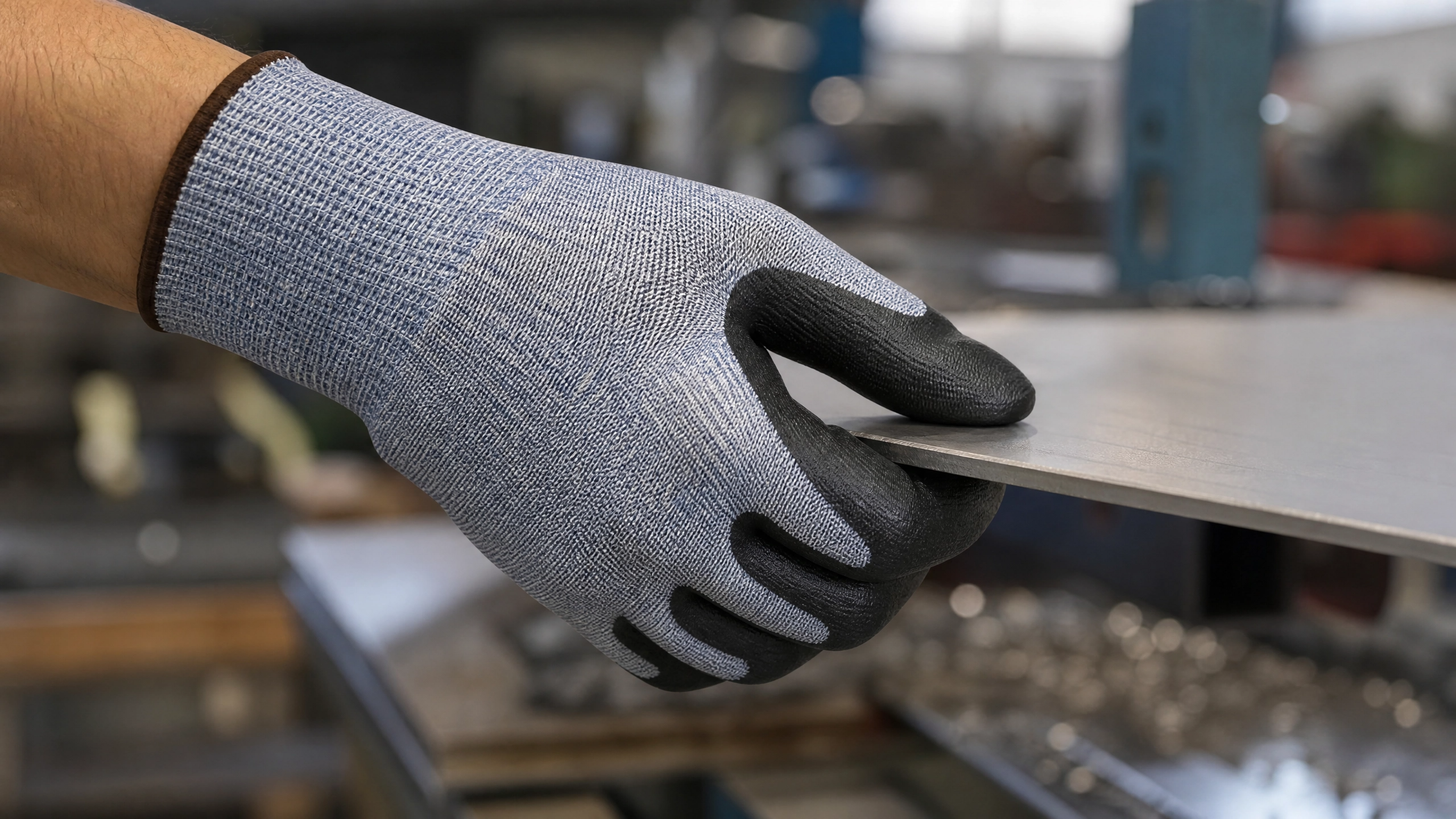
This test is now the reference for high-performance gloves, particularly those based on glass fibre, steel or HPPE (high-density polyethylene). It provides a much more precise and reproducible measurement than the CoupTest for high levels of protection. For the most exposed workstations (sheet metal work, glass, metallurgy, recycling), opt for level 5 cut-resistant gloves, which correspond to F levels on the ISO 13997 scale and guarantee the highest mechanical protection.

Impact resistance (EN 13594 test)

The impact resistance test follows the protocol defined by the EN 13594:2015 standard (initially designed for motorcyclists' gloves). A 2.5 kg striker drops onto the protection zone with an energy of 5 joules, and the transmitted force is measured by a sensor located beneath the anvil.

The final marking depends on the result:

  • P: test passed (transmitted force below the threshold)
  • F: test failed
  • No letter: test not performed

Important: this protection applies only to the back of the hand and the knuckles, never to the fingers. For crushing risks or impacts on the fingers, you need to turn to other complementary standards.

“The EN 388:2016 revision responds directly to the limitations of the CoupTest on modern materials. The ISO 13997 test provides a much more precise and reproducible measurement for high-performance gloves.”

— SATRA Technology, notified body for PPE, 2022.

What do the letters "X" and "0" mean?

The characters "X" and "0" in an EN 388 marking have very distinct meanings. Confusing the two is a common mistake when comparing technical data sheets or during a call for tenders.

  • X: the test was not performed or is not applicable to the glove. This does not mean zero performance.
  • 0: the test was performed, but the result is below the minimum level 1. It therefore represents a genuine absence of performance in the tested category.

Example: a glove marked 4X43C was tested for abrasion (4), tear (4), puncture (3) and ISO 13997 cut (C), but not for the CoupTest — often because the material blunted the blade, which makes the result not meaningful.

How to choose your EN 388 gloves according to your activity?

The right glove is never the one that displays the highest levels, but the one whose performance matches the real risk of the workstation. A glove that is too technical sacrifices dexterity, increases fatigue and usage cost. An under-specified glove exposes the operator. The table below summarises the minimum recommended EN 388 levels according to the activity.

Activity / Main riskMinimum recommended EN 388 levelsSuitable glove type
Light handling (boxes, packaging)2121XPolyurethane-coated nylon
Heavy handling (sheet metal, breeze blocks)4X43C or higherReinforced nitrile cut-resistant gloves
Precision work (electronics, assembly)4131XSandy-finish nylon
Food industry / cutting4543FCut-resistant level 5/F
Work with vibrating machinery4122 + EN ISO 10819Certified anti-vibration
Logging / chainsaw3132X + EN 381-7Chainsaw class 1 or 2

Three principles guide the choice:

  1. Map the risks by workstation before specifying the levels.
  2. Test a sample over 2 to 4 weeks with the operators concerned.
  3. Track the service life of each model to adjust the renewal frequency.

The EN 388 standard remains the essential benchmark for objectively assessing the mechanical protection of a safety glove. Its six levels — abrasion, CoupTest cut, tear, puncture, ISO 13997 cut and impact resistance — provide a precise reading grid, provided you fully understand the meaning of each character, including the letters X and 0.

To choose your gloves with complete peace of mind, always start from the real risk of the workstation and check the version date (EN 388:2016+A1:2018 is mandatory). For high-visibility environments (construction sites, road work, night-time logistics), consider high-visibility cut-resistant gloves, which combine EN 388 mechanical protection and EN ISO 20471-compliant signalling. Mastering the EN 388 standard is the first step towards an effective and sustainable HSE policy.

Related products

Continue reading… These articles may also interest you.

Danger signs in the workplace: meaning, types and legal obligations

A danger sign is a triangular yellow signal with a black border, mandatory in the workplace since the order of 2 August 2013 (NF EN ISO 7010 standard). There are two main categories: permanent and temporary. The risks covered range from physical hazards to chemical, electrical and environmental risks. The employer is legally responsible for their installation and maintenance.

Product News
Melissa Oumaouche
2168 views

All about European standards for safety gloves

Did you know that European standards for safety gloves are crucial for ensuring the safety and protection of your colleagues and employees? If you are a professional in the building or artisan sector concerned about the safety of your employees, don’t miss out on this article.

Product News
5841 views

EN 420: All about the general requirements for safety gloves

Safety gloves are an essential personal protective equipment to protect workers’ hands from mechanical and chemical hazards. European standards for safety gloves, such as EN 420, define the general requirements for the design and sizes of protective gloves. In this article, we will take a closer look at the EN 420 standard, its objectives, requirements, and its importance for the safety of your employees.

Product News
11111 views

Frequently asked questions

What is the difference between the EN 388 standard and the EN 420 standard?

The EN 388 standard assesses mechanical performance (abrasion, cut, tear, puncture, impact), whereas the EN 420 standard — replaced by EN ISO 21420:2020 — sets the general requirements: ergonomics, size, dexterity, CE marking and harmlessness of materials. The two standards are complementary: a glove must satisfy EN ISO 21420 before displaying an EN 388 marking.

What does the "X" mean in the EN 388 marking?

The letter X indicates that the corresponding test was not performed or is not applicable to the glove. It does not reflect zero performance, unlike the digit 0, which means a result below the minimum level 1. An X is common when the CoupTest is not relevant for high-performance materials that blunt the blade: in that case, it is the ISO 13997 test (letters A to F) that provides the reference measurement.

Does an EN 388 glove protect against chemicals?

No, the EN 388 standard covers only mechanical risks. Chemical protection is covered by the EN ISO 374 standard (with its parts EN ISO 374-1 for terminology and EN ISO 374-5 for micro-organisms). For combined protection, you must select a glove that displays both markings simultaneously. The technical data sheet must indicate the substances tested and the duration of protection.

Does an EN 388 glove protect against heat or cold?

No, the EN 388 standard covers neither thermal risks nor risks related to cold. For exposure to heat, check the EN 407 standard. For cold, the EN 511 standard applies. Many industrial gloves combine several certifications: EN 388 + EN 407 for the steel industry, EN 388 + EN 511 for cold-room logistics. Always read the entire pictogram to validate the risk coverage for your workstation.

How do I know if my EN 388 gloves are still compliant?

Check three criteria: the physical condition (wear, puncture, loss of grip), the expiry date (generally 5 years after manufacture) and the consistency of the marking with the current risks of the workstation.

Is the EN 388 standard mandatory in Europe?

Yes, the EN 388 standard is mandatory for any mechanical protection glove placed on the European market, under Regulation (EU) 2016/425 on PPE. Since April 2019, only the EN 388:2016+A1:2018 version is accepted for sale. The former EN 388:2003 version has been withdrawn from the market since January 2023. Any purchase must target the 2016+A1:2018 version.

See the author's articles
Melissa Oumaouche

With over 5 years of experience in creating content optimized for search engines, Mélissa is currently Marketing & Product Manager at SBE Direct, where she leads the product catalogue positioning across the e-commerce website and marketplaces, as well as the SEO content strategy in coordination with the marketing team she oversees.

We use cookies to improve your experience.